
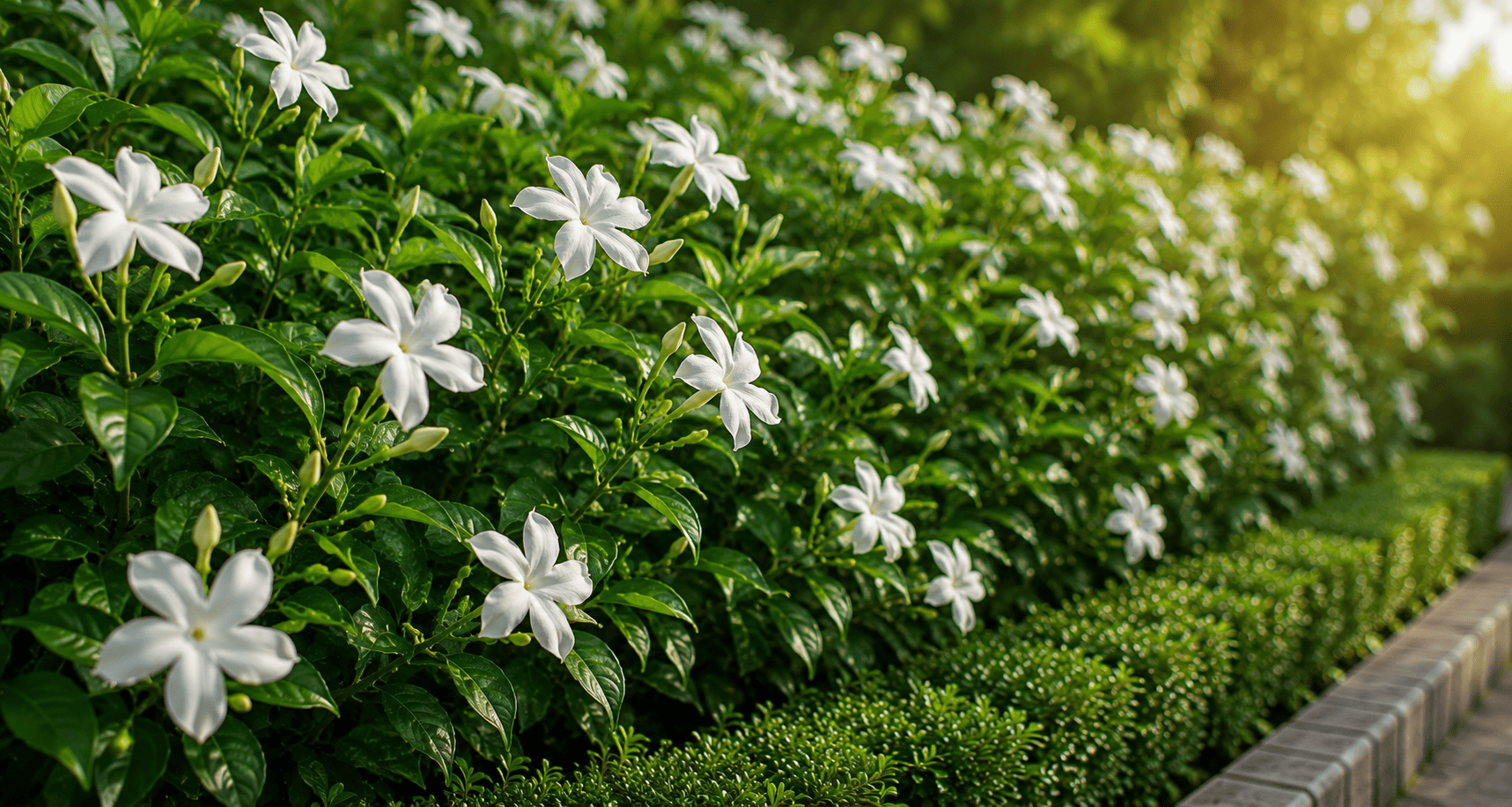
Family: Apocynaceae (Dogbane Family)
Crape Jasmine
History & Botanical Overview
History: The genus name honors the 16th-century German herbalist Jakob Theodor von Bergzabern (Latinized as Tabernaemontanus). While it looks superficially like true jasmine, it belongs strictly to the dogbane family (Apocynaceae) and is characterized by a thick, milky white latex that exudes from broken tissues. Today, it is highly valued globally in modern landscape architecture as a hardy, low-maintenance hedging plant and an aromatic specimen shrub celebrated for its persistent year-round floral display.
Botonical: Tabernaemontana divaricata is native to the warm, tropical regions of South and Southeast Asia, where it has been systematically cultivated for centuries. Historically deeply rooted in Indian culture, it is traditionally planted in residential courtyards and temple gardens due to its profound symbolic association with purity, peace, and spiritual offerings.
Ethnobotanical & Landscape Usage
Ornamental & Landscape Usage
Frequently utilized in landscape design as a flowering
hedge, accent border, privacy screen, or container
specimen plant for courtyards, patios, and modern
urban gardens.
Medicinal Benefits
In ethnic systems of medicine, the roots, leaves, and
sap are used to manage scorpion and snake
envenomation. Extracts have documented
ethnobotanical uses for treating corneal
inflammation, headaches, wounds, and managing
pain.
Spiritual & Cultural Usage
Highly revered in Indian tradition; the pristine white
blossoms are frequently cultivated in temple grounds
and harvested for daily religious offerings, prayers,
and celebratory floral garlands.
Propagation Methods
Readily propagated via semi-hardwood stem cuttings
taken during the warm spring or active summer
growth phases.
Cultivation & Care Specs
Common Names
Mature Dimensions
Growth Conditions
Scientific Name
Watering Guidelines:
Best watered in the early morning (AM) to minimize evaporative loss. Requires regular, consistent weekly watering to maintain evenly moist but never waterlogged soil. Significantly reduce watering frequency during the dormant winter months.
Vulnerabilities:
Highly vulnerable to sap-sucking scale insects (soft brown and hemispherical scales), mealybugs, and whiteflies. Suffers significantly, loses foliage, and exhibits root rot in stagnant waterlogged soil, extreme prolonged droughts, or freezing sub-zero climates.
Small efforts saves a dying plant.
Plants are Important for Human's !!
We have tried our best to ensure the results help you and our team and executives are puushing every day to ensure that App provides better and better results supporting plant health
Cultivation & Care Specs
- Growth Habit: Upright, multi-branched evergreen woody shrub growing in a dense, bushy mound
- Latex Exudate: Exudes a thick, sticky, white milky latex whenever leaves or stems are fractured
- Leaf Structure: Opposite, simple, oblong-oval leaves measuring up to 15 cm in length.
- Foliage Detail: Glossy, deep emerald-green foliage characterized by distinctly wavy, undulate margins and raised venation.
- Floral Morphology: Pure waxy white, five-petaled tubular flowers structured like a miniature pinwheel.
- Petal Orientation: Flower petals showcase a distinctive counterclockwise, left-twisted orientation.
- Fragrance Profile: Flowers release a delicate, soft, sweet aroma that intensifies significantly during nocturnal hours.
- Inflorescence: Blooms organized in structural, multi-flowered cluster arrangements known as cymes.
- Fruit System: Produces rare, inconspicuous dry, hard, pod-like splitting fruits known structurally as follicles.
- Bark & Branching: Smooth, greyish-brown mature bark with highly elastic, wide-spreading horizontal branching habits.
Development Timeline
Foliage Color Scale
Young flush displays vibrant light-green glossy leaves. Mature leaves deepen to a rich, dark emerald green under full sun. Foliage shifts to a pale, yellowish-green hue if exposed to freezing winter temperatures, waterlogged soil conditions, or prolonged nutrient deficiencies
Blooming Format
Free-flowering all year round in tropical zones, with major peaks from mid-spring to early autumn. Arranged in flat-topped cyme clusters. Flowers measure 2 cm to 5 cm in diameter; colored pure white to soft creamy white
Fruit & Harvest
Memory Options
Follicular pods slowly emerge from the base of the faded cyme cluster post-pollination, transitioning from soft green to dry brown over 2 to 3 months before splitting open to reveal a dull orange-red to dry brown interior at full maturity. Harvest for floral decorative use is performed year-round in the early morning. Postharvest dipping in a 4% boric acid solution dramatically limits weight loss and preserves flower freshness for over 33 hours.
Critical
Toxicity Information
Strictly Non-Edible: Non-edible across all primary vegetative components due to toxic alkaloid content. While select traditional regions occasionally process specific flower variations into fritters, consumption is generally discouraged due to inherent toxicity risks. The milky sap contains active indole alkaloids (including tabersonine and coronaridine).
- Humans: Toxic upon ingestion. Causes severe gastrointestinal distress, vomiting, diarrhea, and local oral numbness.
- Infants (High Risk): Accidental ingestion triggers intense mucosal inflammation, abdominal pain, nausea, and central nervous system depression.
- Dogs: Ingestion leads to heavy salivation, abdominal cramping, intestinal irritation, vomiting, and lethargy.
- Cats: Ingestion causes systemic poisoning; severe symptoms include delirium, cardiotoxicity, and neurological issues like paralysis.
Avoidance Strategies: Keep pots elevated on high shelves or enclosed within gated garden borders away from children and pets. Always wear protective gloves while pruning to prevent contact with the irritating sap.