
Money Plant


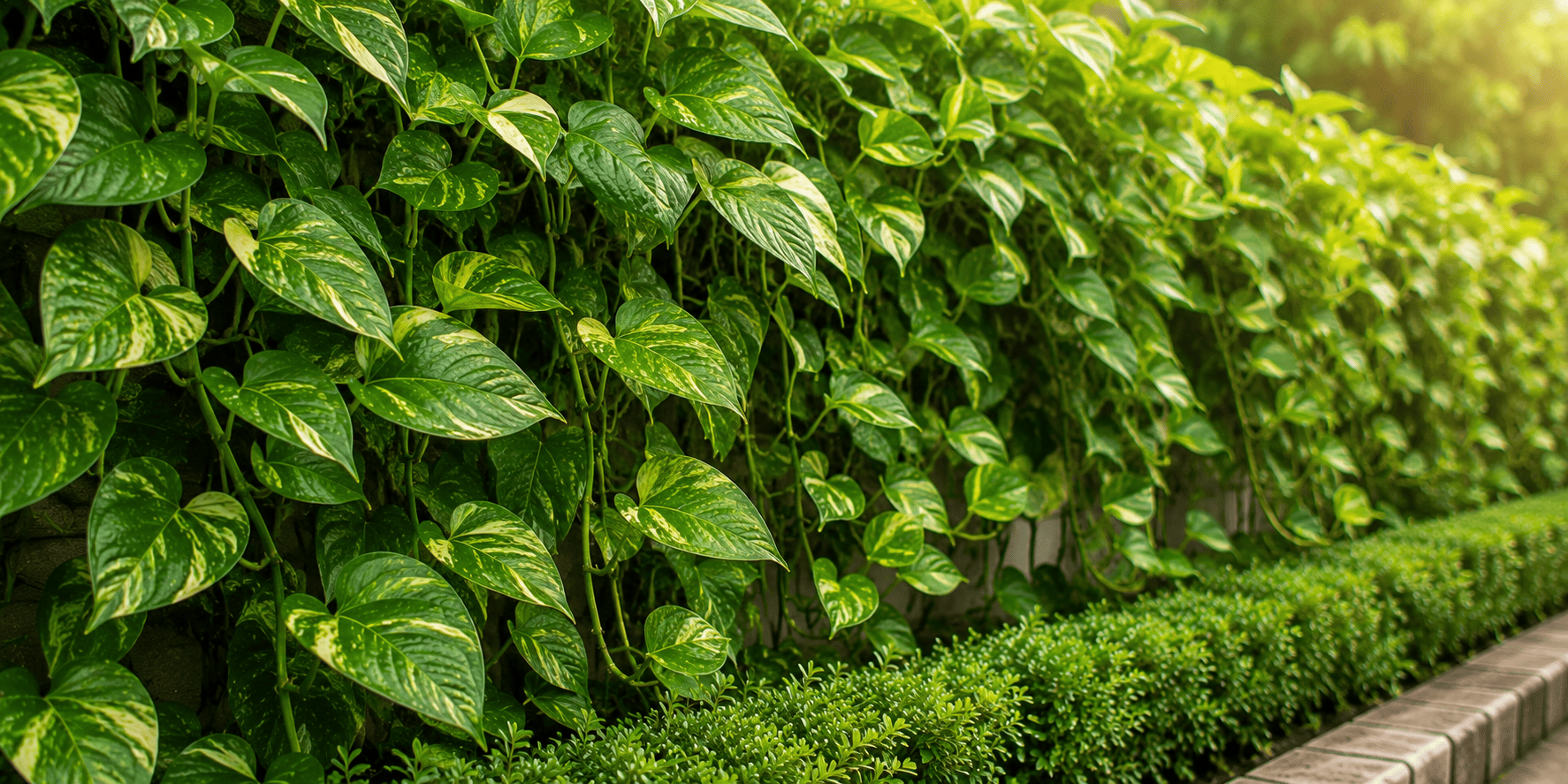
- Watering Guidelines: Highly drought-tolerant. Allow the top 50% of the soil to dry out entirely between waterings. Overwatering is the most common cause of decline; leaves will droop when thirsty and yellow when excessively wet.
- Growth Conditions: Highly adaptable. Thrives in bright, indirect light but will tolerate extremely low-light areas (though variegation may fade). Prefers standard well-draining aroid potting mixes and average household humidity.
- Vulnerabilities: Extremely susceptible to root rot if left sitting in stagnant water. Pests are relatively uncommon but can occasionally include mealybugs, spider mites, or fungus gnats in constantly damp soil.
- Growth Habit: Fast-growing, evergreen creeping vine that will trail downwards from hanging planters or aggressively climb upward if provided structural support.
- Root System: Develops prominent aerial roots at the stem nodes, allowing the plant to anchor onto tree bark, moss poles, or walls.
- Leaf Structure: Alternate, deeply heart-shaped (cordate) leaves featuring a smooth, waxy surface texture.
- Foliage Detail: Leaves are typically a vibrant, glossy green heavily splashed, marbled, or streaked with golden-yellow, pale green, or white variegation.
- Dimorphic Growth (Juvenile vs. Mature): When trailing indoors, leaves remain in their small, juvenile form (5-10 cm). When climbing outdoors in tropical climates, mature leaves can grow up to 90 cm long and develop deep fenestrations (splits).
- Floral Morphology: Exceptionally rare to bloom in cultivation or indoors. Mature plants in the wild produce a typical aroid inflorescence consisting of a spadix shielded by a pale spathe.
- Stem Characteristics: Stems are fleshy, flexible, and light green, capable of rapid adventitious rooting whenever a node makes contact with water or moist substrate.
Strictly Non-Edible: All vegetative components of the Money Plant contain insoluble calcium oxalate crystals (raphides). When chewed or crushed, the plant cells rupture and fire these microscopic, needle-like structures into the soft tissues of the mouth, throat, and gastrointestinal tract, causing immediate physical micro-trauma and severe irritation.
To Humans & Infants
Toxic upon ingestion. Causes immediate, intense burning and irritation of the lips, mouth, and tongue. Can lead to excessive drooling, localized swelling, and difficulty swallowing (dysphagia). Symptoms are rarely fatal but highly distressing to infants.
To Household Pets
In cats and dogs, ingestion causes severe oral irritation, aggressive pawing at the mouth, heavy drooling (hypersalivation), vomiting, and decreased appetite. It can cause localized swelling of the upper airway in rare, severe cases.
Avoidance & Protection Strategies
Utilize hanging baskets, macrame hangers, or place pots on elevated shelves to keep trailing vines safely out of reach of curious pets and toddlers. Wash your hands or wear gloves after pruning, as the sap may cause mild contact dermatitis in sensitive skin.