
Aloe Vera
(Ghrita Kumari)


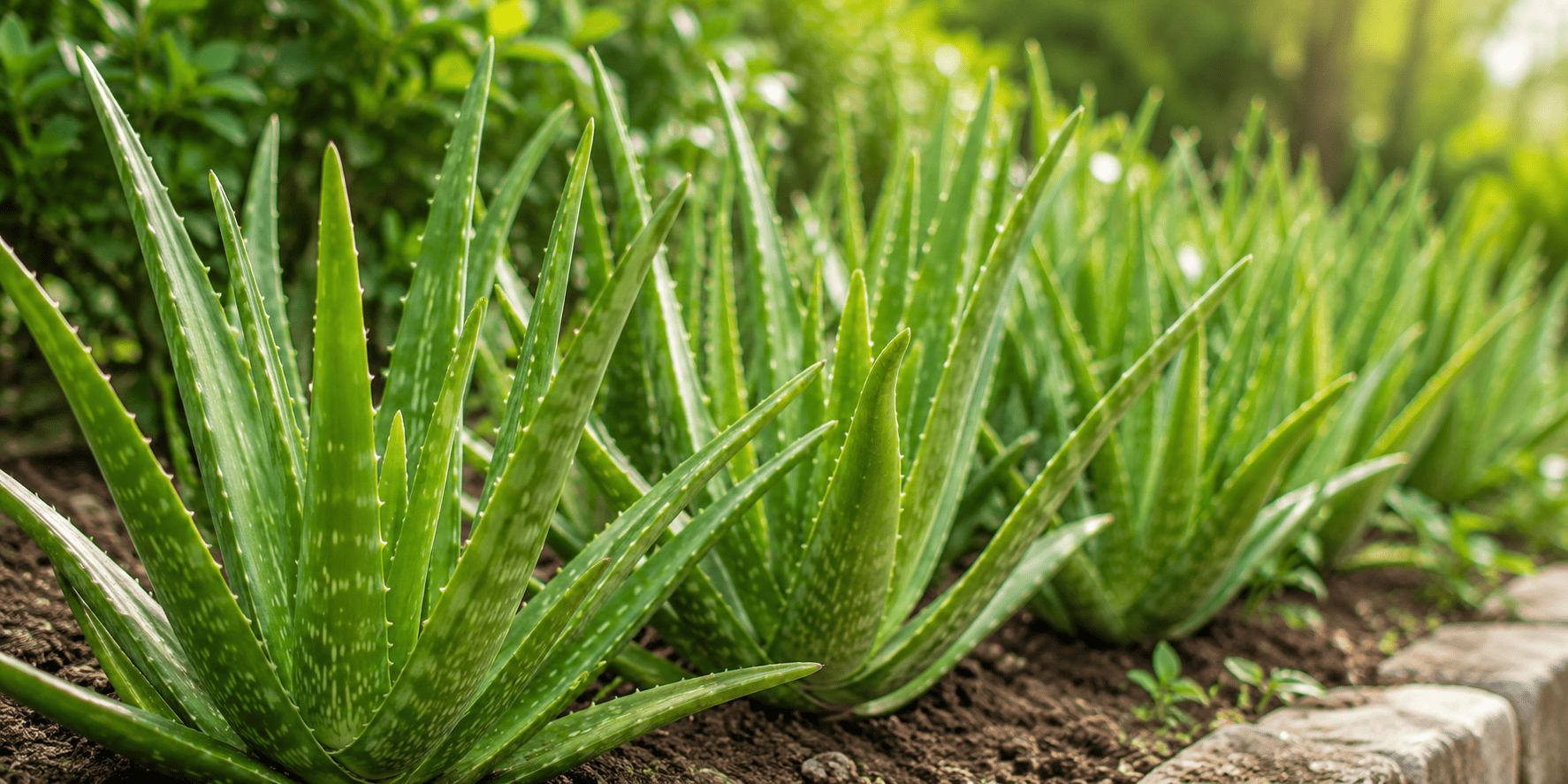
- Watering Guidelines: Highly drought-tolerant. Wait until the potting medium is entirely dry before deeply soaking it. Overwatering, particularly during winter dormancy, is the most common cause of plant collapse.
- Growth Conditions: Thrives in bright, indirect sunlight indoors or full sun when gradually acclimated outdoors. Requires a highly porous, gritty, well-draining cactus or succulent soil mix to prevent moisture retention.
- Vulnerabilities: Extremely susceptible to root and stem rot if left sitting in damp soil or poorly drained containers. Highly sensitive to frost; exposure to freezing temperatures will cause the water-filled leaves to turn to mush and collapse. Watch for mealybugs in the crevices of the rosette.
- Growth Habit: A stemless or very short-stemmed succulent perennial that forms a dense, spreading rosette of upward-reaching leaves.
- Root System: Features a relatively shallow, spreading fibrous root system that vigorously produces lateral offsets (commonly called "pups") to form large clustering colonies.
- Leaf Structure: Thick, fleshy, lanceolate (spear-shaped) leaves that taper to a point, featuring serrated margins lined with small, soft, pale teeth.
- Foliage Detail: Leaves are typically pale green to grey-green, often featuring white flecks or spotting on both the upper and lower surfaces, especially visible in younger specimens.
- Internal Anatomy: The leaves act as water storage organs, containing a clear, viscous mucilaginous gel (the medicinally active parenchyma tissue) surrounded by a yellowish, bitter sap (aloin) located just beneath the thick outer rind.
- Floral Morphology: Mature, well-sunned outdoor plants produce a tall, slender inflorescence (up to 3 feet high) bearing pendulous, tubular yellow or orange flowers arranged in a dense raceme.
- Stem Characteristics: While generally considered stemless, older specimens may develop a short, woody basal stem over time as lower leaves naturally senesce, dry up, and are removed.
Compound Profile: While the clear inner gel of the Aloe Vera plant is universally celebrated and safe for both topical and internal use, the yellowish sap (aloin or aloe latex) found just beneath the outer rind contains anthraquinones. These are potent, irritating laxatives that are highly toxic if ingested in unpurified forms.
To Humans & Infants
The inner gel is completely safe, but ingestion of the whole leaf or unpurified yellow latex causes severe abdominal cramping, diarrhea, and potential kidney damage. It poses a moderate toxicity risk if inappropriately prepared at home.
To Household Pets
Classified as toxic to dogs, cats, and horses by the ASPCA. Ingestion of the saponins and anthraquinones leads to lethargy, vomiting, diarrhea, and a noticeable change in urine color (reddish).
Harvesting & Protection Strategies
Keep potted plants out of reach of curious pets. When harvesting the plant for personal culinary or cosmetic use, you must slice the leaf base and allow the bitter yellow latex to drain completely (usually 15-20 minutes) before extracting the safe inner gel.