
Family: Asteraceae (Daisy Family) Lifespan: Annual

Marigold
(Genda)

Tagetes erecta
🌼 Vibrant Bloom 🛡️ Pest Repellent ✅ Culturally Significant

History & Linnaean Nomenclature
The genus Tagetes is believed to be named after Tages, an Etruscan figure who taught the art of divination. The most common species, Tagetes erecta (African Marigold), was formally classified by Carl Linnaeus in 1753. Despite the "African" moniker, marigolds are native to the Americas, specifically Mexico and Central America, where they have been revered for centuries. They belong to the Asteraceae (daisy/sunflower) family, recognized for their complex, composite flower heads and strong, pungent scent, which serves as a natural defense mechanism against pests.

Botanical Culture & Distribution
Marigolds have naturalized globally, becoming integral to various cultures and agricultural practices. In India, they are known as "Genda" and are ubiquitous in religious offerings, weddings, and festivals, where their vibrant yellow and orange colors represent positivity and the sun. Beyond their ornamental value, they are prized in organic gardening as "companion plants," frequently interplanted with vegetables to repel harmful nematodes and insects. Their cultural and agricultural versatility has made them one of the most widely cultivated and recognized annual flowers on the planet.

Cultural & Practical Usage

Ornamental & Companion Planting

Highly valued as an annual bedding plant for its long-lasting, vibrant blooms. In agriculture, Marigolds are famous "companion plants," interplanted with tomatoes and other crops to naturally repel harmful soil nematodes and deter pests like whiteflies and aphids.

Culinary & Natural Dyeing

Petals of certain varieties (like Tagetes lucida) are edible and used to add color and a citrus-like flavor to salads and dishes. Historically and commercially, the concentrated pigments from the petals are harvested to produce natural food dyes and additives for poultry feed to enhance egg yolk color.

Spiritual & Cultural Significance

Deeply woven into cultural traditions, particularly in India ("Genda") and Mexico ("Cempasúchil"). They are essential in religious rituals, temple offerings, and celebratory garlands. In Mexico, they are famously known as the "flower of the dead," utilized extensively in altars during *Día de los Muertos*.

Propagation Methods

Effortlessly grown from seeds. Seeds can be collected directly from dried, spent flower heads at the end of the season. They germinate quickly when sown in warm, well-draining soil in early spring and are highly receptive to direct sowing in outdoor garden beds.

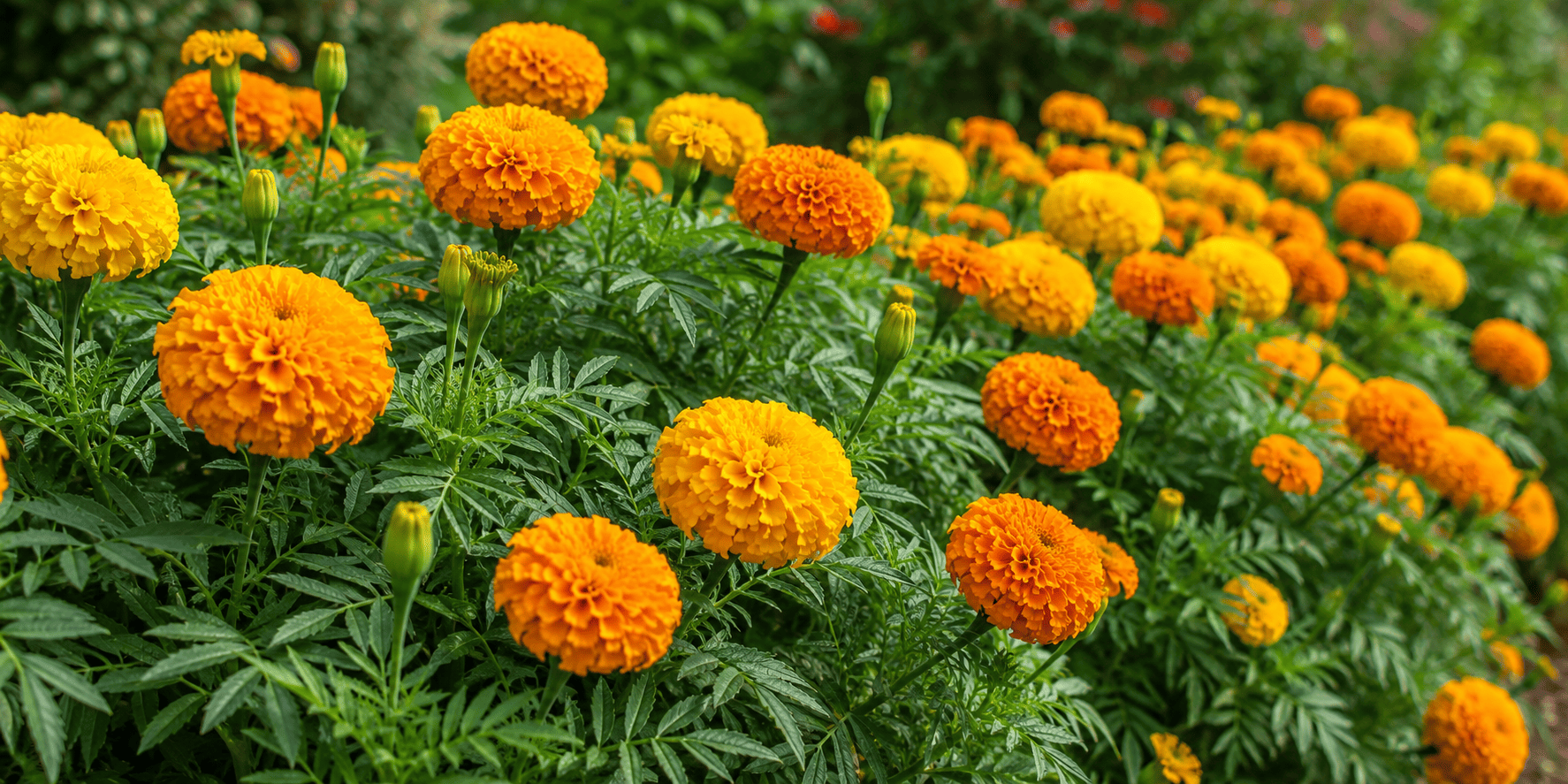
Marigold Field Display
Environmental Garden Display
  • Watering Guidelines: Prefers consistent, moderate moisture. Water at the base of the plant to keep foliage dry, which helps prevent fungal issues like powdery mildew. Allow the top inch of soil to dry slightly between waterings.
  • Growth Conditions: Thrives in full sun (at least 6 hours of direct light daily). They are incredibly adaptable to various soil types but perform best in fertile, well-draining garden soil. Very heat-tolerant once established.
  • Vulnerabilities: Primary threats include slugs, snails, and aphids, especially during the seedling stage. Overwatering or poor air circulation can lead to root rot or fungal foliage diseases. Deadheading spent blooms encourages continuous flowering throughout the season.
  • Growth Habit: Typically a compact, bushy, multi-branched annual that ranges from low-growing mounds to upright, taller varieties depending on the cultivar.
  • Root System: A fibrous, branching root system that effectively captures nutrients and water from the upper layers of the soil.
  • Leaf Structure: Deep green, pinnately divided leaves with serrated or toothed edges, possessing a distinct, pungent aroma when crushed.
  • Foliage Detail: The foliage provides a dense, lush backdrop that contrasts sharply with the bold, bright colors of the flowers.
  • Bloom Lifespan: Individual flowers are long-lasting, often remaining vibrant for several weeks before beginning to fade and develop seeds.
  • Floral Morphology: Composite flower heads consisting of numerous ray and disc florets. Blooms are often densely packed and ruffled, ranging in color from deep lemon-yellow to burnt orange and mahogany.
  • Stem Characteristics: Sturdy, herbaceous stems that may become slightly woody at the base in older, more mature plants, supporting the weight of heavy, clustered blooms.
SAFETY: Non-Toxic Profile & Handling

Generally Safe & Pet-Friendly: The common Marigold (Tagetes species) is widely regarded as a safe and non-toxic plant for both humans and common household pets. Its strong scent, while pleasant to many, acts as a natural deterrent to garden pests, making it a favorite for organic, family-friendly landscapes.

To Humans & Infants

Non-toxic upon ingestion. While the leaves and petals are generally safe, they possess a pungent flavor that makes them unappealing for consumption. The primary concern for infants is accidental ingestion of soil or potential allergic reactions to foliage oils.

To Household Pets

Classified as non-toxic to dogs and cats by the ASPCA. While ingestion of large amounts of any fibrous plant material can cause mild, self-limiting stomach irritation, the Marigold does not contain systemic toxins.

Cultivation & Skin Sensitivity

While non-toxic, the foliage contains thiophenes and other compounds that can cause "gardener's contact dermatitis" in sensitive individuals. Wear gloves when pruning or deadheading for extended periods to avoid minor skin irritation.


Vibrant Marigold garden bed
Safe Garden Aesthetic

Small efforts save a dying plant.

Get instant botanical diagnostics, precise care timetables, and expert structural advice tailored to support your garden's health daily.

Download PlantDecoder App Now

Frequently Asked Questions

Common botanical queries and troubleshooting instructions for Tagetes erecta.

Why are my Marigold seedlings drooping?
Seedlings often droop due to inconsistent watering. They need soil that is moist but not waterlogged. If the soil is dry, water them immediately. If the soil is wet, it may be damping-off disease caused by poor ventilation or overly dense soil.
Why are my Marigolds not blooming?
The most common reason is insufficient sunlight; Marigolds require at least 6 hours of full sun daily. Other causes include excessive nitrogen fertilizer, which promotes lush leaf growth at the expense of flowers, or lack of "deadheading" (removing spent blooms).
Are Marigolds perennial or annual?
Marigolds are typically grown as annuals in most climates, meaning they complete their life cycle in one season. While they can act as perennials in warm, frost-free tropical zones, in most garden settings, they will die back once the first frost arrives.
Why do the leaves have white, powdery spots?
This is likely powdery mildew, a fungal disease favored by high humidity and poor air circulation. Avoid overhead watering (wetting the leaves), ensure adequate spacing between plants to improve airflow, and use a horticultural soap or fungicide if the infection spreads.
Is Marigold (Genda) edible?
Yes, specific varieties of Marigold (especially Tagetes lucida) are edible and have a citrus-like, sometimes spicy flavor. They are often used as garnishes in salads. Note: Always ensure you are consuming a variety grown specifically for culinary use and free from synthetic pesticides.
How do I collect seeds for next year?
Allow the flowers to stay on the plant until they are completely brown and dry. Once dried, pluck the flower head, pull it apart, and you will find long, thin, black-and-white seeds. Store them in a cool, dark, and dry place in a paper envelope until the next planting season.
Do Marigolds really repel pests?
Yes. Their roots produce a substance (alpha-terthienyl) that is toxic to many types of harmful soil nematodes, and their pungent foliage can help deter various above-ground garden pests, including whiteflies and mosquitoes, making them excellent companion plants.
How much water do they need?
Marigolds prefer moderate watering. Water when the top inch of soil feels dry. They are quite drought-tolerant once established, but regular watering during intense summer heat will keep them blooming vigorously. Avoid letting the roots sit in standing water.
Is Marigold toxic to pets?
Marigolds are generally considered non-toxic to dogs and cats. However, the plant contains oils that can cause minor skin irritation (dermatitis) upon contact, and ingestion of significant amounts may lead to mild, temporary gastrointestinal upset in some sensitive animals.
How do I get bushier Marigold plants?
"Pinching" is the key to a bushy habit. Once a seedling reaches about 6 inches in height, pinch off the very top set of leaves. This encourages the plant to develop side branches rather than growing straight up, resulting in a fuller, more compact plant with more blooms.