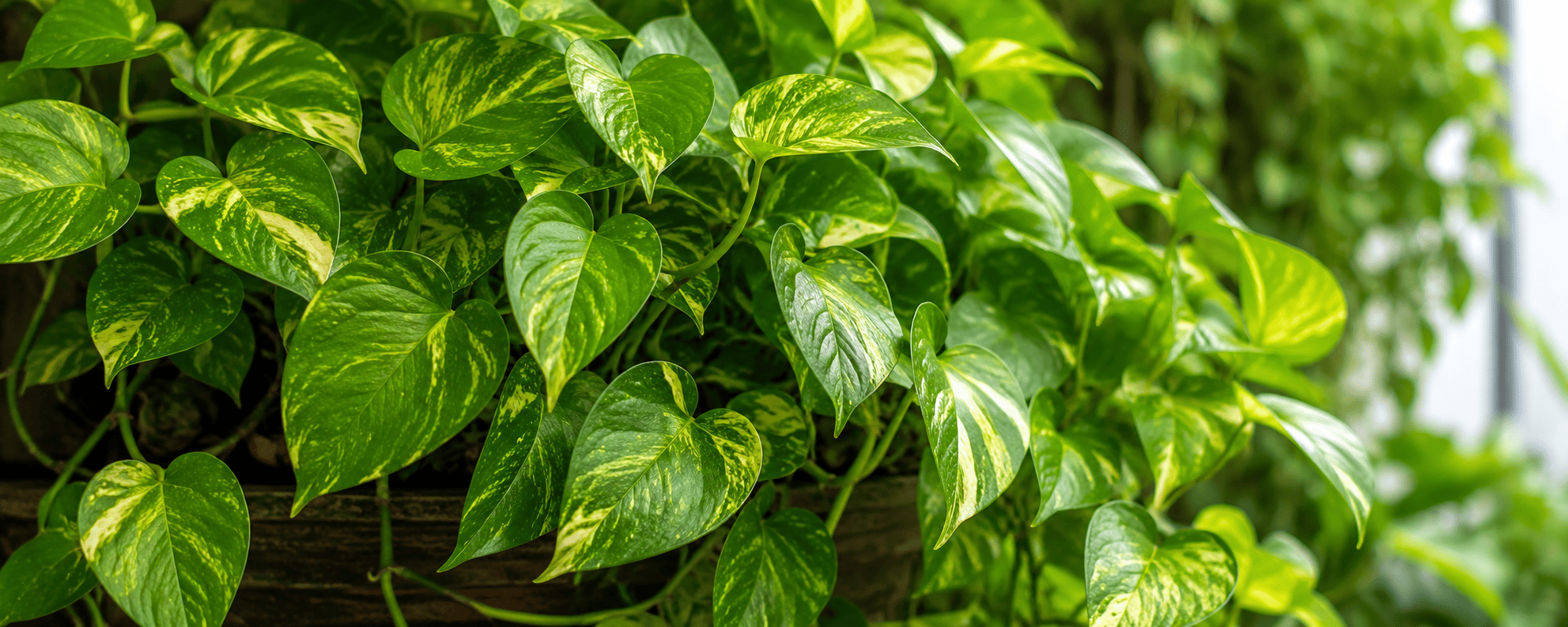
Golden Pothos


- Watering Guidelines: Prefers a "soak and dry" approach. Allow the top 2-3 inches of soil to dry out completely between waterings. Yellowing leaves often indicate overwatering, while drooping indicates it is time for a thorough drink.
- Growth Conditions: Highly adaptable, thriving in anything from low light to bright, indirect sunlight. Avoid direct, harsh sun, which can scorch the variegated leaves. It grows best in standard, well-draining indoor potting mixes.
- Vulnerabilities: Generally pest-resistant but can occasionally attract mealybugs or spider mites if kept in extremely dry or stagnant air. It is not cold-hardy; keep temperatures consistently above 15°C (60°F) for best growth.
- Growth Habit: A vigorous, vining hemiepiphyte. It naturally climbs trees in the wild using aerial roots but trails beautifully in containers or hanging baskets indoors.
- Root System: Features strong, thick roots and produces aerial root nodes along the stems, which can easily anchor to moss poles or other vertical supports.
- Leaf Structure: Heart-shaped (cordate) leaves that are waxy and smooth. They are alternated along the stems, spaced at intervals that allow for a cascading effect.
- Variegation Detail: The signature "Golden" appearance comes from irregular, cream-to-gold mottled patterns on the leaves, which are genetically linked to the plant's light exposure.
- Stem Characteristics: Stems are thick, pliable, and green, hardening slightly as they reach maturity. They are highly resilient and can easily be trimmed to maintain a specific size or shape.
- Adaptive Strategy: Highly efficient at capturing light, which allows it to thrive in the dense shade of forest floors. Its ability to propagate via simple stem cuttings is a key survival and expansion mechanism.
Toxic if Ingested: The Golden Pothos (Epipremnum aureum) contains insoluble calcium oxalates. While commonly grown as a houseplant, all parts of the plant are considered toxic to both humans and pets if ingested, causing oral irritation and digestive distress.
To Humans & Children
Ingestion typically causes immediate pain, burning, and swelling of the lips, tongue, and throat. Keep out of reach of young children who may be tempted to chew on the waxy, trailing leaves.
To Household Pets
Toxic to cats and dogs. Ingestion causes oral irritation, excessive drooling, difficulty swallowing, and vomiting. If your pet consumes a significant amount, contact your veterinarian immediately.
Maintenance & Safety Protocol
Ensure the plant is placed on elevated surfaces, such as hanging planters or high shelves, to keep it away from pets and small children. Always wash your hands after pruning to prevent irritation from potential sap contact.