
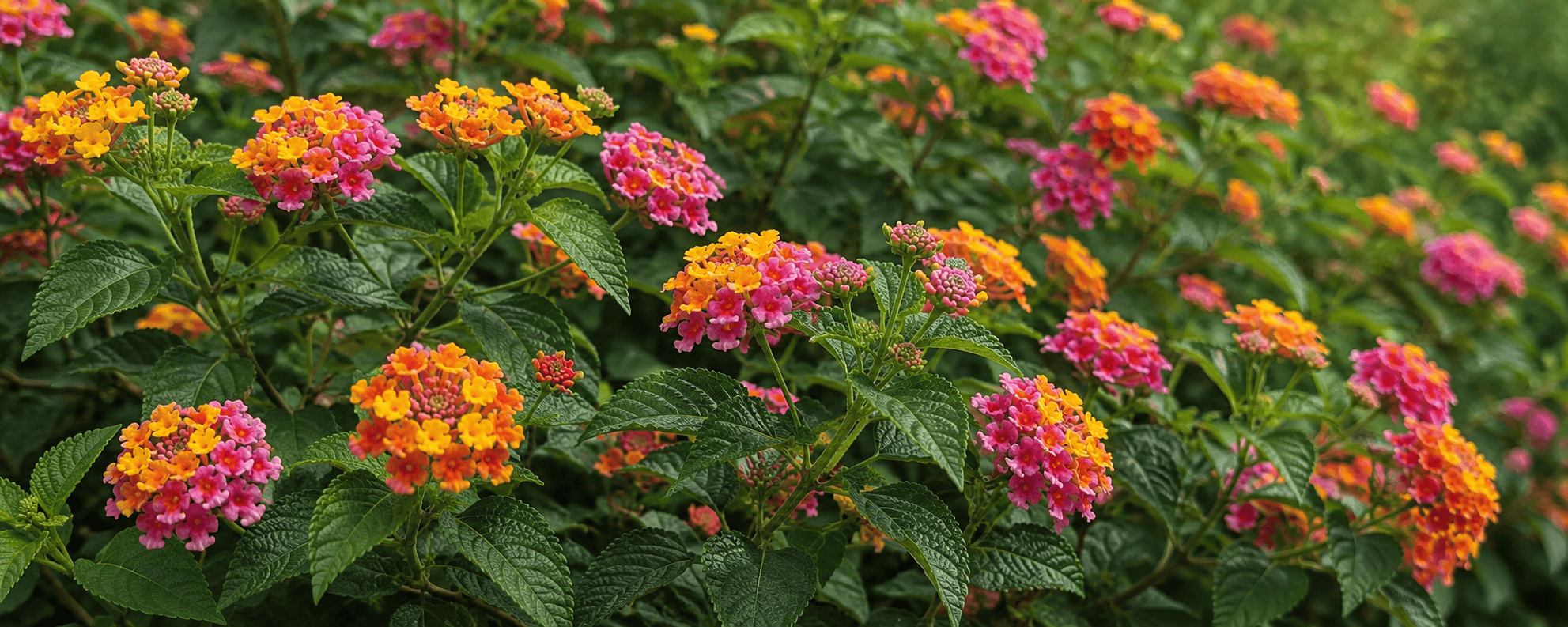
Common Lantana
History & Linnaean Nomenclature
Lantana camara is a species of flowering plant within the verbena family, Verbenaceae. It was formally described and classified by Carl Linnaeus in his foundational work Species Plantarum (1753). Native to the American tropics, the plant's aggressive growth habits and hardiness facilitated its rapid global distribution during the colonial era. It is now recognized as one of the world's most invasive plant species in tropical and subtropical regions, valued for its ornamental versatility while simultaneously managed as a significant weed in agricultural landscapes.
Botanical Culture & Distribution
Lantana is renowned for its unique, multicolored flower clusters, which often transition through shades of yellow, orange, red, and pink on the same head as they mature. This complex blooming process—combined with its high tolerance for drought, poor soil, and heat—has made it a popular garden subject worldwide. While it is celebrated by gardeners as a magnet for butterflies and hummingbirds, it possesses a strong, pungent foliage scent and is strictly toxic to mammals if ingested. In its native Neotropics, it provides essential cover and forage for avian species, whereas in introduced ranges, its dense thickets frequently displace local flora.
Cultural & Practical Usage
Ornamental Landscape Utility
Lantana is a powerhouse for hot, dry landscapes, prized for its ability to produce constant, vibrant color throughout the summer. It is an excellent choice for ground cover, rock gardens, or mass plantings where it can quickly establish a dense, butterfly-attracting display.
Pollinator Attraction
It is widely regarded as one of the best plants for attracting pollinators, including butterflies, bees, and hummingbirds. The flower clusters are rich in nectar, making them a vital food source for local insect populations in gardens and urban green spaces.
Ecological Considerations
Due to its extreme vigor and drought tolerance, Lantana camara is categorized as a highly invasive species in many tropical and subtropical areas worldwide. Gardeners are encouraged to check local regional guidelines to ensure its cultivation does not threaten native plant communities.
Propagation & Growth
Lantana propagates readily from soft-stem cuttings taken in late summer. It establishes quickly in well-draining soil and benefits from light pruning to encourage bushiness. It is highly heat-tolerant but needs full sun to maintain the vibrant color and dense blooming habit it is famous for.

- Watering Guidelines: Exceptional drought tolerance once established. Water deeply but infrequently; allow soil to dry out between sessions. Avoid overwatering, as wet feet lead quickly to root rot in poorly draining soils.
- Growth Conditions: Thrives in full, direct sunlight (minimum 6–8 hours daily) for optimal flowering. Prefers well-draining, average garden soil and is notably tolerant of poor, nutrient-deficient substrates.
- Vulnerabilities: Generally pest and disease-resistant, though susceptible to whiteflies, aphids, and lace bugs in stressed or overcrowded conditions. Not cold-hardy; frost will kill top growth, though it often regrows from the roots in milder climates.
- Growth Habit: Fast-growing, perennial, multi-branched scrambling shrub. Often forms dense, impenetrable thickets if left unpruned in ideal conditions.
- Root System: Aggressive, woody root system that effectively anchors the plant and allows it to persist even in thin, rocky soils.
- Leaf Structure: Opposite, ovate leaves with a rough, sandpaper-like texture and serrated margins. Foliage emits a strong, pungent, herbal odor when crushed.
- Floral Morphology: Tiny, tubular flowers packed into dense, terminal, rounded clusters. A hallmark feature is the color transition, with individual blooms changing from yellow/orange to deeper red or pink as they mature.
- Fruit Structure: Produces clusters of small, green berries that ripen to a dark, glossy, fleshy black/purple, which are highly attractive to birds (who serve as primary seed dispersers).
- Stem Characteristics: Stems are square in cross-section and frequently covered in small, backward-curving, sharp prickles that provide structural support for climbing.
Toxic if Ingested: Lantana (Lantana camara) contains triterpenoid compounds which are highly toxic. All parts of the plant, especially the unripe green berries, are poisonous to humans and pets.
To Humans & Children
Highly toxic. Ingestion of foliage or berries can cause severe abdominal pain, vomiting, diarrhea, dilated pupils, and respiratory distress. Keep away from young children.
To Household Pets
Severely toxic to dogs, cats, cattle, and horses. Ingestion often leads to liver damage, jaundice, sensitivity to sunlight, and gastrointestinal failure. Seek immediate veterinary care if ingestion is suspected.
Handling & Gardening Safety
Always wear protective gloves when pruning, as the foliage can cause contact dermatitis. Lantana should not be planted in areas accessible to pets or children, and spent berries should be removed to discourage accidental ingestion.
Frequently Asked Questions
Common botanical queries and troubleshooting instructions for Lantana camara.