
Family: Paeoniaceae Lifespan: Long-lived Perennial

Peony

Paeonia
🌸 Iconic Bloom ✨ Fragrant ⚠️ Toxic to Pets

Origins & Nomenclature
The genus Paeonia is the sole member of the family Paeoniaceae. Named after Paeon, a physician to the gods in Greek mythology, the peony has been cultivated for thousands of years, first for medicinal purposes in China, where it was known as the "king of flowers," and later for its breathtaking ornamental value. By the 18th century, botanists had formalized its taxonomy, distinguishing between the herbaceous peonies that die back to the ground each winter and the tree peonies that maintain woody, shrub-like growth year-round.

Botanical Culture & Distribution
Native primarily to temperate regions of Asia, Europe, and western North America, peonies are revered for their lush, large blooms and complex foliage. They are remarkably long-lived plants, with established clumps known to thrive for decades in the same location. Culturally, they are synonymous with prosperity, romance, and good fortune in many Eastern traditions. Today, they are a staple of the classic perennial garden, prized for their ability to deliver a spectacular, fragrant display during the transition from late spring to early summer.

Cultural & Practical Usage

Ornamental Garden Use

Peonies are legendary garden specimens, cherished for their massive, fragrant blooms and attractive, divided foliage. They serve as stunning focal points in borders, cottage gardens, and landscape displays, providing a dramatic show of color in late spring and early summer.

Floral & Cut Flower Use

Peonies are among the most popular cut flowers worldwide. Their lush, romantic petals and enduring vase life make them a top choice for floral arrangements, bridal bouquets, and sophisticated home decor during their brief but intense blooming season.

Cultural Significance

The peony carries deep cultural weight, symbolizing prosperity, romance, and honor. In many Asian cultures, it is regarded as the "king of flowers," representing wealth and social status, while in Western traditions, it is frequently used to symbolize a happy marriage and bashfulness.

Propagation Methods

Peonies are best propagated through division of the root clumps during the dormant season (typically fall). This process encourages the plant's health and ensures continued vigor, allowing gardeners to share established, long-lived specimens with others.

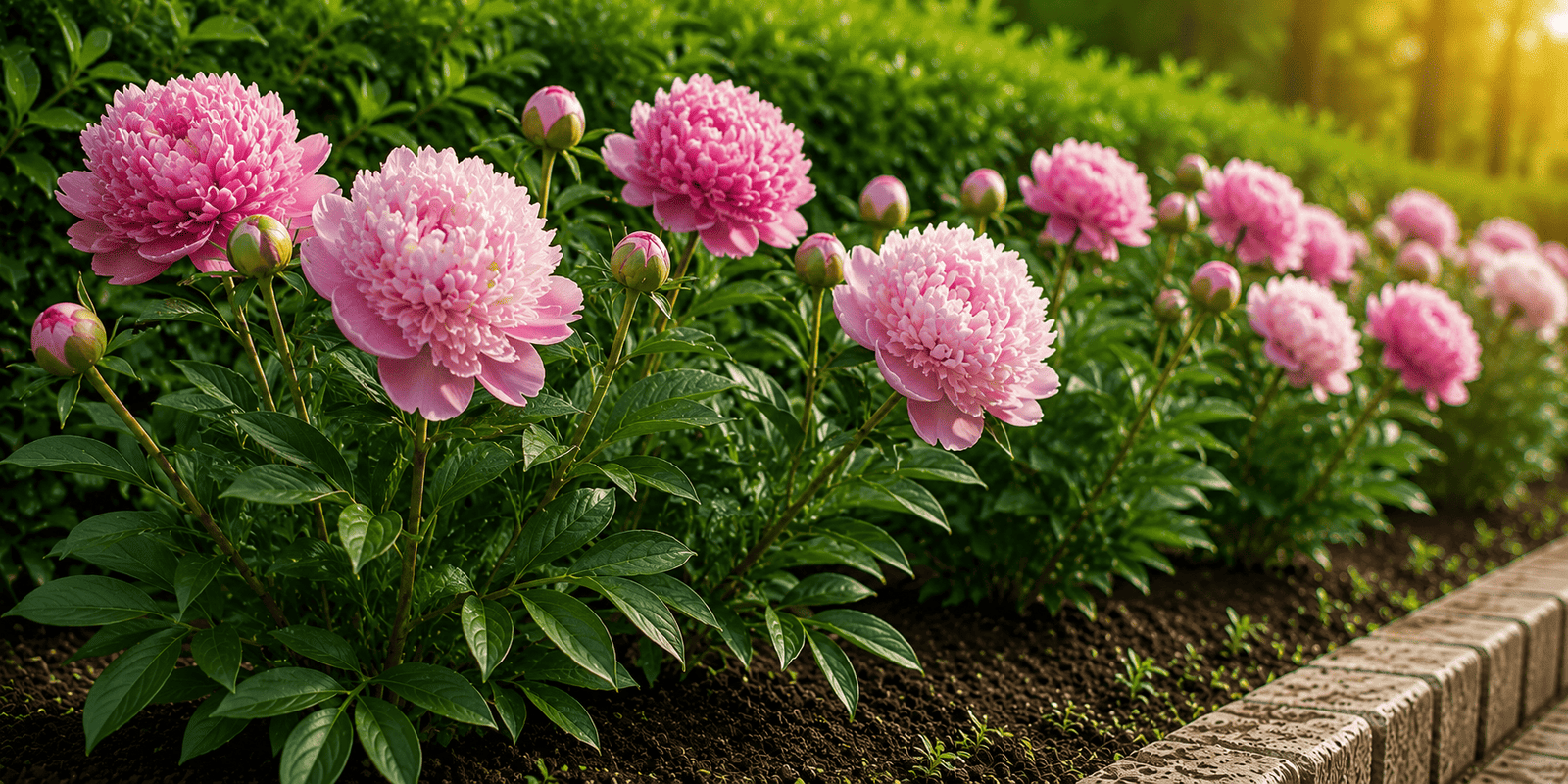
Peony garden display
Perennial Garden Display
  • Watering Guidelines: Requires consistent, deep watering during the spring growing season. Once established, they are moderately drought-tolerant but perform best with regular moisture.
  • Growth Conditions: Thrives in full sun (at least 6-8 hours daily). Requires rich, fertile, well-draining soil. Deep planting is a common mistake; ensure the "eyes" (buds) are planted no more than 2 inches below the soil surface.
  • Vulnerabilities: Susceptible to fungal diseases like Botrytis (gray mold) in damp, humid conditions. Provide ample space between plants to ensure good airflow and minimize foliage wetness.
  • Growth Habit: Herbaceous perennials that die back to the ground each winter, or long-lived woody "tree" peonies. Known for their sturdy, bushy growth that requires minimal structural support.
  • Root System: Develops a large, tuberous, and fleshy root system that serves as the plant's primary energy storage, allowing it to survive for decades.
  • Leaf Structure: Deeply divided, compound leaves with a glossy, dark green appearance, often featuring bronze or purple tints in early spring.
  • Foliage Detail: The foliage remains attractive throughout the summer even after the flowers have faded, providing a lush backdrop for other garden plants.
  • Bloom Lifespan: While individual blooms are ephemeral, a well-established plant can provide a multi-week display if different varieties are planted together.
  • Floral Morphology: Renowned for their spectacular, multi-petaled blossoms. Flower forms vary widely, including single, semi-double, and fully double styles, often heavily scented.
  • Stem Characteristics: Stems are upright and robust, supporting the heavy, complex blooms. As the season progresses, the stems become woody and durable.
SAFETY: Toxicity Warning

Toxic if Ingested: The entire peony plant (Paeonia) contains paeonol, a chemical compound that is toxic to pets. While generally regarded as less severe for humans, ingestion can cause significant discomfort.

To Humans & Children

Mildly toxic. Ingestion of any part of the plant, especially the roots, may lead to gastrointestinal distress, including vomiting and diarrhea, particularly in young children.

To Household Pets

Toxic to dogs, cats, and horses. Ingestion of the plant can cause vomiting, diarrhea, and depression in pets. Keep these plants well out of reach of curious animals.

Handling Protocol

While safe to handle for gardening, always wash your hands after pruning or dividing peony roots. Ensure the plant is placed in an area inaccessible to pets or toddlers who may be tempted to ingest the leaves or roots.


Peony garden
Toxic Ornamental

Small efforts save a dying plant.

Get instant botanical diagnostics, precise care timetables, and expert structural advice tailored to support your garden's health daily.

Download PlantDecoder App Now

Frequently Asked Questions

Common botanical queries and troubleshooting instructions for the Peony (Paeonia).

Why are my peony buds turning black and failing to open?
This is often a sign of Botrytis blight, a common fungal disease encouraged by cool, damp weather. Remove and dispose of the affected buds immediately and ensure the plant has adequate air circulation to help keep the foliage dry.
Why is my peony not blooming?
The most common reason is planting the peony too deep. The "eyes" (pink buds) on the roots should be no more than 1–2 inches below the soil surface. Other causes include lack of sunlight (they need at least 6 hours) or insufficient winter chilling.
Why are there ants on my peony buds?
Don't worry—this is normal! Ants are attracted to the sweet, sticky nectar produced by the buds. They do not harm the plant and, in fact, provide a small service by helping to keep other pests away. No intervention is necessary.
How often do I need to divide peonies?
Peonies do not like to be moved and can grow in the same spot for decades. Divide them only if they show signs of decline, the blooms become smaller, or you wish to propagate them. The best time for division is during the dormant season in early autumn.
Can I plant peonies in the shade?
Peonies require at least 6 hours of full sun to bloom reliably. While they may survive in partial shade, they will likely produce fewer, smaller flowers and may be more susceptible to fungal issues due to lingering moisture on the leaves.
How much water do peonies need?
Provide consistent moisture, especially during the spring when the plant is actively growing and forming buds. However, once the plant is established, it becomes moderately drought-tolerant. Always ensure the soil is well-draining to prevent root rot.
Are peonies safe for my pets?
No, peonies contain paeonol, which is toxic to dogs, cats, and horses. If ingested, it can cause gastrointestinal distress, including vomiting and diarrhea. It is best to keep these plants in areas your pets cannot reach.
Do peonies need support?
Many heavy-blooming herbaceous peonies benefit from support, such as peony hoops or cages. These help keep the large, fragrant flowers from drooping and touching the ground, especially after heavy spring rains.
Should I cut back the foliage in the fall?
For herbaceous peonies, yes. Once the foliage has died back and turned yellow or brown after the first frost, cut the stems down to a few inches above the ground and dispose of them to help prevent fungal spores from overwintering.
Why is my new peony blooming a different color than expected?
It is common for young, newly planted peonies to produce slightly different or less-developed blooms during their first one or two seasons. They often need a few years to establish their full character and bloom potential.