
Family: Cactaceae Lifespan: Long-lived Perennial

Bunny Ears Cactus

Opuntia microdasys
🌵 Desert Succulent ✨ Golden Glochids ⚠️ Handle with Care

History & Taxonomy
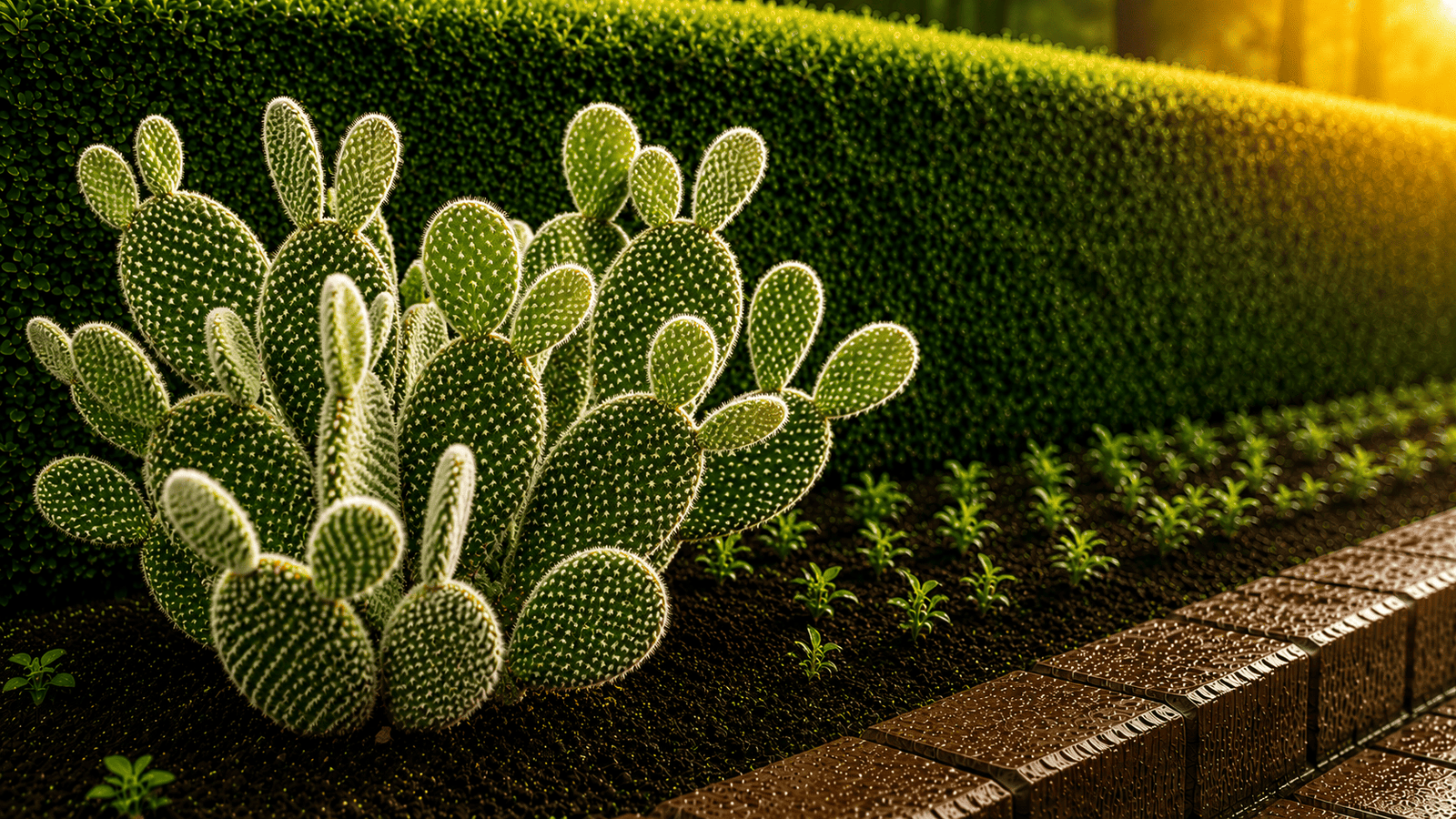
Native to northern and central Mexico, Opuntia microdasys—commonly known as the Bunny Ears Cactus or Polka-dot Cactus—belongs to the Cactaceae family and the large Opuntia genus (prickly pears). It was classified scientifically in the late 19th century. Rather than having traditional sharp, long spines, this distinctive species features velvety cushions of golden or white hair-like structures called glochids, which give it an endearing, rabbit-like silhouette that has made it a global favorite in succulent collections.

Botanical Culture & Distribution
Thriving naturally in arid and semi-desert environments, the Bunny Ears Cactus has adapted exceptionally well to modern container cultivation across the world. Culturally, it is celebrated for its low-maintenance resilience, architectural growth habit consisting of flat, oval pads, and occasional pale yellow cup-shaped flowers followed by edible red fruits in optimal conditions. While beloved for its charming appearance, it requires careful handling due to its tiny, barbed glochids, which easily detach upon contact.

Cultural & Practical Usage

Indoor & Patio Decor

The Bunny Ears Cactus is an exceptionally popular ornamental plant for sunny windowsills, tabletops, and rock gardens. Its compact, upright pads and charming rabbit-like silhouette add a whimsical, architectural element to desert-themed or modern minimalist interior designs.

Xeriscaping & Rock Gardens

Due to its high drought tolerance and love for intense sun, it is heavily utilized in arid region landscaping and xeriscaping. It thrives in low-water garden beds, requiring minimal irrigation once established and contributing to sustainable water-wise landscape designs.

Container Groupings

Because of its slow, controlled growth rate, the Bunny Ears Cactus pairs exceptionally well with other succulents in shallow decorative bowls and mixed dish gardens. Its velvety texture and distinct golden glochids provide a striking contrast against smooth, green succulents.

Pad Propagation

Propagation is straightforward and highly rewarding. Individual pads can be cleanly twisted off, allowed to dry and callus over for several days to prevent rotting, and then placed directly into dry cactus soil where they will quickly sprout roots and form new plants.

Bunny Ears Cactus display
Bunny Ears Cactus Specimen
  • Watering Guidelines: Allow the soil to dry out completely between waterings. Water sparingly during spring and summer, and reduce watering to a bare minimum during the winter dormancy period to prevent root rot.
  • Growth Conditions: Thrives in full, direct sunlight (at least 6 hours daily). Requires a specialized, highly porous cactus or succulent potting mix with exceptional drainage. Avoid high humidity environments.
  • Vulnerabilities: Extremely sensitive to overwatering and damp soil conditions. Highly vulnerable to mealybugs and scale insects. Protect from frost and freezing temperatures below 5°C (41°F).
  • Growth Habit: Small, upright, branching shrub-like succulent that grows in dense clumps composed of distinct flat, oval segments.
  • Root System: Shallow, fibrous root system that spreads horizontally to absorb surface moisture quickly from sandy desert soils.
  • Pad Structure: Elongated oval pads (cladodes) measuring 2 to 6 inches long, typically growing in pairs that resemble a rabbit's ears.
  • Foliage Detail: Covered in velvety green to grey-green skin. True leaves are absent, replaced entirely by modified succulent pads.
  • Glochids: Lacks traditional sharp spines; instead, features dense clusters of golden or white hair-like barbed bristles (glochids) that detach easily upon touch.
  • Floral Morphology: Produces cup-shaped, bright yellow flowers, typically only when mature and exposed to intense, direct outdoor sunlight.
  • Fruit & Seeds: Followed by spherical, reddish-purple edible fruits containing small seeds, though flowering and fruiting are rare when kept indoors.
SAFETY: Glochid & Handling Caution

Non-Toxic Yet Hazardous: While the Bunny Ears Cactus (Opuntia microdasys) is chemically non-toxic and pet-safe regarding ingestion, it features microscopic barbed bristles called glochids that require careful handling to avoid skin irritation.

To Humans & Children

Chemically non-toxic, but physical contact with glochids can cause severe skin irritation, itching, and microscopic splinters. Keep away from small children who might touch the velvety pads.

To Household Pets

Non-toxic if ingested according to the ASPCA, but the tiny barbed glochids can easily lodge in a pet's mouth, tongue, or paws if they brush against or chew the plant, causing significant discomfort.

Handling & Maintenance Safety

Always wear thick gardening gloves or use tongs when pruning or repotting. Never touch the pads with bare hands. Place the plant on an elevated shelf or display area safely out of reach of curious pets and toddlers.


Bunny Ears Cactus pads
Handle with Care

Small efforts save a dying plant.

Get instant botanical diagnostics, precise care timetables, and expert structural advice tailored to support your garden's health daily.

Download PlantDecoder App Now

Frequently Asked Questions

Common botanical queries and troubleshooting instructions for the Bunny Ears Cactus (Opuntia microdasys).

Why are the pads on my Bunny Ears Cactus turning yellow or mushy?
Yellow or mushy pads are a primary indicator of overwatering and root rot. Cacti store water in their pads, and excess moisture breaks down their tissues. Ensure your potting mix is fast-draining and let the soil dry out completely between waterings.
How do I safely handle glochids if I get them on my skin?
Bunny Ears Cacti feature microscopic, barbed bristles called glochids instead of large spines. If you touch them, avoid rubbing the area. Use strong adhesive tape, a glue mask, or tweezers under good lighting to pull the tiny bristles out of your skin.
Why is my cactus leaning or stretching out of shape?
Leaning or elongated, pale growth (etiolation) means the plant is not getting enough light. Bunny Ears Cacti require intense, direct sunlight to maintain their compact, symmetrical shape. Move it to a south or west-facing window immediately.
Is the Bunny Ears Cactus toxic to cats and dogs?
According to the ASPCA, Opuntia microdasys is chemically non-toxic upon ingestion. However, its microscopic glochids can easily lodge in a pet's mouth, tongue, or paws if they brush against or chew the plant, causing severe mechanical irritation.
What is the best type of soil for a Bunny Ears Cactus?
They require a specialized, highly porous cactus and succulent mix. Standard potting soil retains too much moisture and will suffocate the roots. Mixing in extra perlite, pumice, or coarse sand will ensure proper drainage.
How often should I water my Bunny Ears Cactus?
Water thoroughly only when the soil is 100% dry. During the hot spring and summer months, this might be every 2 to 3 weeks. In the winter dormancy period, cut back watering to once a month or less.
Why are white fuzzy spots appearing on the pads?
White fuzzy patches can either be the plant's normal areoles (where glochids emerge) or an infestation of mealybugs. Inspect closely: if the fuzz moves, feels sticky, or smears when touched, treat the plant immediately with rubbing alcohol or insecticidal soap.
Can I propagate a Bunny Ears Cactus from a single pad?
Yes! Gently twist off a healthy pad using tongs or thick gloves, let the cut end callus over in a dry, shaded spot for a few days, and then plant it upright in dry cactus soil. Roots will form within a few weeks without needing frequent watering.
Does the Bunny Ears Cactus flower indoors?
Indoor flowering is rare. While mature plants produce cup-shaped yellow flowers followed by red fruits in the wild, indoor environments usually lack the intense, direct thermal radiation and seasonal temperature variations required to trigger blooms.
When should I repot my Bunny Ears Cactus?
Repotting is best done in early spring before active growth starts. Because they have relatively shallow root systems and prefer to be slightly root-bound, only bump up to a container that is marginally larger than the previous one, and always wear protective gear.