
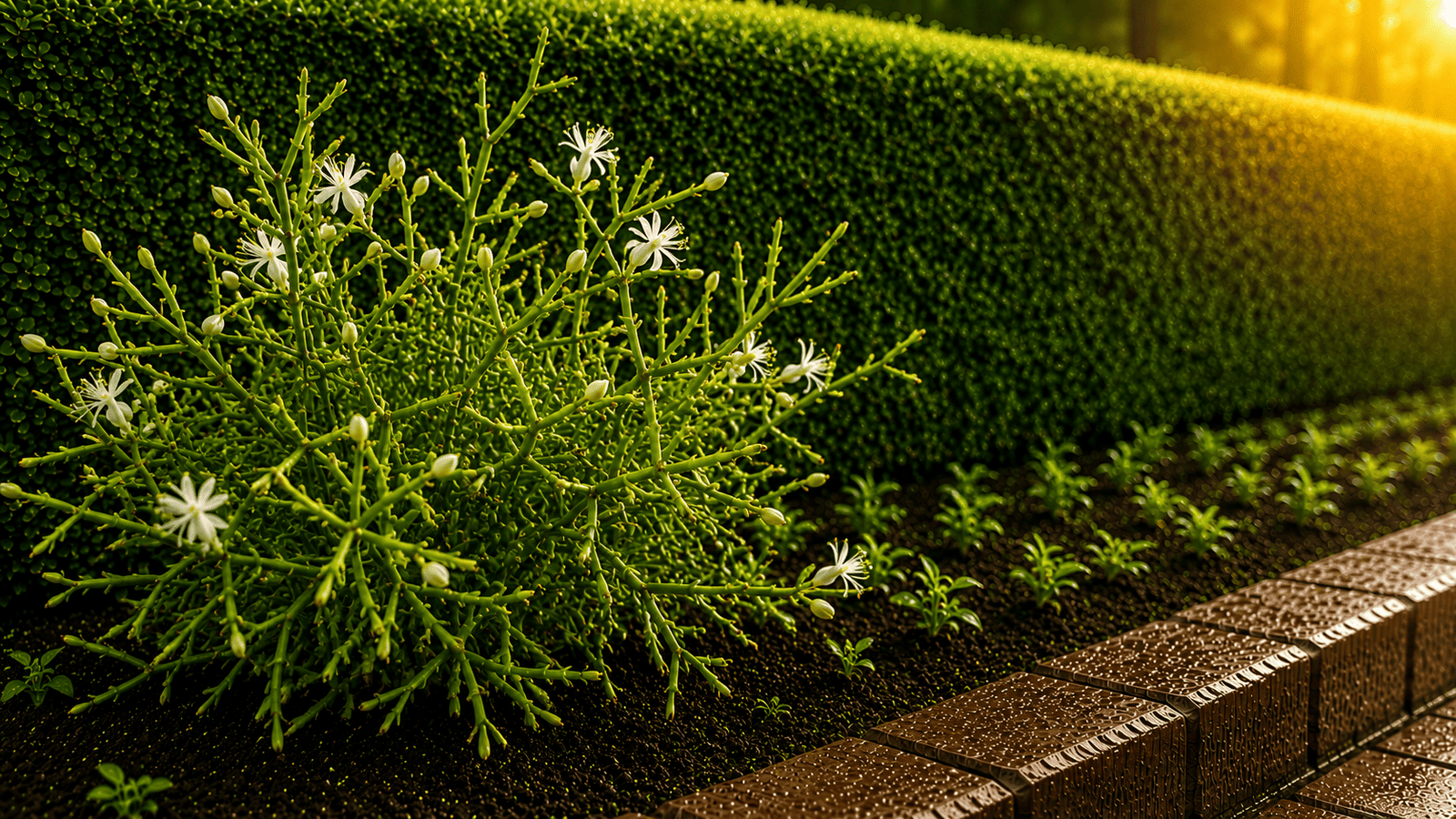
Family: Cactaceae Lifespan: Long-lived Perennial

Mistletoe Cactus

Rhipsalis baccifera
🌿 Epiphytic Jungle Cactus ☁️ Cascading Stems ✅ Pet-Friendly

History & Taxonomy
Native to Central and South America, tropical Africa, and parts of Asia, Rhipsalis baccifera—commonly known as the Mistletoe Cactus—belongs to the Cactaceae family. Uniquely, it is the only cactus species naturally occurring in the Old World (Africa, Madagascar, and Sri Lanka), a botanical mystery long debated by scientists. As an epiphyte, it grows harmlessly upon the branches of rainforest trees, utilizing thin, cascading cylindrical stems and small aerial roots to absorb moisture and nutrients from humid jungle air.

Botanical Culture & Distribution
Thriving in the dappled shade and high humidity of tropical canopies, the Mistletoe Cactus has become a beloved houseplant valued for its lush, trailing green stems that create a stunning curtain-like effect in hanging baskets. Unlike desert cacti, it lacks traditional harsh spines and prefers indirect light and consistent moisture. When mature, it produces tiny white flowers followed by translucent, mistletoe-like white or pinkish berries that attract pollinators in their native habitats.

Cultural & Practical Usage

Hanging & Architectural Decor

The Mistletoe Cactus is heavily favored in interior plant design for its unique, cascading cylindrical stems. It creates a lush, curtain-like aesthetic when placed in elevated hanging baskets, macramé plant hangers, or high bookshelves.

Ecological & Bird Attraction

In its native tropical habitats, the translucent berries produced after flowering serve as a vital food source for arboreal birds and small wildlife. These birds play a crucial role in seed dispersal across the rainforest canopy.

Minimalist & Modern Interiors

Its fine-textured, spineless green stems offer a softer, more delicate visual appeal compared to traditional desert cacti. This makes it an ideal complement to modern minimalist, bohemian, or jungle-themed interior spaces.

Stem Cuttings Propagation

Extremely easy to propagate via stem cuttings. Simply snip a healthy trailing segment, let the cut end callus over for a day or two, and press it lightly into moist, well-draining potting soil where it will root rapidly.

Mistletoe Cactus cascading display
Mistletoe Cactus Cascading Display
  • Watering Guidelines: Keep the soil moderately moist during the spring and summer growing seasons. Allow the top inch of soil to dry out between waterings. Avoid letting it dry out completely for prolonged periods, but never leave it sitting in standing water.
  • Growth Conditions: Thrives in bright, indirect light or filtered morning sun. Protect from intense, direct midday sun which can scorch its delicate stems. Requires loose, highly porous, organic-rich epiphytic or orchid potting mix with exceptional drainage.
  • Vulnerabilities: Prone to root and stem rot if overwatered or planted in heavy, compacted soil. Highly sensitive to frost and cold drafts below 10°C (50°F), which can cause limpness and structural collapse.
  • Growth Habit: Epiphytic, cascading perennial succulent featuring long, highly branched, pendulous stems that drape gracefully downward.
  • Root System: Shallow, delicate root system adapted for anchoring to tree bark rather than growing deep in subterranean soil.
  • Stem Structure: Thin, cylindrical, segmented green stems that resemble strings of mistletoe or rice grains, completely lacking traditional sharp spines.
  • Foliage Detail: True leaves are generally absent or reduced to microscopic scales; photosynthesis is carried out primarily by the green succulent stems.
  • Floral Morphology: Produces tiny, inconspicuous white or pale yellow flowers that emerge directly along the joints of mature stems.
  • Fruit & Seeds: Followed by small, translucent, sticky white or pinkish berries reminiscent of traditional mistletoe fruit, containing tiny seeds.
SAFETY: Non-Toxic Profile & Handling

Completely Safe & Pet-Friendly: The Mistletoe Cactus (Rhipsalis baccifera) is entirely non-toxic. It features spineless, trailing green stems that pose no physical puncture hazards or toxic risks to humans or animals.

To Humans & Children

Completely safe upon touch or accidental ingestion. Its spineless cylindrical stems present no risk of skin punctures or chemical irritation, making it ideal for family-friendly homes.

To Household Pets

Classified as non-toxic to cats, dogs, and horses by the ASPCA. While ingestion of large amounts of any unfamiliar fibrous plant material may cause mild, temporary stomach upset, it contains no harmful chemical compounds.

Maintenance & Handling Safety

No special protective gear or gloves are required when pruning, repotting, or handling trailing stems. Enjoy placing this decorative jungle epiphyte safely in hanging baskets or accessible shelves throughout your home.


Mistletoe Cactus display
Pet-Friendly Epiphyte

Small efforts save a dying plant.

Get instant botanical diagnostics, precise care timetables, and expert structural advice tailored to support your garden's health daily.

Download PlantDecoder App Now

Frequently Asked Questions

Common botanical queries and troubleshooting instructions for the Mistletoe Cactus (Rhipsalis baccifera).

Why are the stems of my Mistletoe Cactus turning mushy or translucent?
Mushy or translucent stems are a classic sign of overwatering and root rot. As a jungle epiphyte, it needs an airy, fast-draining medium and requires its soil to dry out partially between waterings. Prune away any damaged stems immediately.
Why are the trailing stems shriveling or turning brown at the tips?
Shriveled or crispy tips typically indicate severe underwatering or extremely dry indoor air. Ensure you are providing consistent moisture and consider grouping it with other plants or placing it near a humidifier to mimic its native rainforest canopy environment.
Why is my Mistletoe Cactus dropping small stem segments?
Segment dropping is usually triggered by sudden environmental stress, such as a drastic temperature drop, a cold draft, or a sudden shift from over-dry to waterlogged soil conditions. Keep it in a stable location away from AC vents and heaters.
Is the Mistletoe Cactus toxic to cats and dogs?
No, the Mistletoe Cactus is completely non-toxic to cats, dogs, and horses according to the ASPCA. It features spineless, soft stems, making it one of the safest and most pet-friendly trailing plants for your home.
What type of soil is best for a Mistletoe Cactus?
They thrive best in a chunky, highly porous epiphytic or orchid potting mix rather than heavy garden soil. A blend containing orchid bark, perlite, and coco coir mimics their natural tree-dwelling habitat and prevents root suffocation.
How often should I water my Mistletoe Cactus?
Water thoroughly when the top inch of the soil feels dry to the touch. During active spring and summer growth, this usually translates to watering every week or two, while winter watering should be reduced as growth slows down.
Will the Mistletoe Cactus produce flowers and berries indoors?
Yes, but it requires mature plants and optimal care. Indoors, they can produce tiny white flowers followed by translucent white berries, though lack of natural pollinators and lower indoor light levels can make fruiting less common.
How can I propagate my Mistletoe Cactus?
Propagation is exceptionally easy. Simply snip a healthy trailing stem cutting, let the cut end callus over for a day, and press it lightly into moist, well-draining potting soil or water. Roots and new growth will emerge rapidly within weeks.
Does the Mistletoe Cactus need direct sunlight?
No, intense direct sunlight can easily bleach or scorch their delicate green stems. They prefer bright, indirect light or filtered morning sun, perfectly mimicking the dappled canopy light of tropical rainforests.
When should I repot my Mistletoe Cactus?
Repotting is best performed in early spring right before the active growing season starts. Since they have relatively shallow root systems, only bump up to a slightly larger container when roots completely fill the current pot.