Velvet Calathea


- Watering Guidelines: Keep the soil consistently moist but never waterlogged. Water thoroughly when the top half-inch of soil feels dry. Use distilled, filtered, or rainwater, as tap water minerals cause brown leaf tips.
- Growth Conditions: Thrives in bright, indirect light. Direct sunlight will scorch and fade its velvety patterns. Demands rich, highly organic, moisture-retentive yet well-draining soil and high ambient humidity (60% or higher).
- Vulnerabilities: Extremely sensitive to low humidity, underwatering, and cold drafts below 15°C (60°F), which cause crispy leaf edges, curling, and leaf drop. Susceptible to spider mites if air circulation is poor.
- Growth Habit: Upright, clump-forming perennial tropical houseplant that develops a dense, lush cluster of broad foliage emerging from central rhizomes.
- Root System: Shallow, fibrous root system featuring small rhizomes and water-storing tubers that require a well-aerated pot.
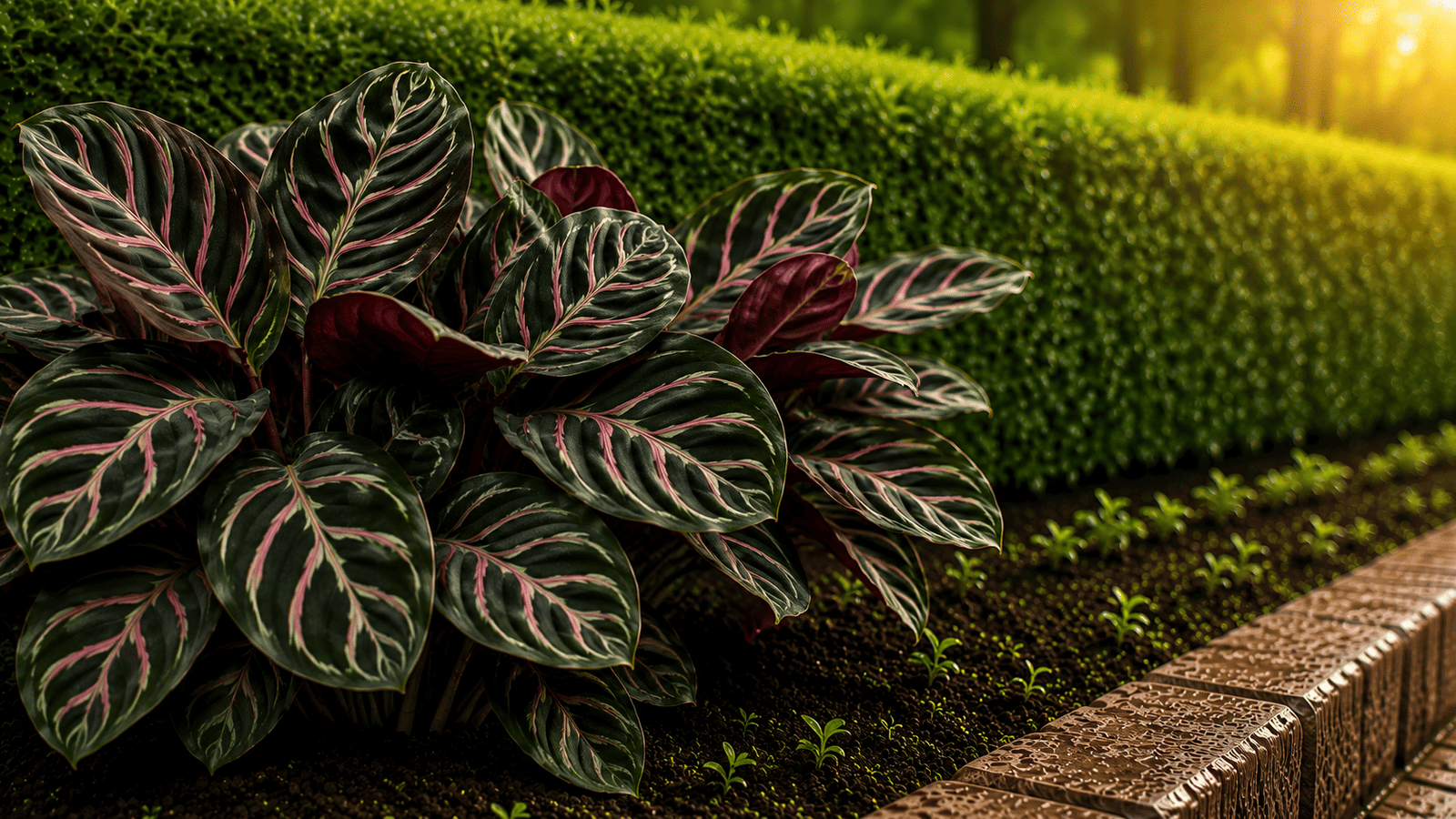
- Leaf Structure: Elongated, velvety lance-shaped leaves featuring a distinctive quilted or corrugated surface texture with wavy margins.
- Foliage Detail: Upper leaf surface exhibits rich gradient shades of velvety emerald and olive green with pale green feather patterns; undersides display a striking deep burgundy-purple tone.
- Nyctinastic Movement: Displays active circadian leaf movement ("prayer plant" behavior), folding its leaves upward vertically at night and flattening them out during daylight hours.
- Bloom Characteristics: Mature plants can produce unusual, cone-shaped inflorescences near the base featuring velvety white or yellow-orange bracts nestled low among the foliage.
- Stem Characteristics: Slender, flexible green petioles that attach the velvety leaves directly to the underground rhizomatous base.
Generally Safe & Non-Toxic: The Velvet Calathea (Goeppertia warszewiczii) is completely non-toxic to humans, cats, and dogs. It contains no hazardous saps, toxins, or chemical irritants, making it entirely safe for domestic home environments.
To Humans & Infants
Completely safe upon touch or accidental contact. No specialized protective gear or handling precautions are necessary when pruning or caring for the velvet foliage.
To Household Pets
Classified as completely non-toxic to cats, dogs, and horses by the ASPCA. Ingestion of occasional leaves is harmless, though eating large amounts of fibrous plant material may cause mild stomach upset.
Child & Pet-Friendly Placement
Safe to display in any family-friendly or pet-friendly interior space. Placing the pot on an elevated plant stand or tabletop keeps the lush velvet foliage secure and tidy from curious pets.