
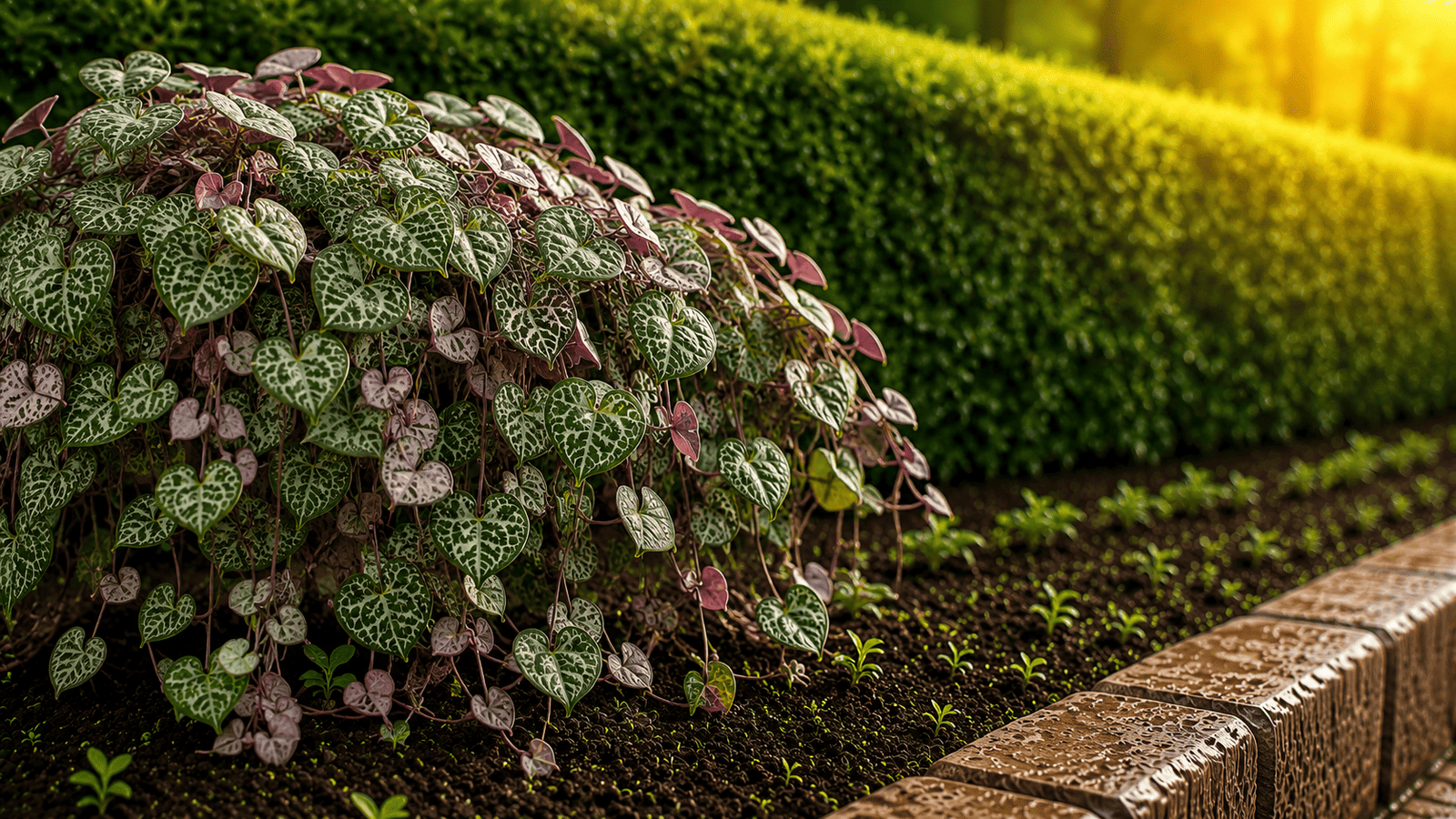
String of Hearts


- Watering Guidelines: Allow the soil to dry out completely between waterings using the soak-and-dry method. Because its tubers and succulent leaves store ample moisture, overwatering easily leads to root rot.
- Growth Conditions: Thrives in bright, indirect light with a few hours of gentle morning sun to maintain deep leaf coloration and variegation. Demands a very loose, fast-draining cactus and succulent potting mix.
- Vulnerabilities: Highly sensitive to soggy, compacted soil and frost. Exposure to cold drafts or temperatures below 10°C (50°F) will cause severe leaf drop and stem collapse.
- Growth Habit: Delicate, trailing succulent vine with thin, wiry purple-tinted stems that cascade gracefully over container edges.
- Root System: Shallow root system supported by underground tubers and specialized aerial tubers that form along the vine nodes.
- Leaf Structure: Small, opposite, thick succulent leaves shaped like tiny hearts, featuring a grayish-green marbled upper surface and deep purple undersides.
- Foliage Detail: Smooth, fleshy, and rubbery texture designed to minimize moisture loss in arid environments; variegated forms display lovely pink and cream tones.
- Bloom Characteristics: Produces fascinating, flashlight-shaped tubular flowers resembling miniature purple lanterns or tiny antennas with fused tips.
- Stem Characteristics: Incredibly thin, flexible, purple-red wiry stems that can stretch several feet long, occasionally developing bulbous aerial tubers at the nodes.
- Growth Rate: Moderate to fast grower under optimal bright indoor conditions, quickly filling out hanging baskets and high-shelf displays.
Generally Safe & Non-Toxic: The String of Hearts (Ceropegia woodii) is completely non-toxic to humans, cats, and dogs. It contains no hazardous saps or chemical irritants, making it entirely safe for domestic home environments.
To Humans & Infants
Completely safe upon touch or accidental contact. No specialized protective gear or handling precautions are necessary when pruning or propagating the trailing vines.
To Household Pets
Classified as completely non-toxic to cats, dogs, and horses by the ASPCA. Ingestion of occasional fallen leaves is harmless, though eating large amounts of fibrous plant material may cause mild stomach upset.
Child & Pet-Friendly Placement
Safe to display in any family-friendly or pet-friendly interior space. Hanging baskets or high shelves keep the delicate cascading vines out of reach of curious paws and active toddlers.