
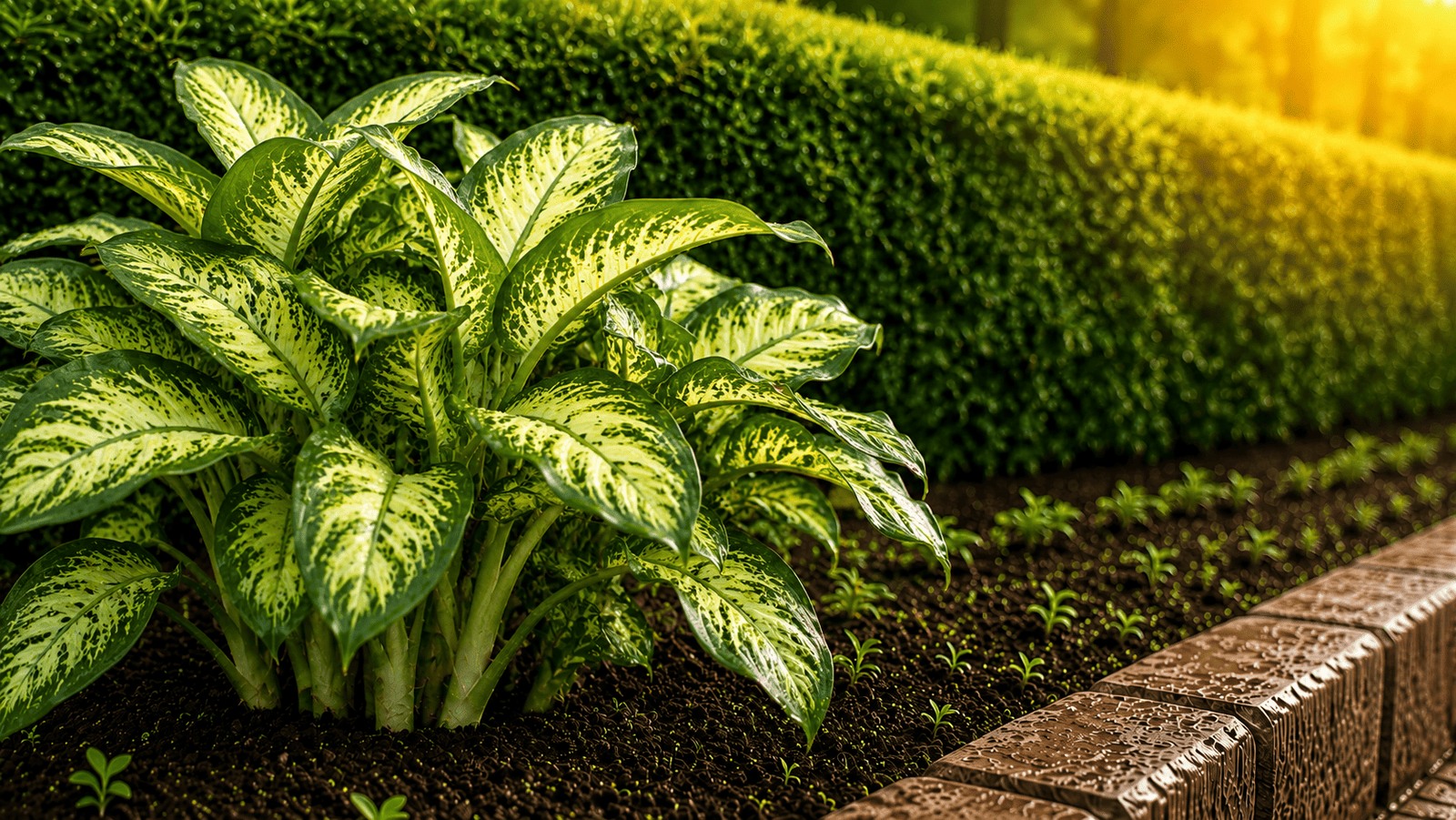
Family: Araceae (Arum Family) Lifespan: Tropical Evergreen Perennial

Dieffenbachia

Dieffenbachia seguine
🍃 Variegated Foliage 🏠 Indoor Houseplant ⚠️ High Oxalate Toxicity

History & Taxonomy
Native to the tropical rainforests of Central and South America, the genus Dieffenbachia—commonly known as Dumb Cane—belongs to the arum family (Araceae). It was named in honor of Ernst Dieffenbach, a 19th-century German physician and botanist. Celebrated worldwide for its lush, dramatically variegated foliage featuring striking patterns of white, cream, and green, it has become a staple interior houseplant prized for its ability to brighten indoor spaces with vibrant tropical aesthetics.

Botanical Culture & Distribution
Thriving naturally as an evergreen perennial under the dense, shaded canopy of tropical rainforests, Dieffenbachia adapts remarkably well to indoor home and office environments with filtered light. Culturally, it earned its common moniker "Dumb Cane" due to the historical recognition that sap ingestion causes intense temporary swelling of the tongue and vocal cords, leading to temporary speechlessness. Today, it remains an iconic interior décor specimen valued for its architectural form and low-maintenance indoor adaptability.

Cultural & Practical Usage

Indoor Décor & Architectural Foliage

Widely prized as a striking interior houseplant, office specimen, or tropical patio accent. Its bold, richly variegated leaves featuring creamy white and green patterns provide a brilliant aesthetic contrast for modern interior spaces.

Indoor Air Quality & Biophilic Value

Valued for its lush canopy foliage that enhances biophilic connection and contributes positively to indoor environments by helping filter airborne volatile organic compounds (VOCs).

Botanical & Cultural History

Famous historically for its common moniker "Dumb Cane," reflecting the intense temporary vocal cord and tongue swelling caused by its toxic sap—a historical deterrent and cautionary botanical curiosity.

Cane Cuttings Propagation

Successfully propagated through stem cane cuttings or tip cuttings during active spring growth. Allowing cut sections to callous slightly before planting in moist, well-draining soil ensures high success rates.

Dieffenbachia Indoor Display
Dieffenbachia Foliage Display
  • Watering Guidelines: Allow the top 2 inches of soil to dry out completely between watering sessions. Avoid soggy soil or standing water to prevent root rot, while ensuring consistent moisture during active growth.
  • Growth Conditions: Thrives in bright, indirect sunlight. Direct scorching sun will bleach and burn its variegated leaves. Prefers warm indoor temperatures between 18°C and 27°C (65°F to 80°F) and high humidity.
  • Vulnerabilities: Sensitive to cold drafts, sudden temperature drops, and overwatering. Susceptible to common indoor pests like spider mites, mealybugs, and scale insects.
  • Growth Habit: Upright, single or multi-stemmed evergreen herbaceous perennial featuring thick, fleshy, cane-like stems.
  • Root System: Shallow, fibrous root system that prefers slightly tight, well-draining container boundaries.
  • Leaf Structure: Large, alternate, oblong to elliptic leaves attached by sturdy sheathing petioles along the main stem.
  • Foliage Detail: Richly variegated leaves displaying striking patterns of creamy white, ivory, and shades of deep emerald green, giving them a vibrant ornamental appearance.
  • Bloom Lifespan: Mature indoor specimens occasionally produce a greenish-white calla-like spadix inflorescence that persists for a short duration during summer.
  • Floral Morphology: Inconspicuous flowers enclosed within a modified pale green leaf spathe, typical of the Araceae family.
  • Stem Characteristics: Thick, succulent, jointed green canes that exude a milky, toxic sap containing calcium oxalate crystals when cut or broken.
SAFETY: Calcium Oxalate & Sap Toxicity Warning

Toxicity Profile: Dieffenbachia seguine contains needle-like insoluble calcium oxalate crystals (raphides) in all its tissues. Ingestion or direct sap contact causes intense localized irritation, earning it the historical moniker "Dumb Cane."

To Humans & Children

Chewing or swallowing leaves causes immediate oral pain, intense burning, swelling of the tongue and vocal cords, and temporary speech impairment. Keep out of reach of children.

To Household Pets

Highly toxic to cats and dogs. Ingestion leads to severe burning of the mouth, excessive drooling, vomiting, and difficulty swallowing due to mechanical tissue irritation from oxalate crystals.

Handling & Placement Precautions

Always wear gloves and wash hands thoroughly after pruning or propagating to prevent accidental sap transfer to eyes or skin. Position potted plants on elevated stands out of reach of pets and young children.


Dieffenbachia variegated foliage display
Oxalate Crystal Caution

Small efforts save a dying plant.

Get instant botanical diagnostics, precise care timetables, and expert structural advice tailored to support your garden's health daily.

Download PlantDecoder App Now

Frequently Asked Questions

Common botanical queries and troubleshooting instructions for the Dieffenbachia (Dumb Cane).

Why are the leaves on my Dieffenbachia turning yellow?
Yellowing leaves are usually caused by overwatering, poor drainage, or natural aging of lower foliage. Let the top couple of inches of soil dry out completely between waterings to prevent root stress.
Why are the tips of my Dieffenbachia leaves turning brown?
Brown leaf tips typically stem from low indoor humidity, underwatering, or a buildup of mineral salts from tap water. Increase ambient humidity or use filtered water when irrigating.
Can I grow a Dieffenbachia successfully indoors?
Yes, Dieffenbachia seguine is an exceptional and widely grown indoor houseplant. It adapts wonderfully to indoor spaces when placed in bright, indirect sunlight.
How tall does a Dieffenbachia grow indoors?
When grown in indoor containers, they typically reach mature heights of 3 to 6 feet. You can easily manage their height and encourage fuller growth by pruning leggy stems.
Can Dieffenbachia plants survive freezing temperatures?
No. They are tender tropical perennials (USDA Zones 10–12) and are intensely sensitive to cold. Frost or temperatures dropping below 10°C (50°F) will cause severe damage or death.
How often should I water my Dieffenbachia?
Water thoroughly whenever the top 2 inches of soil feel dry to the touch. Reduce watering frequency during winter months when growth slows down.
Does Dieffenbachia prefer direct sun or shade?
They thrive best in bright, indirect sunlight. Direct, harsh sunlight will easily scorch, bleach, and burn their delicate variegated foliage.
What pests commonly attack Dieffenbachia plants?
Common indoor pests include spider mites, mealybugs, and scale insects. Regularly wipe down the large leaves and treat any outbreaks promptly with insecticidal soap or neem oil.
Is the Dieffenbachia toxic to pets and children?
Yes. All parts contain sharp calcium oxalate crystals, making it highly toxic to cats, dogs, and humans if ingested, causing intense burning, oral swelling, and temporary speech disruption.
When is the best time to propagate a Dieffenbachia?
The optimal time for propagation is in spring or early summer during its active growing phase, utilizing healthy stem cane cuttings or tip cuttings.