
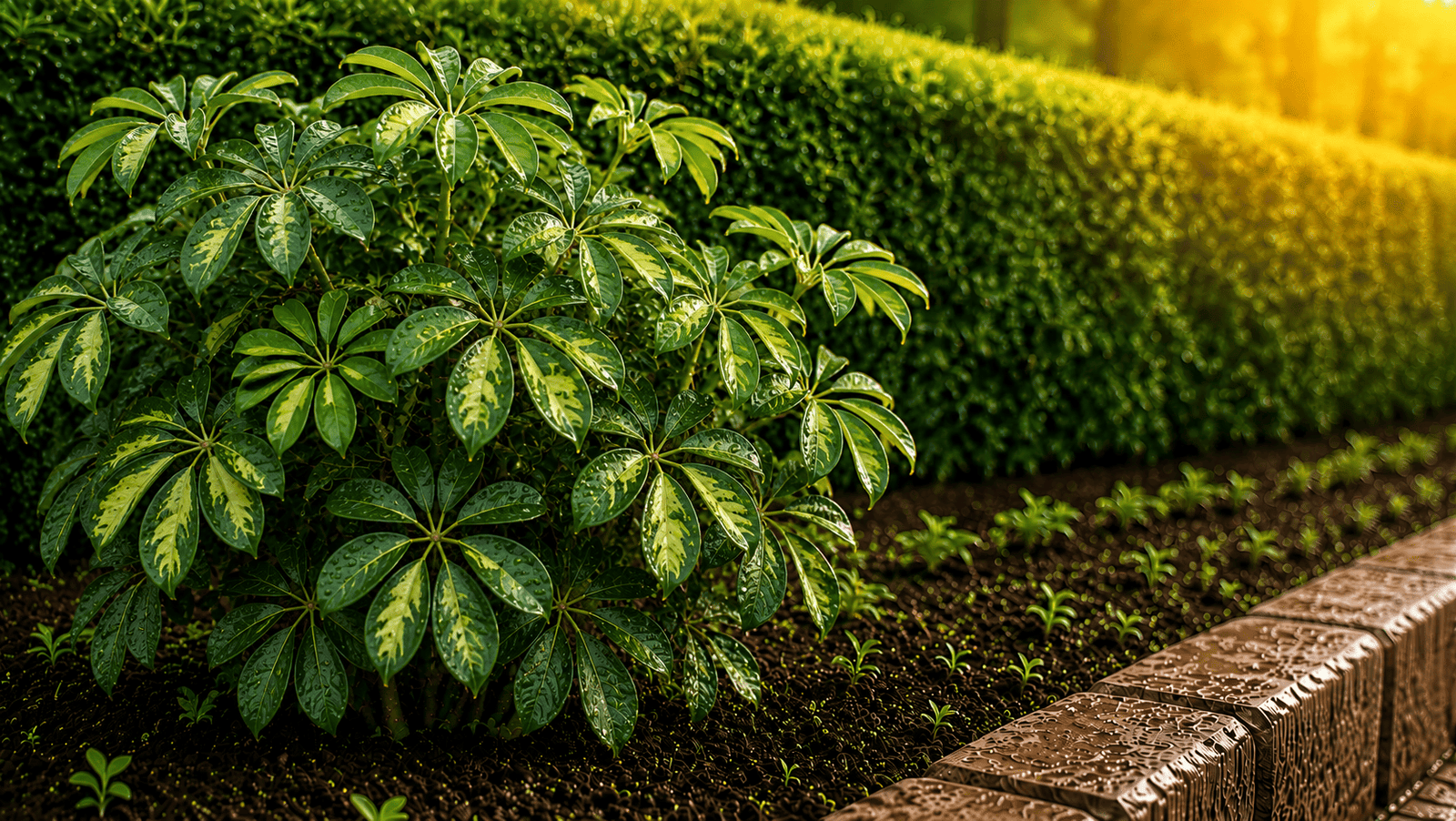
Family: Araliaceae (Ginseng Family) Lifespan: Woody Evergreen Perennial

Umbrella Plant

Schefflera actinophylla
☂️ Palmate Foliage 🌿 Indoor Staple ⚠️ Mild Toxicity

History & Taxonomy
Native to the rainforests of Australia and New Guinea, the Umbrella Plant (Schefflera actinophylla)—also commonly known as the Octopus Tree or Queensland Umbrella Tree—belongs to the ginseng family (Araliaceae). It was first formally described by the Austrian botanist Stephan Endlicher in the mid-19th century. Characterized by its striking compound leaves radiating outward from a central point like the ribs of an umbrella, it has become one of the most popular and resilient tropical foliage plants used in interior landscaping worldwide.

Botanical Culture & Distribution
Thriving naturally as a large evergreen tree or multi-stemmed epiphyte in tropical rainforests and warm coastal regions, Schefflera actinophylla grows exceptionally vigorously in frost-free climates, occasionally producing dramatic, massive red flower spikes that attract nectar-feeding birds. When cultivated indoors, it adapts remarkably well to container living, making it a beloved staple for homes, offices, and atriums seeking lush, tropical green canopy cover and easy maintenance.

Cultural & Practical Usage

Indoor Foliage & Interior Landscaping

Widely utilized as an exceptional indoor houseplant, office specimen, or patio tree. Its glossy, umbrella-like compound leaves add a lush, tropical architectural element to contemporary interior spaces.

Air Purification & Climate Value

Known for its robust foliage canopy, Schefflera actinophylla helps filter indoor air pollutants and increases ambient humidity, making it a functional addition to living areas and work spaces.

Tropical & Garden Specimen

In frost-free tropical climates, it serves as a grand standalone landscape tree or privacy screen. Its large, nectar-rich red flower clusters act as a vital food source for native birds and pollinators.

Stem & Air Layering Propagation

Most successfully propagated through stem cuttings or air layering during the active spring and summer growing seasons. Utilizing rooting hormone and providing warm, humid conditions ensures high success rates.

Umbrella Plant Indoor Display
Umbrella Plant Canopy Display
  • Watering Guidelines: Allow the top 2 inches of soil to dry out completely between waterings. Water thoroughly until it drains out the bottom, but avoid soggy soil to prevent root rot.
  • Growth Conditions: Thrives in bright, indirect sunlight. Prefers well-draining, organically rich potting mixes and temperatures between 16°C and 27°C (60°F to 80°F). Protect from cold drafts.
  • Vulnerabilities: Prone to root rot if overwatered. Susceptible to indoor sap-sucking pests like spider mites, mealybugs, and scale insects, especially in dry indoor winter air.
  • Growth Habit: Upright, woody evergreen shrub or small tree featuring a single or multi-stemmed trunk with a lush, spreading umbrella-like canopy.
  • Root System: Strong, spreading root system that adapts well to container boundaries while requiring adequate pot depth as the plant matures.
  • Leaf Structure: Palmate compound leaves featuring 7 to 16 glossy, oval leaflets radiating outward from a central point like the ribs of an open umbrella.
  • Foliage Detail: Smooth, leathery, dark emerald green leaves that provide a striking, tropical architectural appearance.
  • Bloom Lifespan: Mature outdoor specimens occasionally produce umbrella-like clusters of small red or pink flowers followed by small dark fruits, though indoor plants rarely flower.
  • Floral Morphology: Distinctive terminal panicles consisting of showy, tentacle-like spikes bearing small, radially symmetrical flowers and stamens.
  • Stem Characteristics: Smooth, light gray-brown woody stems and branches that branch outward to form a dense canopy structure.
SAFETY: Calcium Oxalate & Toxicity Warning

Toxicity Profile: The Umbrella Plant (Schefflera actinophylla) contains insoluble calcium oxalate crystals throughout its tissues, which can cause intense irritation and discomfort if ingested or handled improperly.

To Humans & Children

Ingesting leaves or stems causes immediate oral pain, burning sensation of the mouth and tongue, excessive drooling, and localized swelling. Keep out of reach of young children.

To Household Pets

Toxic to cats and dogs. Ingestion leads to intense oral irritation, vomiting, difficulty swallowing, and excessive drooling due to the sharp needle-like oxalate crystals piercing tissue.

Handling & Placement Precautions

Place potted umbrella plants on elevated plant stands or shelves out of reach of curious cats, dogs, and toddlers. Wear gloves when pruning to avoid skin contact with plant sap.


Umbrella plant foliage display
Oxalate Toxicity Precaution

Small efforts save a dying plant.

Get instant botanical diagnostics, precise care timetables, and expert structural advice tailored to support your garden's health daily.

Download PlantDecoder App Now

Frequently Asked Questions

Common botanical queries and troubleshooting instructions for the Umbrella Plant (Schefflera actinophylla).

Why are the leaves on my Umbrella Plant turning yellow and dropping?
Widespread leaf yellowing and dropping are typically caused by overwatering, poor soil drainage, or sudden drafts. Allow the top couple of inches of soil to dry out completely between watering sessions.
Why is my Umbrella Plant dropping lower, healthy-looking leaves?
Lower leaf drop can be a natural aging process as the plant grows taller and sheds older foliage, but it can also be triggered by sudden environmental changes, insufficient light, or underwatering.
Can I grow an Umbrella Plant successfully indoors?
Yes, Schefflera actinophylla is a widely beloved indoor houseplant. It thrives exceptionally well when placed in bright, indirect sunlight and protected from cold drafts or heating vents.
How tall will an Umbrella Plant grow indoors?
When grown indoors in containers, they typically mature to a height of 6 to 10 feet. You can easily control their vertical growth and encourage bushier branching by pruning the top stems regularly.
Can Umbrella Plants survive freezing outdoor temperatures?
No. They are tender tropical trees (USDA Zones 10–12) and are highly sensitive to frost. Exposure to freezing temperatures will cause severe structural damage or plant death.
How often should I water my Umbrella Plant?
Water deeply whenever the top 2 inches of soil feel dry. Reduce watering frequency during the slower winter months, and always ensure your pot has adequate drainage holes to prevent root rot.
Does the Umbrella Plant prefer bright sun or shade?
They prefer bright, indirect sunlight. While they can tolerate lower light conditions, intense, scorching direct sun can burn and bleach their glossy, umbrella-like leaves.
What pests commonly attack Umbrella Plants?
Indoor plants can occasionally be targeted by sap-sucking pests such as spider mites, mealybugs, and scale insects. Inspect foliage regularly and treat outbreaks promptly with insecticidal soap or neem oil.
Is the Umbrella Plant toxic to household pets and children?
Yes. Schefflera actinophylla contains insoluble calcium oxalate crystals, making it toxic to cats, dogs, and humans if ingested, leading to immediate oral irritation, burning, and excessive drooling.
When and how should I prune my Umbrella Plant?
The best time to prune is in spring or early summer during its active growth phase. Trim back leggy stems above a leaf node to promote a denser, multi-branched canopy structure.