
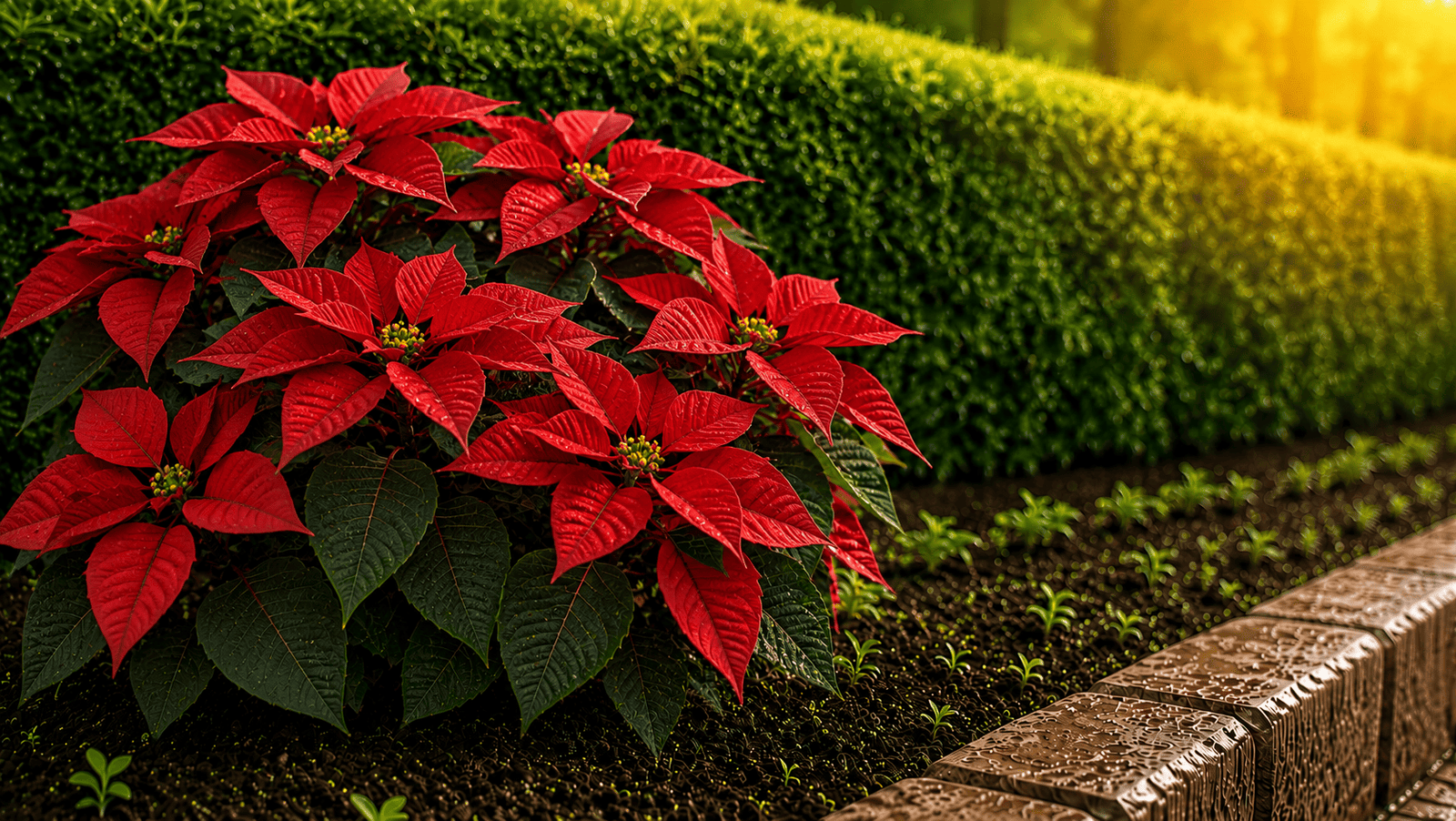
Family: Euphorbiaceae (Spurge Family) Lifespan: Perennial Woody Shrub

Poinsettia

Euphorbia pulcherrima
⭐ Festive Bracts 🌿 Holiday Staple ⚠️ Mildly Toxic

History & Taxonomy
Native to Central America particularly specific regions of southern Mexico and Guatemala the Poinsettia (Euphorbia pulcherrima) belongs to the spurge family (Euphorbiaceae). It was introduced to the United States in the 1820s by Joel Roberts Poinsett, the first U.S. Minister to Mexico, after whom the plant is commonly named. In Aztec culture, it was known as cuetlaxochitl and valued for producing red dye and medicinal latex. Botanically, what appear to be brilliant red flower petals are actually specialized upper leaves called bracts, which surround the plant's true, inconspicuous yellow cyathia flowers. Today, it stands globally as the preeminent symbol of the winter holiday season.

Botanical Culture & Distribution
Thriving naturally as a perennial woody shrub in frost-free tropical and subtropical climates, Euphorbia pulcherrima can reach several feet in height outdoors. Cultivated extensively as a seasonal potted plant for winter festivities, it requires specific photoperiodic conditions—long nights and short days—to trigger the vibrant coloration of its bracts. Modern horticulture has produced a vast array of cultivars featuring white, pink, speckled, and marbled bracts, cementing its status as a beloved seasonal staple worldwide.

Cultural & Practical Usage

Holiday & Interior Decoration

Globally celebrated as the quintessential winter holiday plant, poinsettias are widely utilized to brighten indoor spaces, table settings, and entryways with their vibrant red, white, or pink seasonal bracts.

Historical & Latex Applications

Historically, the Aztecs extracted a purplish-red dye from the colorful bracts for textiles and cosmetics, while utilizing the milky white sap (latex) in traditional poultices to alleviate fevers.

Festive & Religious Significance

Known in Mexico as Flor de Nochebuena (Christmas Eve Flower), the poinsettia holds deep religious symbolism associated with the Star of Bethlehem and festive holiday celebrations across cultures.

Stem Cutting Propagation

Successfully propagated through healthy stem cuttings taken during spring or early summer. Cuttings require rooting hormone, well-draining soil, and high humidity to establish new root systems effectively.

Poinsettia Holiday Display
Poinsettia Shrub Display
  • Watering Guidelines: Water thoroughly when the top surface of the soil feels dry to the touch. Ensure excess water drains completely, as sitting in waterlogged soil rapidly leads to root rot and premature leaf drop.
  • Growth Conditions: Thrives in bright, indirect sunlight (at least 6 hours daily). Prefers stable indoor temperatures between 18°C and 22°C (65°F to 72°F) and must be kept far away from cold drafts or heating vents.
  • Vulnerabilities: Sensitive to sudden temperature fluctuations, overwatering, and low light conditions, which trigger yellowing leaves and bract drop. Susceptible to common indoor pests like whiteflies and mealybugs.
  • Growth Habit: Upright, branching woody shrub or perennial plant that forms a dense, compact shape when cultivated as a potted holiday specimen.
  • Root System: Developing a fibrous, sensitive root system that requires loose, porous, and well-draining soil mixes to thrive.
  • Leaf Structure: Alternate, dark green, oval to elliptic leaves with smooth or subtly lobed margins along the stems.
  • Foliage Detail: Features large, vibrantly colored upper leaves known as bracts (commonly red, pink, white, or marbled) that surround the true flowers, serving as the plant's primary visual attraction.
  • Bloom Lifespan: Long-lasting seasonal display; the colorful bracts persist for several months through the winter holiday season if proper care is maintained.
  • Floral Morphology: True flowers are small, inconspicuous yellow clusters called cyathia located at the center of the colorful bract whorls.
  • Stem Characteristics: Sturdy woody stems that exude a milky white latex sap when cut, broken, or pruned.
SAFETY: Low Toxicity & Sap Irritation Warning

Mild Toxicity Profile: Contrary to urban legend, the Poinsettia (Euphorbia pulcherrima) is not fatally toxic, but its milky white latex sap can cause localized skin irritation and mild gastrointestinal discomfort if ingested.

To Humans & Children

Ingesting leaves can cause minor stomach upset, nausea, or vomiting. Contact with the milky latex sap may trigger localized skin irritation, rashes, or eye discomfort if rubbed.

To Household Pets

Mildly toxic to cats and dogs. Ingestion of foliage or sap typically results in drooling, vomiting, or mild diarrhea, which is usually self-limiting and rarely life-threatening.

Handling & Placement Precautions

Wear gloves when pruning or handling broken stems to avoid contact with the irritating latex sap. Keep potted poinsettias out of direct reach of pets and small children to prevent accidental ingestion or skin contact.


Poinsettia holiday display
Sap Irritation Caution

Small efforts save a dying plant.

Get instant botanical diagnostics, precise care timetables, and expert structural advice tailored to support your garden's health daily.

Download PlantDecoder App Now

Frequently Asked Questions

Common botanical queries and troubleshooting instructions for the Poinsettia (Euphorbia pulcherrima).

Why are the leaves on my Poinsettia turning yellow and dropping?
Yellowing leaves and premature drop are typically caused by overwatering, poor drainage, or cold drafts. Allow the top inch of soil to dry out between waterings and keep the plant away from drafty windows or heating vents.
How do I get my Poinsettia bracts to turn red again next year?
Poinsettias are photoperiodic plants. To re-color their bracts, they require uninterrupted total darkness for 12 to 14 hours each night starting in late September or October, followed by bright indirect light during the day.
Can I keep my holiday Poinsettia alive as a houseplant year-round?
Yes! With proper care—including adequate light, regular watering, and occasional pruning in spring—you can successfully maintain a Poinsettia as a leafy green indoor perennial houseplant.
How long do Poinsettia bracts stay colorful?
The brilliant colorful bracts of Euphorbia pulcherrima are exceptionally long-lasting, persisting for several months through the winter holiday season when provided with stable indoor conditions.
Can Poinsettias tolerate freezing temperatures?
No. Poinsettias are tropical shrubs (USDA Zones 9–11) that are extremely sensitive to cold. Exposure to temperatures below 10°C (50°F) or frost will cause rapid wilting, leaf drop, and plant death.
How often should I water my Poinsettia?
Water thoroughly whenever the soil surface feels dry to the touch. Always remove excess water from the decorative foil or saucer to prevent root rot, as they despise sitting in standing water.
Does a Poinsettia prefer direct sun or shade indoors?
They thrive best in bright, indirect sunlight near a sunny window. Avoid harsh, scorching direct sun which can bleach or burn their colorful bracts.
What pests commonly attack Poinsettia plants?
They can occasionally attract indoor pests such as whiteflies, fungus gnats, and mealybugs. Inspect foliage regularly and treat infestations promptly with insecticidal soap or neem oil.
Are Poinsettias dangerously toxic to pets and children?
No, this is a common myth. Poinsettias have mild toxicity; ingestion may cause minor stomach upset or drooling in pets, and the milky sap can cause localized skin irritation, but it is rarely serious.
When is the best time to prune a Poinsettia?
Prune your Poinsettia back to about 4 to 6 inches tall in late spring (around April or May) after the colorful bracts fade. This encourages a much bushier, compact plant structure for the next season.