
Blue Passion Flower


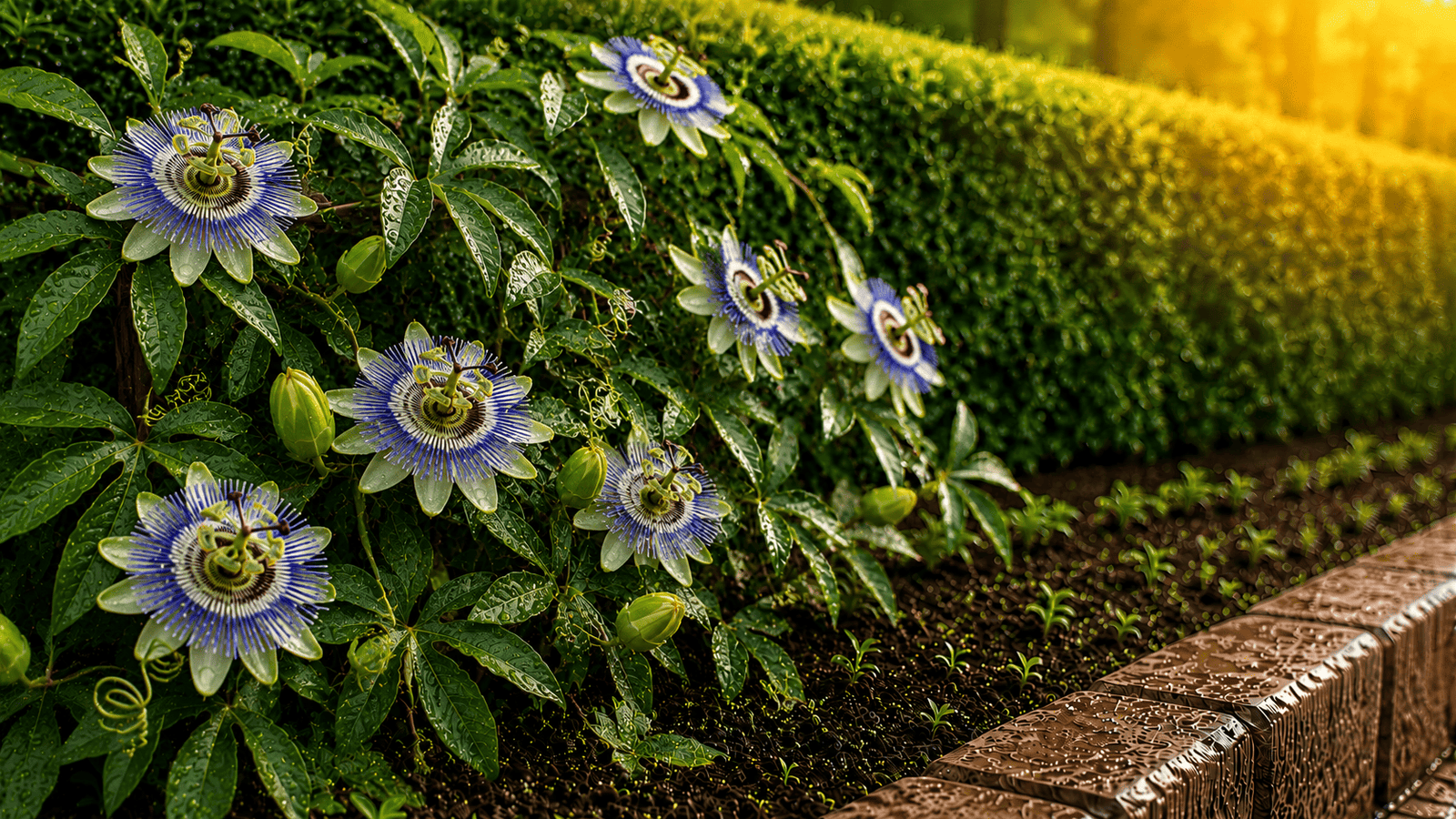
- Watering Guidelines: Keep the soil consistently moist during the spring and summer growing seasons. Water deeply when the top inch of soil feels dry, but ensure excellent drainage to prevent waterlogging.
- Growth Conditions: Thrives best in full sun to partial shade (at least 6 hours of sunlight daily encourages heavier blooming). Prefers fertile, loamy, well-draining soils with neutral to slightly acidic pH.
- Vulnerabilities: Generally hardy and robust, but can occasionally attract caterpillars (such as Gulf Fritillary larvae) or spider mites. While root-hardy down to USDA Zone 6, severe freezing temperatures will cause top-growth dieback.
- Growth Habit: Fast-growing, vigorous woody-stemmed evergreen or semi-evergreen climber that scales structures using specialized axillary tendrils.
- Root System: Strong, spreading root system that produces underground runners, allowing established vines to vigorously rebound after frost.
- Leaf Structure: Deeply palmately divided leaves typically featuring five distinct, smooth-margined lobes arranged in a star-like pattern.
- Foliage Detail: Lustrous, dark green leaves that provide a lush, dense backdrop for the striking, geometrically complex flowers.
- Bloom Lifespan: Individual complex blossoms generally remain open for a single day, but flowers are produced in continuous succession throughout summer and autumn.
- Floral Morphology: Intricate, radially symmetrical flowers featuring pale greenish-white petals, a prominent central corona of blue, purple, and white filaments, and a central staminal column.
- Stem Characteristics: Pliable green climbing vines that mature into tough, woody stems capable of covering extensive trellises and arbors.
Cautionary Profile: While certain parts of the Blue Passion Flower (Passiflora caerulea) are edible or used traditionally, unripe fruits and vegetative components contain cyanogenic glycosides and minor alkaloids that can be toxic if consumed in large quantities improperly.
To Humans & Children
Unripe green fruits and excessive ingestion of raw leaves or stems can cause stomach discomfort, nausea, and mild cyanide-related symptoms due to cyanogenic compounds. Fully ripe orange fruits are edible in moderation.
To Household Pets
Mildly toxic to dogs and cats. Ingestion of raw foliage, unripe fruit, or large quantities of plant material can cause vomiting, lethargy, and gastrointestinal irritation.
Harvesting & Handling Precautions
Only consume the soft inner pulp of fully ripe, soft orange-yellow fruits. Avoid eating green, unripe fruits or raw vegetative foliage. Wear gloves if handling sap-heavy pruned vines if you have sensitive skin.