
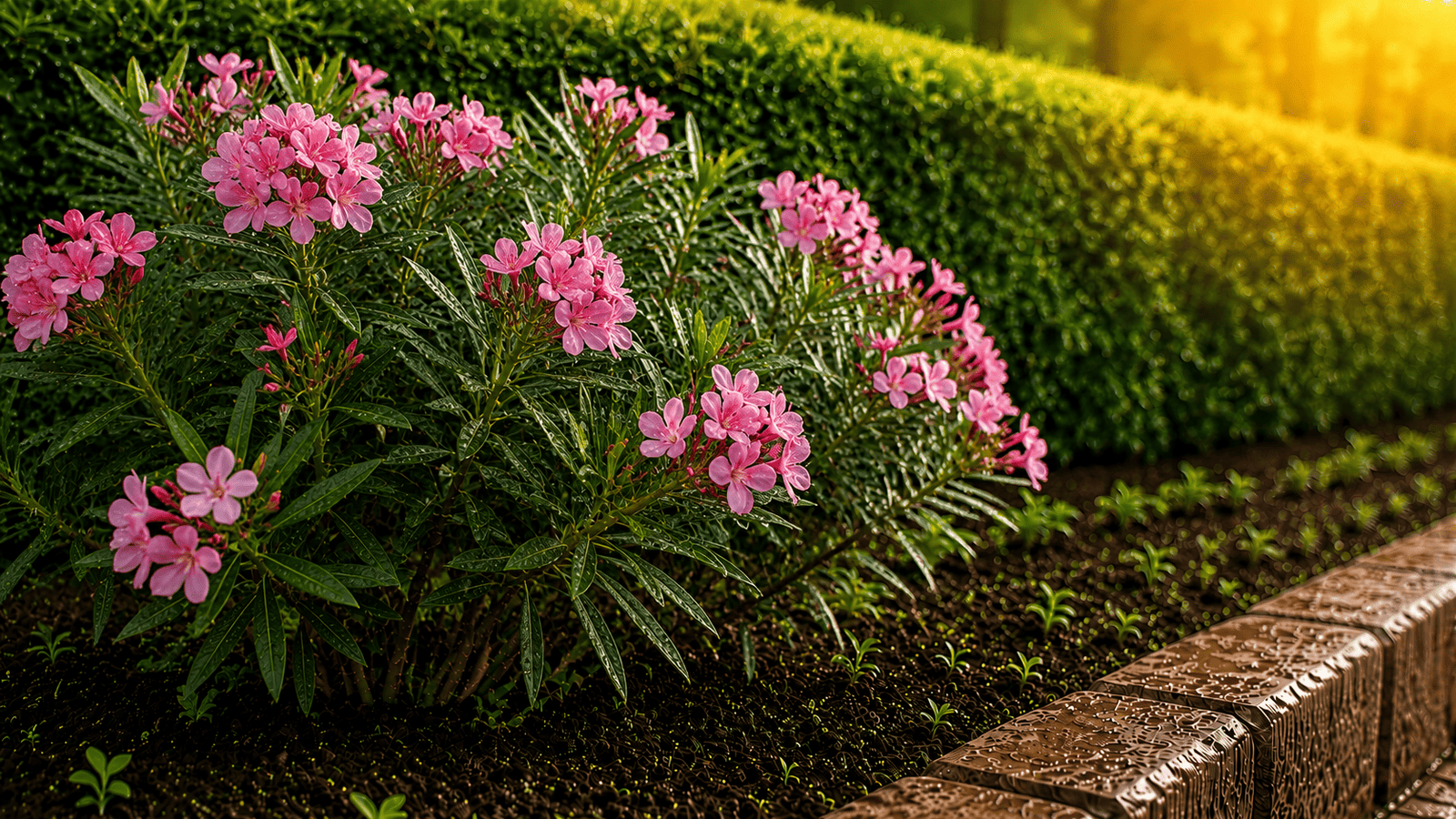
Family: Apocynaceae (Dogbane Family) Lifespan: Long-lived Evergreen Shrub

Oleander

Nerium oleander
🌸 Abundant Blooms 🛡️ Drought Tolerant ⚠️ Highly Toxic

History & Taxonomy
Native to the Mediterranean basin, subtropical Asia, and parts of the Middle East, the Oleander (Nerium oleander) belongs to the dogbane family (Apocynaceae). First formally cataloged and described by Carl Linnaeus in his landmark 1753 work Species Plantarum, the plant has a rich ancient history spanning thousands of years, referenced in classical Greek, Roman, and Ayurvedic texts. Renowned for its exceptionally tough constitution, leathery dark evergreen foliage, and stunning clusters of funnel-shaped blossoms, it has become a staple ornamental shrub in warm climate landscapes worldwide.

Botanical Culture & Distribution
Thriving effortlessly under blazing sun and in poor, dry soils, oleander is exceptionally resilient against drought, salt spray, and urban pollution, making it a favorite median and roadside planting in arid and coastal regions. Despite its dazzling aesthetic appeal—with cultivars blooming in vibrant shades of pink, white, red, and yellow—every single part of the plant contains potent cardiac glycosides (such as oleandrin), requiring profound caution and respect in landscaping and residential settings.

Cultural & Practical Usage

Landscape & Privacy Screening

Oleander is extensively cultivated in warm climates as a tough, robust evergreen screen, privacy hedge, or highway median divider. It is prized for its magnificent clusters of trumpet-shaped flowers that bloom continuously through the warm seasons.

Drought & Coastal Tolerances

Highly resistant to severe drought, intense heat, and wind-driven salt spray, making it an exceptional choice for coastal landscaping, arid xeriscapes, and urban environments with poor soil conditions.

Historical & Symbolic Context

Revered for centuries across Mediterranean and subtropical gardens, oleander has historically been celebrated in poetry and art for its lush evergreen foliage and brilliant blossoms, though its extreme toxicity requires mindful placement.

Stem Cutting Propagation

Easily propagated through semi-hardwood stem cuttings taken during spring or summer. Cuttings root reliably when placed in water or a moist potting medium, though gloves must be worn to handle the toxic sap safely.

Oleander Shrub Landscape Display
Oleander Shrub Display
  • Watering Guidelines: Highly drought-tolerant once established. Water deeply during the growing season when the soil becomes dry, but allow it to dry out between waterings. Overwatering can lead to root rot.
  • Growth Conditions: Thrives under full, direct sunlight (6+ hours daily) for optimal flowering. Prefers average, well-draining soil and tolerates poor soils, coastal salt spray, and urban pollution exceptionally well.
  • Vulnerabilities: Generally pest-resistant, though occasionally targeted by oleander aphids or scale insects. While hardy in warm regions, heavy freezes can cause stem dieback, though established plants typically rebound vigorously in spring.
  • Growth Habit: Large, upright, multi-stemmed evergreen shrub or small tree forming a dense, rounded, and bushy architectural canopy.
  • Root System: Strong, deep woody root system capable of tolerating extended dry spells and anchoring the plant securely in challenging substrates.
  • Leaf Structure: Thick, leathery, narrow lance-shaped leaves arranged in whorls of three along the stems with prominent midribs.
  • Foliage Detail: Dark, glossy emerald-green leaves that persist year-round, providing a lush backdrop for the abundant flower clusters.
  • Bloom Lifespan: Long-lasting clusters (cymes) of blossoms that appear continuously throughout the warm spring, summer, and autumn months.
  • Floral Morphology: Showy, funnel-shaped flowers featuring five symmetrical petals in shades of pink, white, red, or yellow, often sweetly fragrant.
  • Stem Characteristics: Sturdy woody branches covered in smooth, gray bark that exude a toxic, milky latex sap when cut or broken.
SAFETY: Extreme Toxicity Warning

Extremely Toxic Plant: Every single part of the Oleander (Nerium oleander)—including its leaves, stems, flowers, and sap—contains potent cardiac glycosides like oleandrin and neriine. Ingestion can be fatal to humans and animals.

To Humans & Children

Highly toxic upon ingestion. Ingestion causes severe gastrointestinal distress, cardiac arrhythmias, dizziness, and potential fatality. Skin contact with sap can also cause localized irritation.

To Household Pets

Extremely toxic to dogs, cats, horses, and livestock. Even a minuscule amount of leaf material or ingestion of water from a vase containing oleander can cause fatal poisoning in pets.

Handling & Landscape Precautions

Always wear heavy protective gloves and long sleeves when pruning or handling oleanders. Never burn plant clippings, as the toxic smoke can cause severe respiratory and eye irritation. Keep plants entirely out of reach of children and pets.


Oleander shrub display
Extreme Toxicity

Small efforts save a dying plant.

Get instant botanical diagnostics, precise care timetables, and expert structural advice tailored to support your garden's health daily.

Download PlantDecoder App Now

Frequently Asked Questions

Common botanical queries and troubleshooting instructions for the Oleander plant (Nerium oleander).

Why are the leaves on my Oleander turning yellow and dropping?
Widespread yellowing and leaf drop can be caused by overwatering, poor soil drainage, or extreme nutrient deficiencies (such as a lack of nitrogen). Ensure your oleander is planted in well-draining soil and allowed to dry slightly between waterings.
Why are my Oleander flower buds falling off before they open?
Premature bud drop is typically triggered by inconsistent watering, sudden temperature shifts, or pest pressures like oleander caterpillars or aphids. Maintaining steady moisture levels helps buds reach maturity.
Is every part of the Oleander plant truly toxic?
Yes. Every part of the Nerium oleander plant—including the leaves, stems, flowers, roots, and even the milky sap—contains potent cardiac glycosides that are highly toxic when ingested by humans or pets.
How drought-tolerant is the Oleander shrub once established?
Oleanders are exceptionally drought-tolerant. Once their root systems are established in the landscape, they can endure long periods of dry weather and intense heat with minimal supplemental irrigation.
Can I grow Oleander in a container or pot?
Yes! Oleanders grow exceptionally well in large pots or tubs, making them ideal for patios, decks, or cooler regions where they can be easily moved indoors before winter freezes.
How often should I water a landscape Oleander?
During their first growing season, water regularly to establish deep roots. Once established, they only need infrequent deep waterings during extended dry spells, as they dislike soggy, waterlogged soil.
Does Oleander prefer full sun or partial shade?
Oleanders demand full sun (at least 6 hours of direct sunlight daily) to produce their heaviest, most vibrant floral displays. Shadier locations will result in leggy growth and fewer blooms.
What pests commonly attack Oleander plants?
The most frequent visitor is the oleander caterpillar, along with aphids and scale insects. Inspect foliage regularly and manage outbreaks promptly to prevent severe defoliation.
When is the safest time to prune an Oleander?
Prune immediately after the heavy spring and summer flowering cycle finishes. Always wear heavy protective gloves and long sleeves to avoid contact with the caustic sap, and never burn the clippings.
Can Oleander survive freezing winter temperatures?
Oleanders are hardy in USDA Zones 8–10. While mature plants can tolerate brief dips down to -10°C (14°F), severe and prolonged freezes will cause significant stem dieback, though they often resprout from the base in spring.