
Family: Euphorbiaceae (Spurge Family)
Lifespan: Tender Perennial Shrub
Croton
Codiaeum variegatum
🎨 Dazzling Foliage
☀️ Sun Lover
⚠️ Toxic to Pets


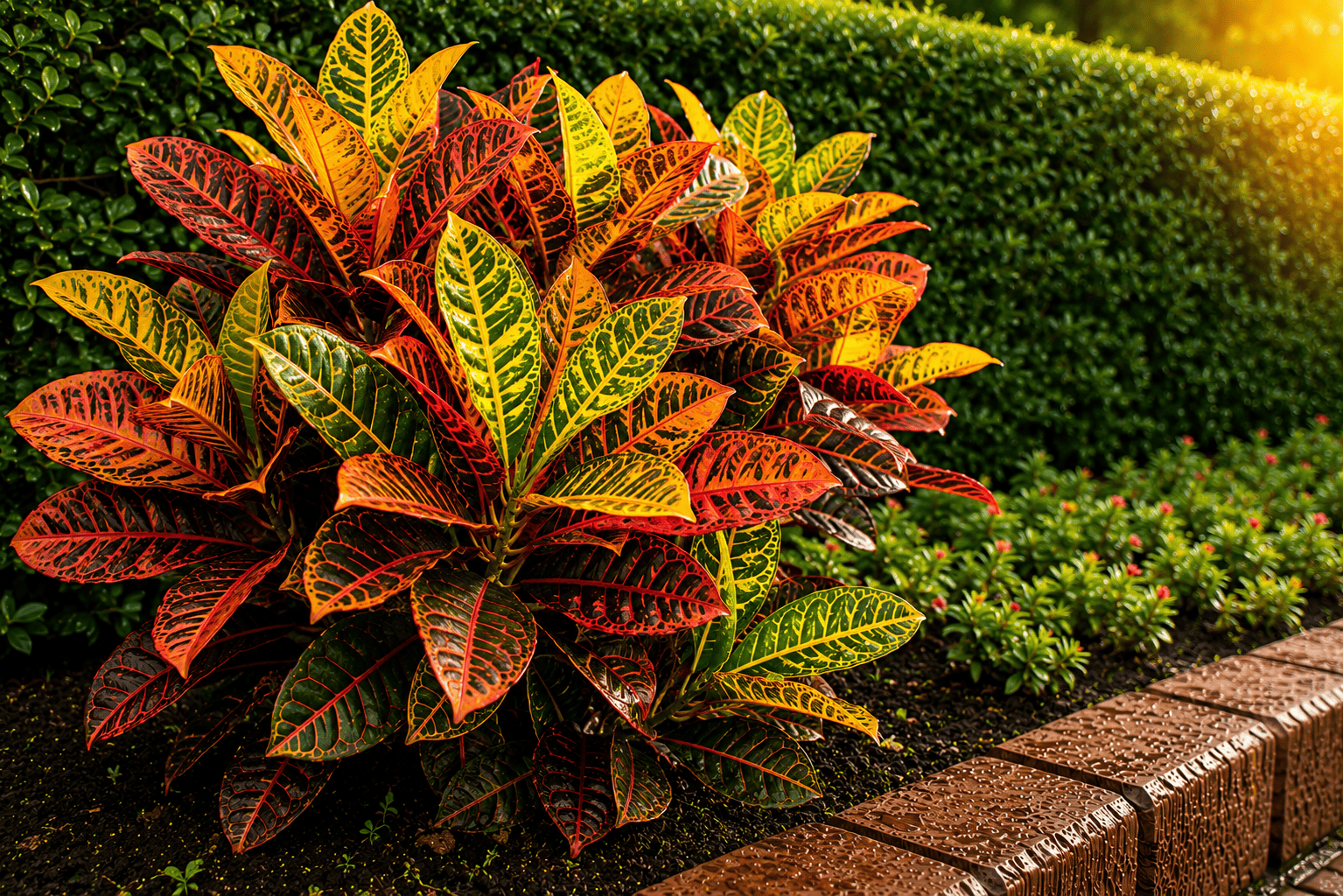
Croton Foliage Display
- Watering Guidelines: Keep soil evenly moist during spring and summer, allowing the top inch to dry slightly between waterings. Avoid soggy soil, but ensure the plant never dries out completely, which causes sudden leaf drop.
- Growth Conditions: Thrives in bright, direct sunlight (at least 6 hours daily) to maintain its fiery, multicolored leaf pigmentation. Prefers warm, humid environments and rich, organically fertile, well-draining soil.
- Vulnerabilities: Highly sensitive to sudden temperature drops, cold drafts, and moving locations, which frequently trigger mass leaf shedding. Prone to spider mites and mealybugs, especially in dry indoor air.
- Growth Habit: Upright, multi-branched evergreen shrub featuring a dense, shrubby canopy that can be pruned to maintain desired indoor heights.
- Root System: Moderate root system consisting of thick, branching roots that require porous, well-aerated potting mixes to prevent root rot.
- Leaf Structure: Leathery, stiff, alternate leaves that vary dramatically by cultivar—ranging from broad ovate blades to narrow, twisted, linear, or lobed shapes.
- Foliage Detail: Celebrated for spectacular, multi-toned coloration featuring dazzling splashes of brilliant yellow, orange, red, pink, bronze, and deep green.
- Bloom Lifespan: Small, inconspicuous star-shaped flowers appear seasonally on slender racemes, though they are secondary to the plant's brilliant foliage.
- Floral Morphology: Dioecious plant producing small, petalless male flowers and petaled female flowers grouped in branching axillary clusters.
- Stem Characteristics: Sturdy woody stems and branches that exude a milky, latex-like sap when cut or broken, which requires careful handling.
SAFETY: Toxicity & Sap Warning
Toxic Plant Profile: The Croton plant (Codiaeum variegatum) contains a milky latex sap within its stems and leaves that is toxic when ingested and can cause skin irritation or allergic reactions in sensitive individuals.
To Humans & Children
Ingestion of leaves or sap causes severe mouth irritation, vomiting, and diarrhea. Skin contact with the milky latex can trigger dermatitis or allergic rashes.
To Household Pets
Toxic to cats and dogs. Ingestion leads to heavy drooling, vomiting, abdominal pain, and excessive thirst. Keep out of reach of curious pets.
Handling & Placement Precautions
Always wear gardening gloves when pruning or propagating crotons to protect your skin from the caustic milky sap. Place potted plants on elevated stands out of reach of pets and small children.