
Family: Sapindaceae Lifespan: Long-lived Deciduous Tree

Japanese Maple

Acer palmatum
🍁 Laced Foliage 🌳 Specimen Tree ✅ Pet-Friendly

History & Taxonomy
Native to Japan, China, Korea, eastern Mongolia, and parts of Russia, the Japanese Maple (Acer palmatum) belongs to the Sapindaceae family. The species was first formally described and named by the Swedish naturalist Carl Peter Thunberg, a student of Carl Linnaeus, during his travels in Japan in the late 18th century. The specific epithet palmatum refers to the hand-like shape of the leaves, resembling an open palm with radiating lobes. For centuries, Japanese horticulturists have bred thousands of distinct cultivars, making it one of the most celebrated ornamental trees in global landscape architecture.

Botanical Culture & Distribution
Thriving naturally in the understory of temperate deciduous forests, Japanese Maples have earned legendary status across traditional Japanese gardens and modern Western landscapes alike. Revered for their exquisite, deeply lobed foliage and breathtaking autumn color transformations—ranging from fiery crimson and bright orange to deep bronze and yellow—they symbolize grace, elegance, and the changing of the seasons. They are extensively planted as prized focal point specimens, in Asian-inspired garden designs, and as exceptional subjects for bonsai cultivation.

Cultural & Practical Usage

Specimen & Landscape Design

The Japanese Maple is globally celebrated as the premier ornamental specimen tree. Its delicate, star-like palmate foliage, striking branching habits, and breathtaking autumn color displays make it an exquisite focal point in garden borders, rock gardens, and patios.

Bonsai & Container Cultivation

Due to their fine branch structure and small leaves, Japanese Maples are among the most highly prized subjects in traditional bonsai art. They adapt wonderfully to containers and specialized pruning techniques for miniature artistic displays.

Japanese Garden Heritage

Deeply rooted in Japanese culture, they hold a central role in traditional momijigari (autumn leaf viewing). They symbolize peace, serenity, and the passage of time, serving as essential elements in classic Zen and stroll garden designs.

Grafting & Propagation

While standard species can be grown from seed, specific named cultivars are most successfully propagated through professional grafting (such as side or whip grafting onto rootstock) or via spring softwood stem cuttings treated with rooting hormone.

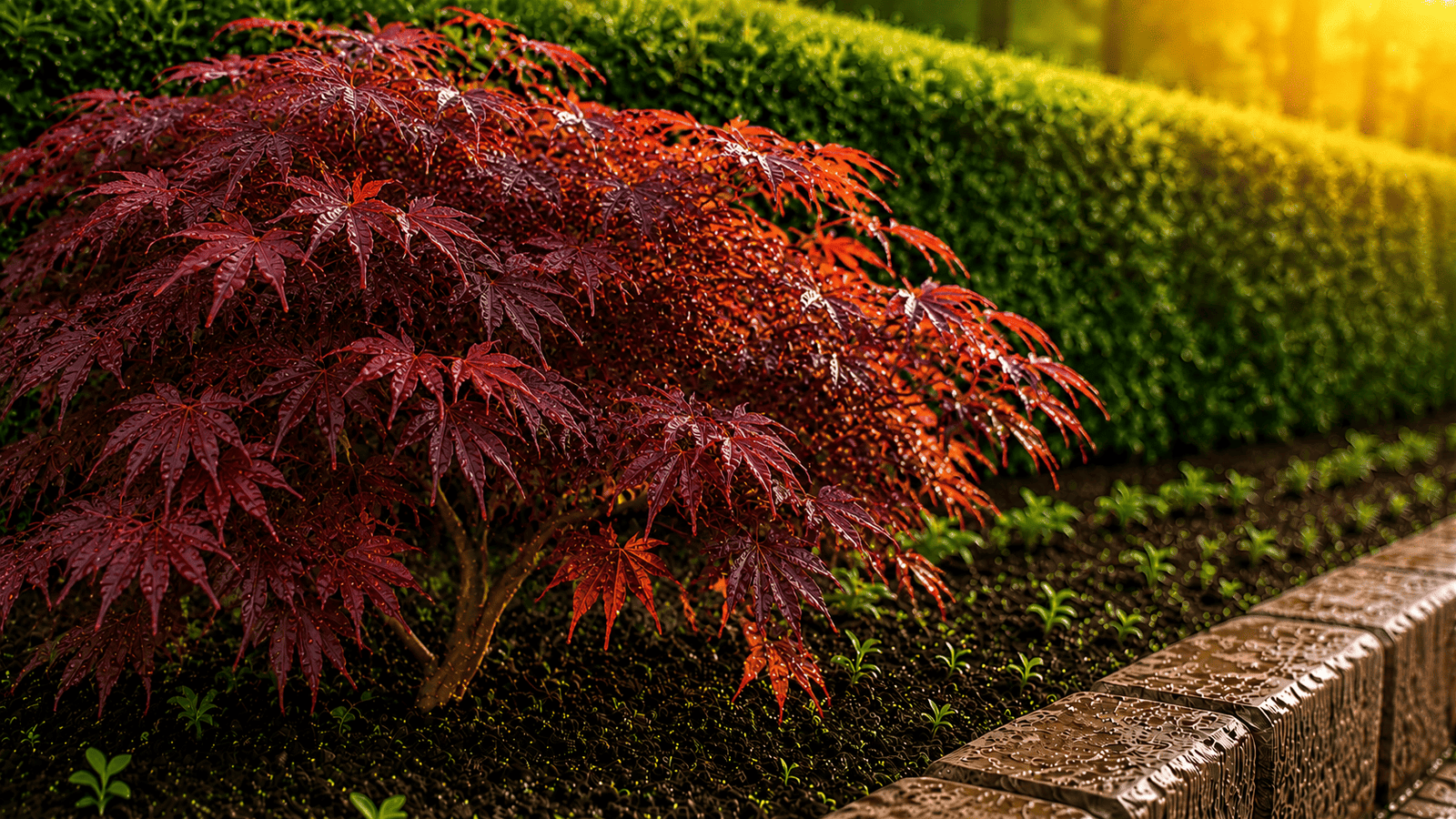
Japanese Maple Canopy Display
Japanese Maple Specimen Display
  • Watering Guidelines: Requires consistent, evenly moist soil, especially when young or planted in containers. Water deeply whenever the top 2 inches of soil feel dry. Protect from severe drought, which causes leaf scorch and tip burn on delicate lobes.
  • Growth Conditions: Thrives in partial shade (particularly protection from harsh afternoon sun) to prevent leaf scorching. Prefers rich, organically fertile, slightly acidic, and exceptionally well-draining soil mulched generously to keep shallow roots cool.
  • Vulnerabilities: Susceptible to verticillium wilt, root rot in poorly draining clay soils, and leaf scorch from hot, dry winds or intense direct sun. Protect young trees from late spring frosts.
  • Growth Habit: Graceful, deciduous small tree or large shrub featuring elegant, slender branching patterns and a naturally rounded or umbrella-like canopy.
  • Root System: Shallow, fibrous root system that spreads widely just beneath the soil surface, requiring careful cultivation around the base.
  • Leaf Structure: Deeply lobed, star-shaped palmate leaves featuring 5 to 9 sharply pointed, finely toothed lobes radiating from a central point.
  • Foliage Detail: Renowned for breathtaking seasonal color transformations—emerging in brilliant shades of red, pink, or chartreuse in spring, maturing to deep green or bronze in summer, and finishing with fiery crimson, orange, and yellow in autumn.
  • Bloom Lifespan: Small, inconspicuous purple-red flowers appear in delicate clusters during mid-to-late spring, lasting for several weeks before giving way to winged samaras (helicopter seeds).
  • Floral Morphology: Tiny, paired flowers consisting of five small sepals and five petals, blooming in small umbrella-like cymes hidden amidst the expanding foliage.
  • Stem Characteristics: Slender, smooth, and pliable young twigs that mature into refined, gracefully arching woody branches covered in smooth gray-brown bark.
SAFETY: Non-Toxic Profile & Handling

Completely Safe & Pet-Friendly: The Japanese Maple (Acer palmatum) is entirely non-toxic. It poses no chemical hazards or severe toxicity risks to humans or domestic animals, making it an ideal, worry-free choice for residential gardens.

To Humans & Children

Completely safe upon touch or accidental contact. The foliage and wood contain no toxic compounds or irritating saps, presenting zero chemical risk for family environments.

To Household Pets

Classified as non-toxic to cats, dogs, and horses by the ASPCA. While chemically safe, ingestion of large quantities of fibrous fallen leaves may cause mild, self-limiting digestive upset in pets.

Garden Safety & Maintenance

No special protective gear or gloves are required when pruning or maintaining your Japanese Maple. Enjoy cultivating this graceful specimen tree anywhere in your landscape with total peace of mind.


Japanese Maple canopy display
Pet-Friendly Tree

Small efforts save a dying plant.

Get instant botanical diagnostics, precise care timetables, and expert structural advice tailored to support your garden's health daily.

Download PlantDecoder App Now

Frequently Asked Questions

Common botanical queries and troubleshooting instructions for the Japanese Maple (Acer palmatum).

Why are the leaves on my Japanese Maple turning brown and crispy at the edges?
Leaf scorch is typically caused by excessive direct afternoon sun, drying winds, or irregular watering. Ensure your maple receives protection from harsh afternoon heat and maintain a consistent watering schedule with organic mulch around the base.
Why are my Japanese Maple leaves turning pale or losing their vibrant color?
Loss of brilliant pigmentation is often caused by too much shade. While they need protection from scorching midday sun, most cultivars require a few hours of gentle morning sun to develop their deepest red or variegated hues.
How often should I water a newly planted Japanese Maple?
Young trees require deep, regular watering (typically 1 to 2 times a week) during their first couple of seasons to establish a strong root system. Always let the soil dry slightly between waterings to prevent soggy conditions.
When is the best time of year to prune a Japanese Maple?
The optimal time to prune is in late autumn or winter after all leaves have dropped, or during mid-summer when the tree is fully leafed out. Avoid pruning in early spring when sap flows heavily.
Are Japanese Maples toxic to pets or children?
No. Japanese Maples (Acer palmatum) are completely non-toxic to dogs, cats, horses, and humans according to the ASPCA. They make a safe and worry-free addition to family gardens.
Can I grow a Japanese Maple in a container or pot?
Yes! Dwarf and weeping laceleaf cultivars thrive exceptionally well in large pots or containers. Ensure the container has excellent drainage holes and use a rich, well-draining potting mix.
Why is my Japanese Maple dropping its leaves in the middle of summer?
Mid-summer leaf drop is usually a defensive response to severe drought stress or extreme heatwaves. Deep, thorough soaking and a thick layer of organic mulch will help insulate the shallow roots.
What are the common diseases affecting Japanese Maples?
They can occasionally be affected by verticillium wilt (a soil-borne fungus), powdery mildew, and root rot in poorly draining clay soils. Ensuring proper soil drainage is your best preventive measure.
How do I protect my Japanese Maple from late spring frosts?
Newly emerged spring leaves are delicate and tender. You can protect potted trees by moving them under a porch or patio, and landscape trees can be draped overnight with a light frost cloth.
Can I propagate a Japanese Maple from cuttings?
Yes, though it can be challenging. They are best propagated using semi-hardwood stem cuttings taken in early summer treated with rooting hormone, though named cultivars are commercially propagated via grafting.