
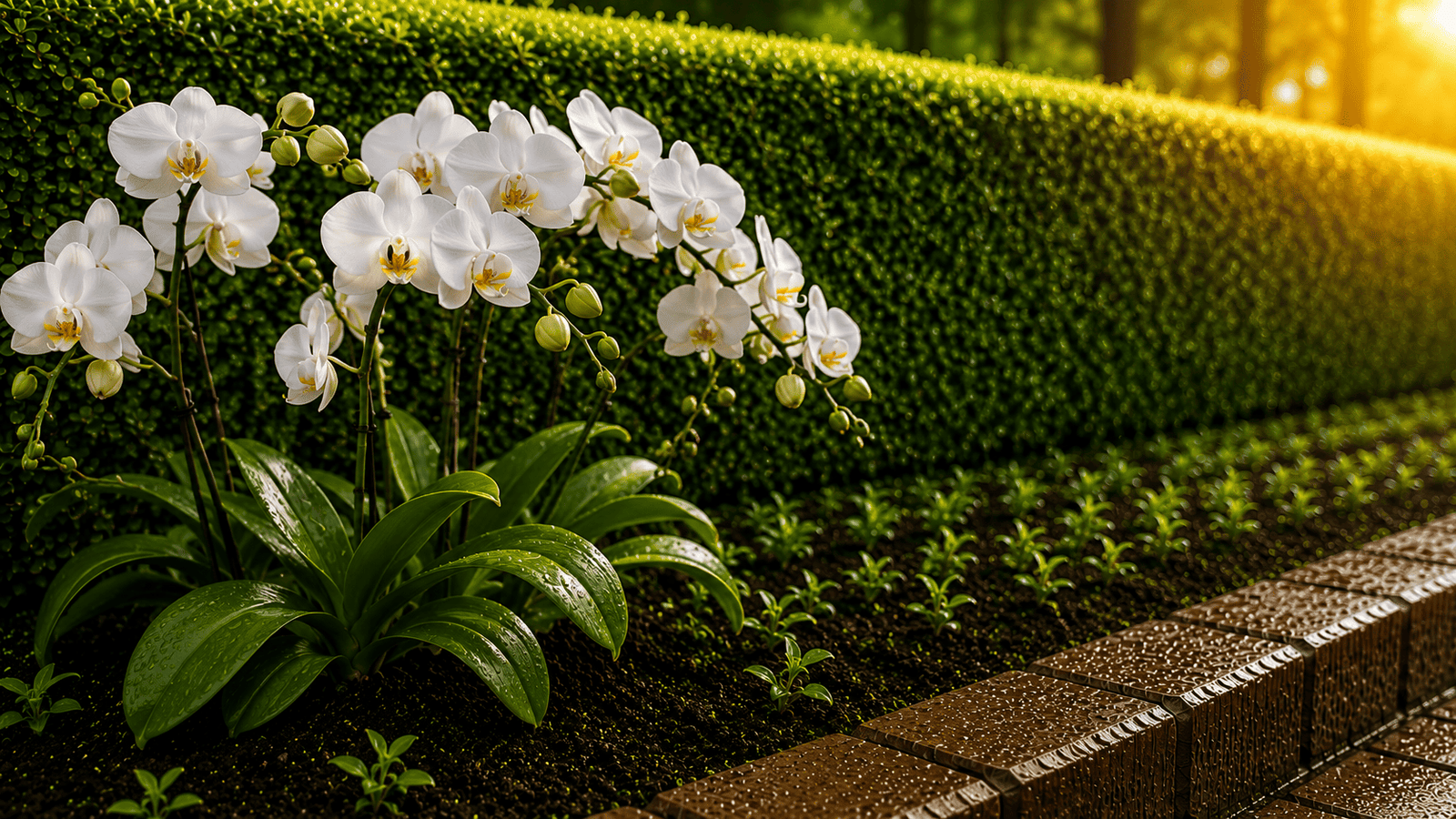
Family: Orchidaceae Lifespan: Long-lived Perennial

Moth Orchid

Phalaenopsis
🦋 Elegant Blooms ☁️ Epiphytic Habit ✅ Pet-Friendly

History & Taxonomy
Native to tropical and subtropical regions of Asia—ranging from the Himalayas and Taiwan down through Southeast Asia to the Philippines and northern Australia—the genus Phalaenopsis was first established by the German botanist Carl Ludwig Blume in 1825. Commonly known as Moth Orchids due to the striking resemblance of their blossoms to flying moths, these plants belong to the Orchidaceae family. As epiphytes, they grow naturally attached to the bark of trees in humid forest canopies, utilizing silvery-green aerial roots to absorb moisture and nutrients directly from the humid tropical air.

Botanical Culture & Distribution
Thriving in the warm, dappled shade of tropical forests, Moth Orchids have become the single most popular and widely cultivated indoor flowering houseplant in the world. Modern hybridization programs have produced thousands of breathtaking cultivars boasting an extraordinary spectrum of colors, patterns, and forms. Revered for their incredible blooming longevity—where a single flowering spike can put on a dazzling display for months—they have transitioned from rare conservatory specimens to beloved staples of modern interior decor.

Cultural & Practical Usage

Indoor Floral Specimen

The Moth Orchid is globally celebrated as the premier interior flowering houseplant. Its elegant, long-lasting sprays of moth-like blossoms bring refined luxury, vertical architectural lines, and vibrant color splashes to living rooms, offices, and entryways.

Biophilic Design & Air Quality

As an epiphyte, the Moth Orchid participates in Crassulacean Acid Metabolism (CAM), absorbing carbon dioxide and releasing oxygen during the night. This makes it an exceptional, wellness-boosting addition to bedroom interiors.

Mounted & Clear-Pot Culture

Because their silvery roots require sunlight for photosynthesis, Moth Orchids are traditionally displayed in specialized clear plastic pots or mounted artistically on natural driftwood and bark slabs to mimic their native tree-dwelling habitats.

Keiki Propagation

Propagated naturally or via hormone paste through the growth of "keikis" (baby orchid plantlets) directly on the flower spikes. Once the keiki develops its own roots and leaves, it can be gently detached and potted independently.

Moth Orchid Display
Moth Orchid Floral Display
  • Watering Guidelines: Water thoroughly only when the thick roots inside the clear pot turn silvery-gray (usually every 7-10 days). If roots are vibrant green, withhold water. Never allow the pot to sit in standing water.
  • Growth Conditions: Thrives in bright, indirect light near an east or shaded south-facing window. Plant exclusively in chunky, breathable orchid bark media rather than standard potting soil. Prefers warm indoor temperatures (18°C to 29°C) and moderate to high humidity.
  • Vulnerabilities: Extremely susceptible to crown rot if water gets trapped in the center of the leaves. Vulnerable to mealybugs, scale, and spider mites. Highly sensitive to cold drafts, sudden temperature drops, and ethylene gas from ripening fruit, which causes bud blast.
  • Growth Habit: Monopodial epiphyte that grows strictly upward from a single central stem without forming bulbs or creeping rhizomes.
  • Root System: Thick, fleshy, silvery-green aerial roots covered in velamen, serving both as structural anchors and photosynthetic organs.
  • Leaf Structure: Thick, leathery, oblong evergreen leaves arranged in an alternating two-ranked (distichous) basal rosette.
  • Foliage Detail: Smooth, glossy, deep green surface; some specialty cultivars feature striking mottled or silvery-veined variegation.
  • Exceptionally long-lasting. Individual sprays of symmetrical, moth-like blossoms can remain open in pristine condition for 2 to 4 months.
  • Floral Morphology: Highly specialized zygomorphic blooms featuring three sepals, two petals, and a prominent labellum (lip) often marked with contrasting colors or guiding lines.
  • Stem Characteristics: Produces long, slender, arching green floral spikes (inflorescences) that emerge from the axils between lower leaves.
SAFETY: Non-Toxic Profile & Handling

Completely Safe & Pet-Friendly: The Moth Orchid (Phalaenopsis) is entirely non-toxic. It poses no chemical hazards or physical injury risks to humans or animals, making it an exceptionally safe and worry-free houseplant.

To Humans & Children

Completely safe upon touch or accidental ingestion. It features smooth, non-irritating leaves and soft blossoms with no thorns, sharp edges, or toxic saps, making it entirely harmless for family environments.

To Household Pets

Classified as non-toxic to cats, dogs, and horses by the ASPCA. While ingestion of large amounts of any unfamiliar fibrous plant material may cause mild, temporary stomach upset, it contains no harmful chemical compounds.

Maintenance & Care Safety

No special protective gear or gloves are required when handling, pruning, or repotting your Moth Orchid. Enjoy placing this elegant epiphyte safely anywhere in your home or office space without safety concerns.


Moth Orchid display
Pet-Friendly Orchid

Small efforts save a dying plant.

Get instant botanical diagnostics, precise care timetables, and expert structural advice tailored to support your garden's health daily.

Download PlantDecoder App Now

Frequently Asked Questions

Common botanical queries and troubleshooting instructions for the Moth Orchid (Phalaenopsis).

Why are the leaves on my Moth Orchid turning yellow or limp?
Yellowing or limp leaves are typically caused by overwatering, root rot, or direct sun scorching. Check the root system: healthy roots are plump and silvery-green or green, while rotting roots are brown, mushy, and hollow. Ensure proper drainage in chunky orchid bark.
Why are the flower buds turning yellow and dropping off before opening?
Bud blast is a common stress response triggered by sudden temperature fluctuations, drafts, lack of light, or exposure to ethylene gas (emitted by ripening fruit nearby). Keep your orchid in a stable, draft-free location with consistent indirect light.
Why do the roots inside the pot look silvery-gray?
Silvery-gray roots simply mean your orchid is thirsty and ready for a drink! When watered, healthy roots will rapidly turn a vibrant, bright green. Always look at the root color inside your clear orchid pot to determine when it is time to water.
How long do Moth Orchid flowers last?
The exquisite blooms of Phalaenopsis are famously long-lasting. A healthy plant in optimal indoor conditions can maintain its stunning floral display continuously for 2 to 4 months before the blossoms naturally fade and drop.
What should I do after my orchid finishes blooming?
Once all the flowers have dropped, you can either cut the green spike back to just above a node to encourage secondary branching and more blooms, or trim it entirely at the base if the spike turns brown and dries out.
How often should I water my Moth Orchid?
Instead of a strict schedule, water thoroughly only when the roots inside the clear pot have turned silvery-gray (typically every 7 to 10 days). Soak the pot completely and let all excess water drain away entirely.
Can I plant my Moth Orchid in standard potting soil?
No! Standard potting soil holds too much moisture and will quickly suffocate the roots, leading to fatal root rot. Moth Orchids are tree-dwelling epiphytes and must be planted exclusively in chunky, breathable orchid bark media.
Are Moth Orchids toxic to pets or children?
No, according to the ASPCA, Phalaenopsis orchids are completely non-toxic to cats, dogs, and horses. They are also entirely safe for humans, containing no harmful chemicals, sharp thorns, or irritating saps.
How do I get my orchid to re-bloom?
Re-blooming is naturally triggered in autumn by a slight drop in indoor nighttime temperatures (down to about 15°C to 18°C for a few weeks) combined with consistent, bright indirect light.
What are those green shoots growing on the flower spike?
Those are keikis (baby orchid plantlets)! A keiki is a natural clone of the mother plant that develops its own tiny leaves and aerial roots directly on the flower spike. Once large enough, they can be potted on their own.