
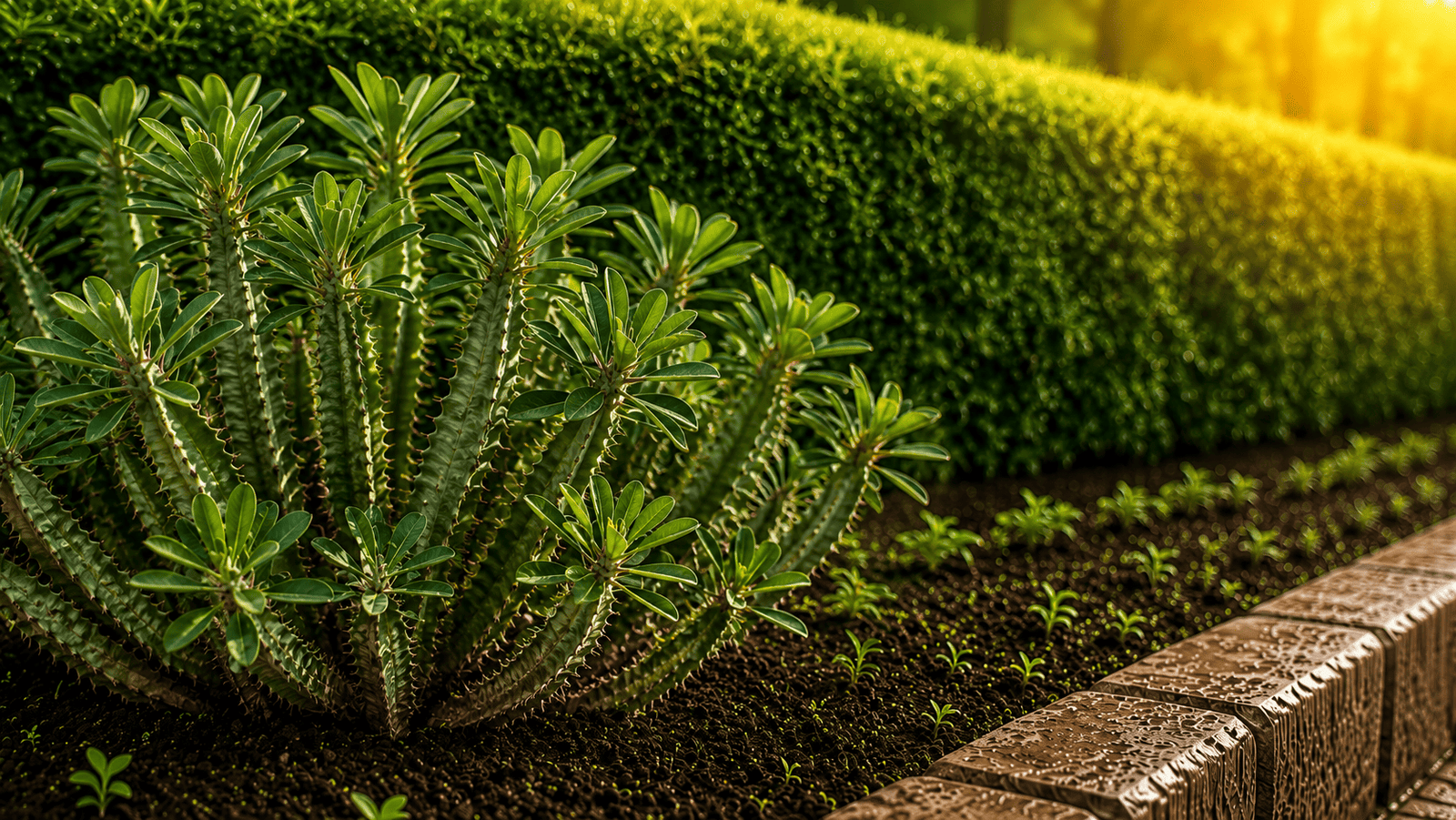
Family: Euphorbiaceae (Spurge Family) Lifespan: Woody Succulent Perennial

African Milk Tree

Euphorbia trigona
🌵 Architectural Succulent ☀️ Drought Tolerant ⚠️ Toxic Milky Sap

History & Taxonomy
Native to the arid regions of Central and Southern Africa (specifically tropical West, Central, and Southeast Africa), the African Milk Tree (Euphorbia trigona) belongs to the large and diverse spurge family (Euphorbiaceae). Although it resembles a cactus due to its succulent stems, ribbed triangular columns, and sharp thorns, it is actually a succulent shrub. It was introduced to global horticulture as a striking architectural houseplant, prized for its upright growth habit, vibrant green stems, and small teardrop-shaped leaves that emerge along the ridges.

Botanical Culture & Distribution
Thriving naturally in dry, rocky, and well-draining tropical and subtropical African landscapes, Euphorbia trigona has adapted to withstand intense sunlight and prolonged drought by storing water in its thick, succulent stems. Culturally, it is widely cultivated across the globe as an exceptional indoor and patio specimen valued for its dramatic, candelabra-like silhouette. When injured or pruned, all parts of the plant exude a milky white latex sap, which gives the species its popular common name while serving as a natural defense mechanism against herbivores.

Cultural & Practical Usage

Architectural Indoor & Patio Décor

Celebrated for its striking, candelabra-like silhouette and vertical growth habit. Its ribbed green stems adorned with small teardrop leaves make it a stunning architectural statement piece for modern indoor living spaces and bright patios.

Outdoor Privacy & Security Hedges

In frost-free tropical and subtropical climates, Euphorbia trigona is frequently grown outdoors as a dense, fast-growing privacy hedge or security barrier thanks to its robust stems, upright branching, and protective thorns.

Minimalist & Biophilic Design

Widely favored by interior stylists and plant enthusiasts for bringing strong vertical lines, structural contrast, and a touch of desert modernism into residential and commercial architectural designs.

Stem Cuttings Propagation

Successfully propagated via stem cuttings. Always wear protective gloves against the toxic latex sap, allow the cut end to callous over completely for several days, and plant in a dry, fast-draining succulent soil mix.

African Milk Tree Potted Display
Architectural Succulent Display
  • Watering Guidelines: Allow the potting mix to dry out completely between waterings. Water sparingly during spring and summer, and reduce frequency drastically during winter dormancy. Overwatering is the primary cause of root rot.
  • Growth Conditions: Thrives in bright, direct sunlight (at least 6 hours daily) to maintain vibrant growth and prevent etiolation. Demands extremely porous, fast-draining cactus and succulent soil mixes.
  • Vulnerabilities: Highly sensitive to overwatering and soggy substrates. Extremely frost-tender; exposure to cold drafts or temperatures below 10°C (50°F) will cause severe tissue damage and stem collapse.
  • Growth Habit: Upright, multi-branched succulent shrub featuring distinctive candelabra-like architectural growth.
  • Root System: Shallow, compact root system adapted to rocky, arid conditions and restricted container environments.
  • Leaf Structure: Small, teardrop-shaped alternate green leaves that emerge seasonally along the sharp stem ridges, often dropping off as the stem matures.
  • Foliage Detail: Smooth, glossy green stems (or variegated cream-and-green in cultivars like 'Alba') marked by prominent, ribbed triangular columns.
  • Spine Characteristics: Features paired, sharp brownish spines situated along the prominent ridges of each triangular stem segment.
  • Latex Defense: When broken or pruned, the plant exudes a milky white latex sap that is toxic and irritating to skin and mucous membranes.
  • Stem Structure: Thick, succulent, fleshy columns designed to store abundant water, enabling the plant to survive prolonged dry periods.
SAFETY: Toxic Latex Sap & Spine Hazard

Toxicity Profile: Euphorbia trigona produces a milky white latex sap throughout its tissues that is highly toxic and irritating. In addition, the stems feature sharp spines along their ridges, requiring cautious handling.

To Humans & Children

Direct contact with the latex sap causes severe skin irritation, painful inflammation, and temporary blindness or extreme eye damage if touched. Keep away from children and wear gloves when pruning.

To Household Pets

Highly toxic to dogs, cats, and other animals. Ingestion or sap contact leads to intense mouth and stomach irritation, excessive drooling, and vomiting. Position out of reach of pets.

Handling & Protective Precautions

Always wear thick protective gloves and eye protection when pruning or taking stem cuttings. Immediately wash any skin areas that come into contact with the milky latex sap.


African Milk Tree potted display
Toxic Latex Sap Warning

Small efforts save a dying plant.

Get instant botanical diagnostics, precise care timetables, and expert structural advice tailored to support your garden's health daily.

Download PlantDecoder App Now

Frequently Asked Questions

Common botanical queries and troubleshooting instructions for the African Milk Tree (Euphorbia trigona).

Why are the leaves on my African Milk Tree turning yellow and dropping off?
Leaf drop is frequently caused by overwatering, poor drainage, or sudden changes in temperature. Additionally, the plant naturally sheds its small teardrop leaves during cooler winter dormancy periods.
Why are the stems of my African Milk Tree turning soft and mushy at the base?
Soft, mushy stems indicate advanced root rot caused by overwatering or compacted, poorly draining soil. Immediately cut away any rotting sections and repot healthy cuttings in a dry, porous succulent mix.
Can I grow an African Milk Tree successfully indoors?
Yes, Euphorbia trigona makes an exceptional indoor architectural houseplant provided it is placed near a bright, sun-drenched window (such as south or west-facing) receiving direct sunlight.
How tall does an African Milk Tree grow in a container?
When grown indoors in pots, they typically mature to heights of 3 to 8 feet over time, branching out into a striking candelabra-like structure.
Can African Milk Trees survive freezing temperatures?
No. They are tender tropical and subtropical succulents (USDA Zones 10–11) that will suffer severe cellular collapse, blackening, and death if exposed to frost or freezing conditions below 10°C (50°F).
How often should I water my African Milk Tree?
Allow the potting soil to dry out completely between waterings. Water sparingly during active spring and summer growth, and reduce watering to a bare minimum during winter.
Does the African Milk Tree prefer direct sun or shade?
They thrive best in full, direct sunlight (at least 6 hours daily). Insufficient light causes weak, spindly stems (etiolation) and pale, stretched growth.
What pests are most likely to attack this plant?
They can occasionally be troubled by mealybugs or spider mites, especially in dry indoor air. Treat infestations promptly using cotton swabs dipped in rubbing alcohol or insecticidal soap.
Is the African Milk Tree toxic to pets and humans?
Yes. All parts contain a toxic, milky white latex sap that causes severe skin irritation, painful eye inflammation if touched, and dangerous internal upset if ingested by pets or children.
How do I safely prune or take cuttings from my African Milk Tree?
Always wear thick protective gloves and eye protection when pruning. Rinse cut stems immediately in warm water to stop the latex sap flow, let the cutting callous for a few days, and plant in dry succulent soil.