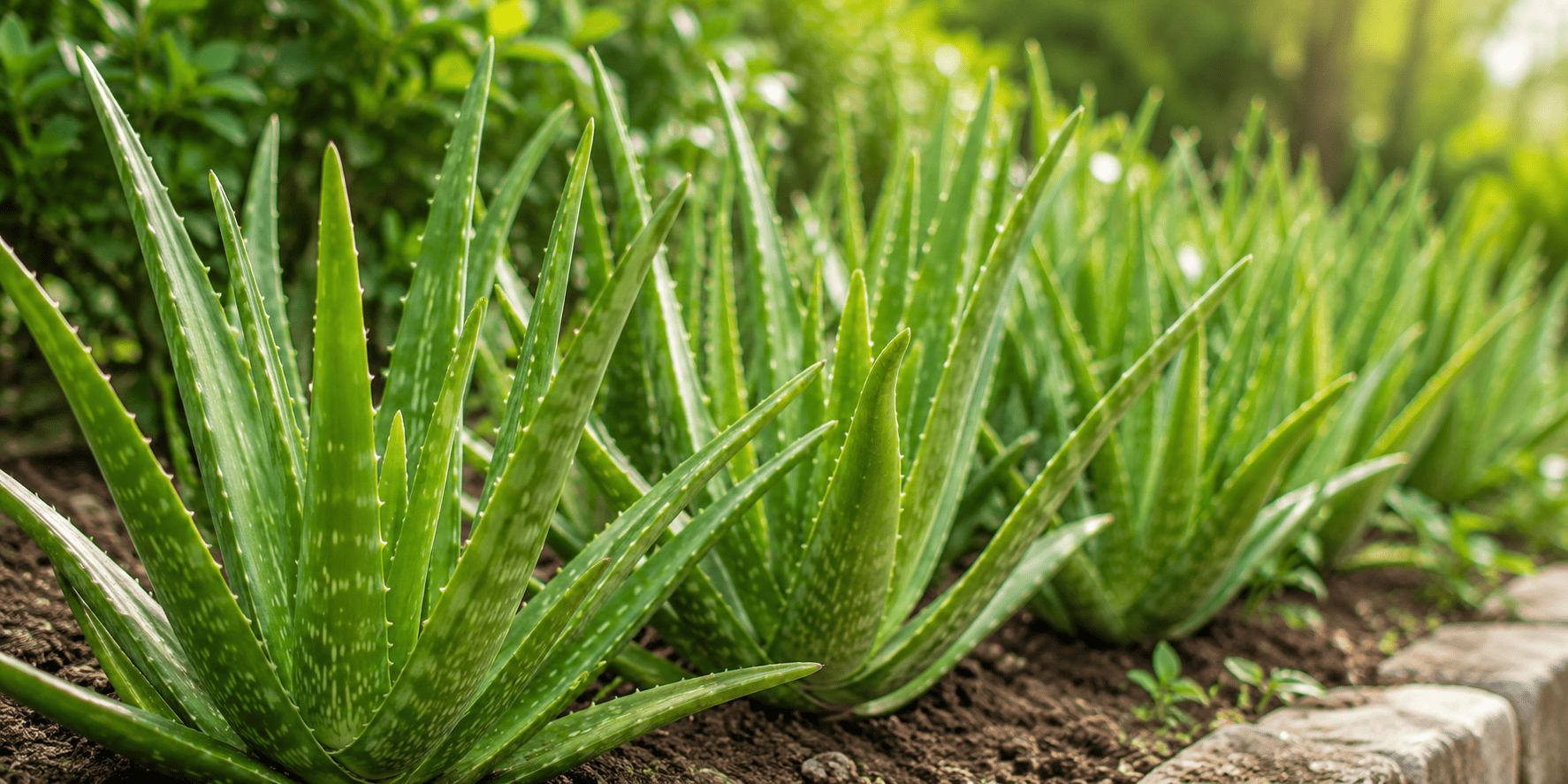
Family: Asphodelaceae Lifespan: Perennial (10-25 Years)

Aloe Vera
(Ghrita Kumari)

Aloe vera (syn. Aloe barbadensis miller)
🌿 Succulent Perennial ⚕️ Highly Medicinal ☀️ Sun Loving

History & Linnaean Nomenclature
The genus name Aloe is derived from the Arabic word "alloeh," meaning a shining, bitter substance, while vera is Latin for "true." It was formally described by Carl Linnaeus in 1753 as Aloe perfoliata var. vera, and later by Philip Miller as Aloe barbadensis, leading to some taxonomic confusion. Today, Aloe vera is the universally accepted scientific name. Belonging to the family Asphodelaceae, it is heavily characterized by its thick, fleshy, water-retaining leaves that contain a clear, mucilaginous gel. It is one of the oldest and most widely recognized medicinal plants in human history.

Botanical Culture & Distribution
Originating in the arid, harsh climates of the Arabian Peninsula, Aloe vera has successfully naturalized in tropical, semi-tropical, and arid regions worldwide. It holds profound cultural and medicinal significance across the globe. In traditional Indian Ayurvedic medicine, it is highly revered as "Ghrita Kumari" (the young girl), symbolizing its rejuvenating properties and widespread use in promoting skin health, digestion, and vitality. Beyond its vast commercial agricultural presence for the cosmetics and pharmaceutical industries, it is a remarkably resilient and popular household succulent globally.

Cultural & Practical Usage

Ornamental & Landscape Usage

Widely cultivated as a structural, drought-tolerant landscaping plant in arid, rock, and xeriscape gardens. Indoors, it serves as a highly popular, low-maintenance potted succulent that adds a bold, architectural element to bright, sunny windowsills.

Culinary & Medicinal Uses

Revered globally for its soothing mucilaginous gel. It is extensively used topically to treat minor burns, sunburns, and skin irritations. Culinarily, the clear inner gel is often consumed in juices and health smoothies to aid digestion and promote gut health.

Spiritual & Cultural Usage

In Ayurvedic medicine, it is known as "Ghrita Kumari," highly valued for its rejuvenating, cooling properties. Across various global traditions, hanging an Aloe vera plant above a doorway is historically believed to ward off evil spirits and invite good luck into the household.

Propagation Methods

Extremely easy to multiply through the division of basal offsets, commonly known as "pups." These small clone plants emerge at the base of the mother plant and can be carefully separated and repotted once they develop their own independent root systems.

Aloe Vera Environmental Display
Environmental Succulent Display
  • Watering Guidelines: Highly drought-tolerant. Wait until the potting medium is entirely dry before deeply soaking it. Overwatering, particularly during winter dormancy, is the most common cause of plant collapse.
  • Growth Conditions: Thrives in bright, indirect sunlight indoors or full sun when gradually acclimated outdoors. Requires a highly porous, gritty, well-draining cactus or succulent soil mix to prevent moisture retention.
  • Vulnerabilities: Extremely susceptible to root and stem rot if left sitting in damp soil or poorly drained containers. Highly sensitive to frost; exposure to freezing temperatures will cause the water-filled leaves to turn to mush and collapse. Watch for mealybugs in the crevices of the rosette.
  • Growth Habit: A stemless or very short-stemmed succulent perennial that forms a dense, spreading rosette of upward-reaching leaves.
  • Root System: Features a relatively shallow, spreading fibrous root system that vigorously produces lateral offsets (commonly called "pups") to form large clustering colonies.
  • Leaf Structure: Thick, fleshy, lanceolate (spear-shaped) leaves that taper to a point, featuring serrated margins lined with small, soft, pale teeth.
  • Foliage Detail: Leaves are typically pale green to grey-green, often featuring white flecks or spotting on both the upper and lower surfaces, especially visible in younger specimens.
  • Internal Anatomy: The leaves act as water storage organs, containing a clear, viscous mucilaginous gel (the medicinally active parenchyma tissue) surrounded by a yellowish, bitter sap (aloin) located just beneath the thick outer rind.
  • Floral Morphology: Mature, well-sunned outdoor plants produce a tall, slender inflorescence (up to 3 feet high) bearing pendulous, tubular yellow or orange flowers arranged in a dense raceme.
  • Stem Characteristics: While generally considered stemless, older specimens may develop a short, woody basal stem over time as lower leaves naturally senesce, dry up, and are removed.
CRITICAL: Dual Toxicity & Safe Handling

Compound Profile: While the clear inner gel of the Aloe Vera plant is universally celebrated and safe for both topical and internal use, the yellowish sap (aloin or aloe latex) found just beneath the outer rind contains anthraquinones. These are potent, irritating laxatives that are highly toxic if ingested in unpurified forms.

To Humans & Infants

The inner gel is completely safe, but ingestion of the whole leaf or unpurified yellow latex causes severe abdominal cramping, diarrhea, and potential kidney damage. It poses a moderate toxicity risk if inappropriately prepared at home.

To Household Pets

Classified as toxic to dogs, cats, and horses by the ASPCA. Ingestion of the saponins and anthraquinones leads to lethargy, vomiting, diarrhea, and a noticeable change in urine color (reddish).

Harvesting & Protection Strategies

Keep potted plants out of reach of curious pets. When harvesting the plant for personal culinary or cosmetic use, you must slice the leaf base and allow the bitter yellow latex to drain completely (usually 15-20 minutes) before extracting the safe inner gel.


Sliced Aloe Vera leaf showing gel extraction
Safe Gel Extraction

Small efforts save a dying plant.

Get instant botanical diagnostics, precise care timetables, and expert structural advice tailored to support your garden's health daily.

Download PlantDecoder App Now

Frequently Asked Questions

Common botanical queries and troubleshooting instructions for Aloe vera.

Why are my Aloe Vera leaves turning mushy and yellow?
Yellow, soft, or mushy leaves near the base are the primary symptoms of overwatering and root rot. Aloe vera is a succulent that stores water in its leaves; if the soil remains wet, the plant essentially drowns. Cease watering immediately and ensure the pot has drainage holes.
How often should I water my Aloe Vera?
Water deeply but infrequently, roughly every 2 to 3 weeks during the spring and summer. The potting medium must dry out completely between waterings. In winter dormancy, reduce watering to once a month or less.
Why is my Aloe plant turning brown or red?
A brownish, reddish, or purplish tint is a sign of environmental stress, most commonly sunburn from a sudden move into harsh, direct sunlight. It can also indicate extreme thirst or cold drafts. Move the plant to bright, indirect light to allow it to recover its green color.
Why are the leaves of my Aloe bending and lying flat?
When an Aloe's stiff leaves begin to droop or lie flat against the soil, it usually indicates insufficient sunlight (causing the plant to weaken and stretch) or advanced root rot compromising the structural integrity of the base.
Is Aloe Vera toxic to dogs and cats?
Yes. While humans can safely utilize the gel, the outer skin and the yellow latex layer contain saponins and anthraquinones that are toxic to pets, causing lethargy, vomiting, and diarrhea if ingested.
Can I use the gel from my indoor potted Aloe?
Yes! You can harvest the thick outer leaves. However, you must first slice the leaf base and let the yellow, bitter latex drain out completely for 15-20 minutes, as this sap can severely irritate the skin. The clear inner gel is safe to apply to minor burns and abrasions.
How do I propagate my Aloe Vera?
Aloe is best propagated by removing the "pups" or offsets—the small baby plants that sprout around the base of the mother plant. Gently unpot the plant, separate the pups (ensuring they have some roots attached), and pot them in a dry succulent mix.
Does Aloe Vera purify indoor air?
Yes. Like the Snake Plant, Aloe Vera utilizes Crassulacean Acid Metabolism (CAM) photosynthesis. This means it absorbs carbon dioxide and releases fresh oxygen during the night, making it an excellent plant for bedrooms.
What kind of soil does an Aloe Vera need?
It requires a highly porous, gritty, and fast-draining potting mix. Standard indoor potting soil retains too much moisture and will cause rot. Use a specialized cactus or succulent mix, ideally amended with extra perlite or pumice.
When should I repot my Aloe plant?
Aloe vera prefers to be slightly root-bound and generally only needs repotting every 2 to 3 years. Repot in the spring when the plant becomes top-heavy, roots grow out of the drainage holes, or it is crowded with too many offsets.