
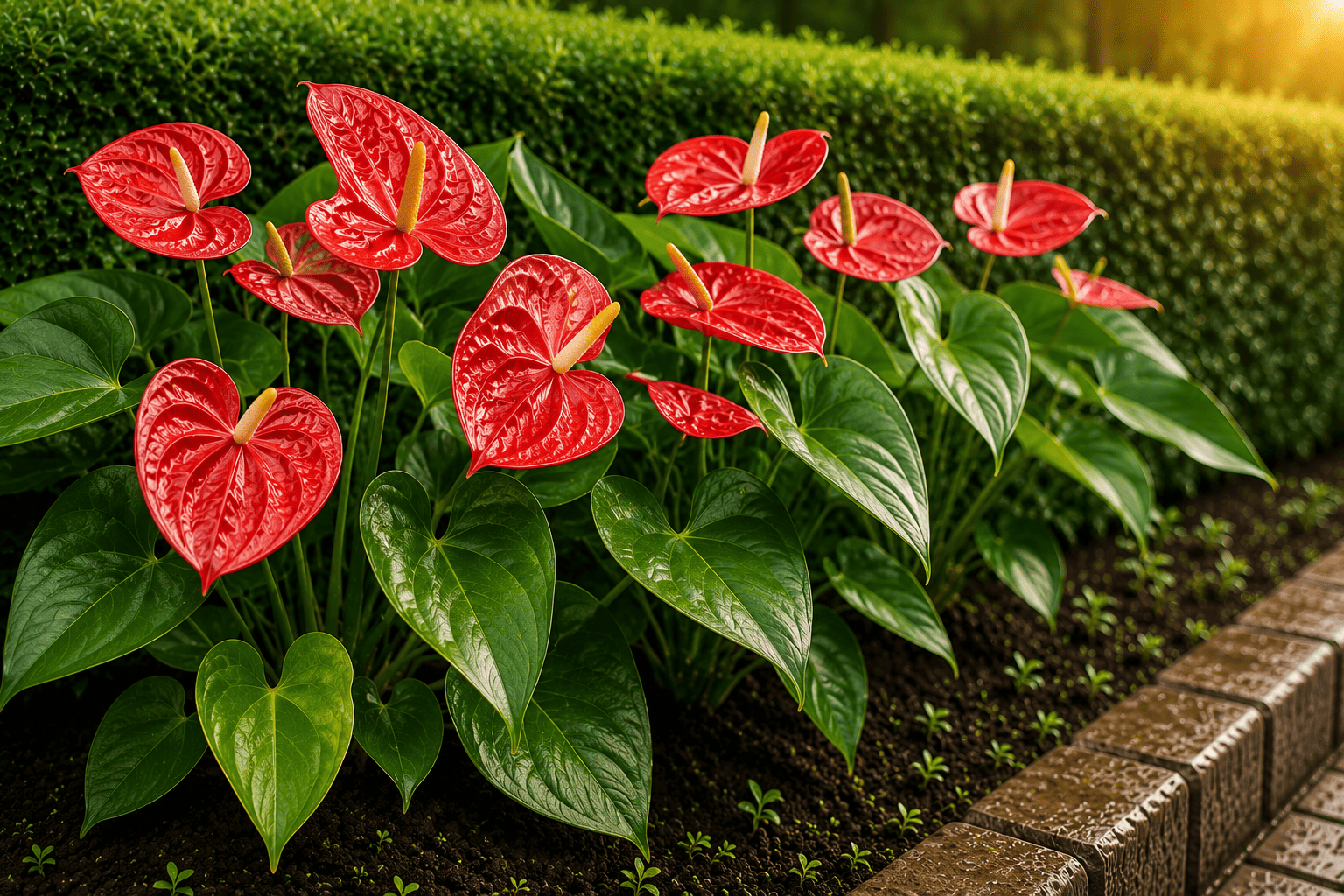
Family: Araceae Lifespan: Perennial

Anthurium

Anthurium andraeanum
✨ Waxy Spathes 🌿 Tropical Beauty ⚠️ Toxic to Pets

History & Taxonomy
The genus Anthurium, a member of the Araceae family, encompasses hundreds of species native to the tropical regions of the Americas. Often called the "Tailflower" or "Flamingo Flower," the plant was first described by the Austrian botanist Heinrich Wilhelm Schott in the 19th century. Anthuriums are prized for their highly modified floral structures: the vibrant, waxy part often mistaken for a petal is actually a spathe (a specialized bract), while the tiny, actual flowers are densely clustered on the prominent, finger-like spadix.

Botanical Culture & Distribution
Primarily found in the cloud forests of South and Central America, Anthuriums thrive in humid, shaded environments as epiphytes or terrestrial plants. Their popularity as indoor ornamentals skyrocketed due to their long-lasting, striking blooms and their ability to bring a touch of the tropics into the home. In their native ecosystems, they are vital components of the forest understory, often adapted to low-light conditions. Today, hybridized varieties are celebrated worldwide for their vibrant spathes—which can range from classic red to pink, white, and variegated patterns—making them a centerpiece in modern interior plant collections.

Cultural & Practical Usage

Ornamental Display

Anthuriums are prized primarily for their stunning, waxy spathes that provide long-lasting, vibrant color to indoor spaces. They are popular as high-end floral cut flowers and as year-round container specimens that offer a sophisticated, sculptural element to home and office decor.

Air Purification

Beyond their beauty, Anthuriums are effective at cleaning the air of common indoor pollutants. Their large, surface-rich leaves are highly efficient at absorbing volatile organic compounds (VOCs), such as ammonia and formaldehyde, contributing to a fresher, healthier indoor environment.

Feng Shui Symbolism

In various cultural practices, the Anthurium is often associated with hospitality, luck, and abundance. Due to the heart-shaped appearance of its spathe, it is frequently gifted as a symbol of love and friendship, believed to bring happiness and positive, welcoming energy to a home.

Propagation Methods

Anthuriums are best propagated through division during repotting. By carefully separating the root clump into smaller offsets, you can establish new plants with existing roots, ensuring a higher success rate than stem cuttings alone. Always use a well-aerated potting mix for new divisions.

Anthurium andraeanum
Anthurium Floral Display
  • Watering Guidelines: Keep the potting medium consistently moist but never waterlogged. Allow the top inch to dry out between waterings. Use lukewarm, filtered water if possible, as they are sensitive to cold water and mineral buildup.
  • Growth Conditions: Thrives in bright, indirect light. Direct sunlight will scorch the leaves and spathes. Anthuriums require high humidity to flourish; consider placing them on a pebble tray or near other plants to boost local moisture.
  • Vulnerabilities: Prone to root rot if soil drainage is insufficient. Susceptible to common indoor pests like aphids and spider mites. Protect from cold drafts and temperatures below 15°C (60°F), which can stunt growth.
  • Growth Habit: Typically grows as a terrestrial or epiphytic perennial with a clump-forming habit. It does not vine, but slowly expands through basal offsets.
  • Root System: Features thick, fleshy roots that are highly sensitive to moisture levels. They need a coarse, airy growing medium to prevent suffocation.
  • Leaf Structure: Large, dark green, heart-shaped leaves with a thick, leathery texture. They are designed to hold moisture and withstand tropical conditions.
  • Foliage Detail: Leaves have a matte to slightly glossy finish and are supported by long, sturdy petioles that rise directly from the crown.
  • Bloom Lifecycle: Long-lasting. The vibrant spathe can remain attractive for weeks or even months, while the true flowers are tiny and clustered on the central spadix.
  • Floral Morphology: Comprised of a waxy, colorful spathe (the modified leaf) and a central spadix (the true flower-bearing spike). These are the defining visual characteristics of the genus.
SAFETY: Toxicity Warning

Toxic if Ingested: Anthurium species contain insoluble calcium oxalate crystals, which are toxic to both humans and household pets if ingested. Handling the plant is safe, but caution is necessary to avoid accidental consumption.

To Humans & Children

Toxic. Chewing or swallowing parts of the plant can cause intense burning, swelling, and severe irritation of the mouth, throat, and tongue.

To Household Pets

Toxic to cats and dogs. Ingestion typically leads to oral irritation, difficulty swallowing, drooling, and vomiting. Keep this plant in elevated or restricted areas.

Handling Protocol

While Anthuriums are beautiful additions to indoor spaces, they require careful placement. Keep them out of reach of children and pets. Always wash your hands thoroughly after pruning or repotting to remove any residual plant sap.


Anthurium plant
Toxic Ornamental

Small efforts save a dying plant.

Get instant botanical diagnostics, precise care timetables, and expert structural advice tailored to support your garden's health daily.

Download PlantDecoder App Now

Frequently Asked Questions

Common botanical queries and troubleshooting instructions for Anthuriums.

Why are the leaves on my Anthurium turning yellow?
Yellowing leaves are frequently caused by overwatering, which can lead to root rot. Ensure your potting mix is coarse and well-draining. Yellowing can also occur if the plant is receiving too much direct sunlight or if the soil is too dry for too long.
Why is my Anthurium not producing new flowers?
The most common reason is insufficient light. While Anthuriums tolerate shade, they need bright, indirect light to produce those signature spathes. Ensure your plant is in a well-lit location, and consider a fertilizer formulated for blooming tropical plants.
Why are the tips of the leaves turning brown?
Brown, crispy tips are usually a sign of low humidity or underwatering. Anthuriums are tropical plants that love moisture. Try grouping it with other plants, using a pebble tray, or increasing the humidity in the room to help the foliage stay lush.
Is the Anthurium toxic to my pets?
Yes, Anthuriums are toxic to dogs and cats. They contain calcium oxalate crystals that cause irritation, pain, and swelling in the mouth and throat if chewed or ingested. Always keep this plant safely out of reach of your pets.
What kind of soil do Anthuriums need?
Anthuriums thrive in a coarse, airy potting mix that mimics their natural epiphytic habitat. A mixture designed for orchids—containing orchid bark, perlite, and a bit of peat or coco coir—is ideal to provide necessary drainage and oxygen to the roots.
How often should I water my Anthurium?
Water when the top inch or two of the soil feels dry to the touch. Be careful not to let the plant sit in standing water, as this will quickly lead to root rot. Adjust your watering frequency based on the humidity and light conditions in your home.
Can I move my Anthurium outdoors?
You can move it outdoors in warm, humid weather, provided it is kept in a shaded, protected spot away from direct, harsh sun and strong winds. Bring it back indoors well before temperatures drop below 15°C (60°F), as they are very sensitive to cold.
Why are the leaves drooping?
Drooping is usually a sign of thirst or improper root conditions. If the soil is dry, a deep watering should perk it up. However, if the soil is wet and the leaves are drooping, the roots may be damaged and unable to take up water—check the root health in this case.
How do I get rid of dust on the leaves?
Gently wipe the leaves with a soft, damp cloth. This keeps the leaves looking beautiful and helps the plant breathe and photosynthesize more efficiently. Avoid using harsh leaf-shine products, which can clog the pores.
How can I tell if my plant needs repotting?
If you see roots growing out of the drainage holes or if the plant seems to dry out much faster than usual, it may be time for a larger pot. Repot in the spring, and only move up one pot size to avoid leaving too much excess, water-retaining soil around the root system.