
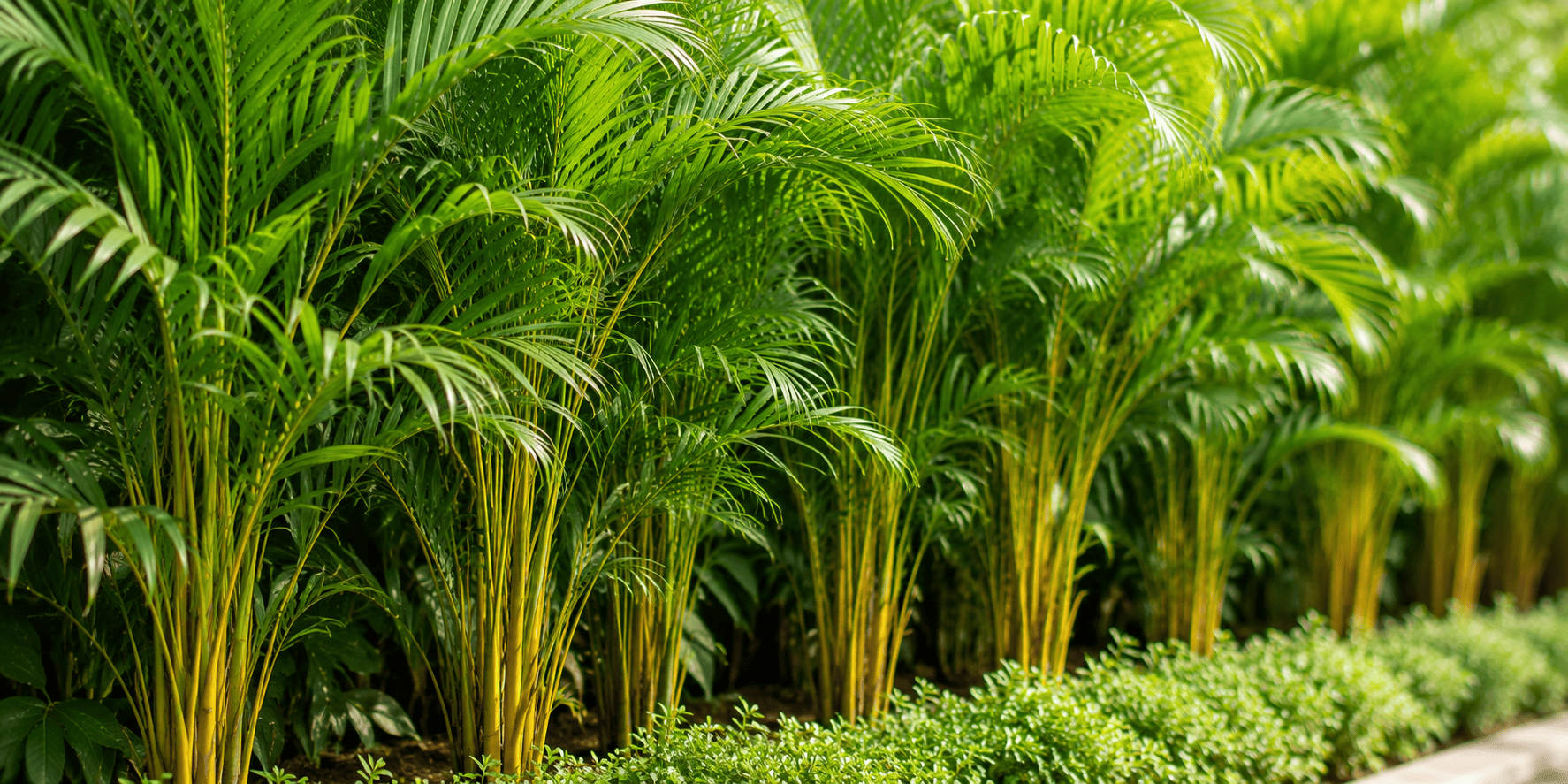
Family: Arecaceae (Palm Family) Lifespan: Perennial (10+ Years)

Areca Palm

Dypsis lutescens
🌴 Feather Palm 🌬️ Air Purifying ✅ Pet Safe

History & Linnaean Nomenclature
Native to the humid forests of Madagascar, the Areca Palm, scientifically known as Dypsis lutescens, is also commonly referred to as the Butterfly Palm or Golden Cane Palm. It belongs to the Arecaceae (palm) family and is characterized by its clustering habit, producing multiple golden-hued, bamboo-like stems that sprout from the base. Historically, it was imported worldwide as an ornamental feature, and it eventually gained fame in the late 20th century as a top-tier indoor air-purifying plant, a status bolstered by various NASA-related studies suggesting it effectively removes toxins like formaldehyde and xylene.

Botanical Culture & Distribution
In its natural habitat, Dypsis lutescens thrives in the humid, tropical lowlands of Madagascar, though it is currently considered endangered in the wild due to habitat destruction. Beyond its native range, it has been widely introduced and naturalized in tropical regions across the globe. In indoor horticulture, it is highly prized for its soft, arching, feather-like fronds that bring a lush, tropical aesthetic to interiors. It is remarkably popular in modern wellness-focused office designs and residential spaces, not only for its air-cleaning properties but also for its ability to add significant visual volume and a calming natural presence to large indoor areas.

Cultural & Practical Usage

Ornamental & Interior Usage

Highly prized for its lush, arching fronds and elegant aesthetic, the Areca Palm is a staple of interior design. It serves as a large-scale structural plant for living rooms, offices, and commercial lobbies, creating a calming, tropical atmosphere.

Air Purification Profile

Renowned for its efficiency in indoor environments, the Areca Palm is recognized for its high rate of transpiration, which helps naturally humidify indoor air. It is also noted for its ability to filter common airborne toxins such as formaldehyde, xylene, and toluene.

Spiritual & Cultural Usage

The Areca Palm is often associated with positive energy and growth. In many wellness-focused traditions, it is kept in living spaces to signify vitality and prosperity, while its presence is believed to reduce stress and improve mental well-being in professional environments.

Propagation Methods

Propagation is primarily achieved through division. Because Areca Palms grow in clusters, you can carefully separate established clumps with healthy root systems during repotting. Propagation via seeds is possible but significantly slower and more demanding.

Areca Palm Indoor Specimen
Environmental Palm Display
  • Watering Guidelines: Prefers soil that is consistently moist but never waterlogged. Allow the top inch of the potting medium to dry slightly between waterings. Use distilled or filtered water if possible, as palms are highly sensitive to fluoride and chlorine, which cause leaf tip browning.
  • Growth Conditions: Thrives in bright, filtered indirect light. Avoid harsh, direct afternoon sun, which can scorch the delicate fronds. Prefers high environmental humidity and requires well-draining, peat-based soil mixes.
  • Vulnerabilities: Extremely sensitive to poor water quality, low humidity, and cold drafts. Susceptible to spider mites, particularly in dry indoor environments. Yellowing fronds often indicate a combination of overwatering and insufficient humidity.
  • Growth Habit: A clustering, multi-stemmed palm that grows in dense, elegant clumps, eventually forming a soft, canopy-like spread.
  • Root System: Features a relatively non-invasive, fibrous root system that prefers to be somewhat contained; however, it requires enough space to support its vigorous, multi-stemmed growth habit.
  • Frond Structure: Large, pinnate (feather-like) fronds that arch gracefully outward from the main stems, consisting of many narrow, linear leaflets.
  • Foliage Detail: Fronds are a vibrant, medium-green color. The individual leaflets are arranged in a "V" shape along the rachis, giving the plant its distinctive, delicate, and airy appearance.
  • Stem Characteristics: Smooth, bamboo-like stems that often exhibit a distinct golden-yellow to greenish coloration, particularly when the plant receives adequate light.
  • Floral Morphology: In optimal outdoor tropical conditions, mature palms produce large, branched inflorescences bearing clusters of small, bright yellow flowers, which are followed by small, yellowish-orange to black fruit.
  • Environmental Adaptation: The Areca Palm is highly optimized for tropical environments, designed to filter light through its dense, multilayered fronds while effectively transpiring moisture to regulate its internal temperature.
SAFETY: Non-Toxic Profile & Handling

Pet-Friendly Botanical: The Areca Palm (Dypsis lutescens) is officially recognized as non-toxic to both cats and dogs by the ASPCA. It is a fantastic choice for households with curious pets, offering a lush, tropical aesthetic without the health risks associated with many other common indoor palms.

To Humans & Infants

Completely non-toxic. While the fronds are not intended for human consumption, they pose no chemical danger if accidentally touched or mouthed. The only minor risk is a physical scratch from the pointed tips of the leaflets.

To Household Pets

Entirely safe. Ingestion of the leaves may cause mild, temporary indigestion or vomiting due to the fibrous texture, but the plant contains no toxic compounds harmful to dogs or cats.

Cultivation & Pet Maintenance

While safe, pets may still enjoy "playing" with the fronds. If your cat or dog frequently grazes on your Areca Palm, consider placing it in a well-lit corner or a specialized plant room to preserve the frond integrity and ensure a healthy, undisturbed growth habit.


Areca Palm Frond Texture
Pet-Safe Foliage

Small efforts save a dying plant.

Get instant botanical diagnostics, precise care timetables, and expert structural advice tailored to support your garden's health daily.

Download PlantDecoder App Now

Frequently Asked Questions

Common botanical queries and troubleshooting instructions for Dypsis lutescens.

Why are the leaf tips of my Areca Palm turning brown?
Brown, crispy tips are the most common issue, usually caused by low humidity, poor water quality (fluoride/chlorine), or inconsistent watering. Increase humidity with a humidifier, use filtered or distilled water, and keep the soil lightly moist.
Does the Areca Palm require direct sunlight?
No. Areca Palms thrive in bright, filtered indirect light. Direct, harsh sunlight can easily scorch the delicate, arching fronds, causing yellowing or bleached patches. A spot near a bright window with a sheer curtain is ideal.
Why are the stems of my palm turning yellow?
While the stems naturally have a golden-yellow hue (giving them the name "Golden Cane Palm"), intense, widespread yellowing can indicate overwatering, underwatering, or spider mite infestation. Check the soil moisture and inspect the undersides of leaves for webbing.
How often should I water my Areca Palm?
Keep the soil consistently moist but not waterlogged. Water when the top inch of the potting mix feels dry to the touch. Ensure excellent drainage; never let the pot sit in a saucer of stagnant water, as this will lead to root rot.
Is the Areca Palm safe for my pets?
Yes. The Areca Palm is completely non-toxic to cats and dogs. It is one of the best palm choices for pet owners who want to incorporate large, tropical foliage into their home without worrying about the health risks associated with other palm varieties.
What should I do if I see webbing on the fronds?
Webbing is a classic sign of spider mites, which are highly attracted to the dry indoor air that Areca Palms often struggle with. Treat by gently wiping the fronds with insecticidal soap or a mild neem oil solution and increase the surrounding humidity.
Can I prune the brown fronds off?
Yes, you can prune away brown or damaged fronds to maintain the palm's aesthetic. Use sharp, sterilized shears to cut the stem as close to the base as possible without damaging the healthy, growing shoots.
Does the Areca Palm actually clean the air?
Yes. It is highly valued as an efficient air purifier. Its large surface area of foliage is excellent at humidifying the air and removing common indoor volatile organic compounds (VOCs) such as formaldehyde and xylene.
Why is my Areca Palm growing so slowly?
Areca Palms can be slow to establish when moved to new indoor locations. Slow growth is often caused by insufficient light or a root-bound container. Ensure it has enough space and bright, indirect light, and feed with a palm-specific fertilizer during the growing season.
What kind of fertilizer should I use?
Use a balanced, slow-release fertilizer formulated specifically for palms during the spring and summer. Palms have specific micronutrient needs (like magnesium and potassium), and a palm-specific formula helps prevent common nutrient deficiencies that lead to leaf yellowing.