
Dieffenbachia


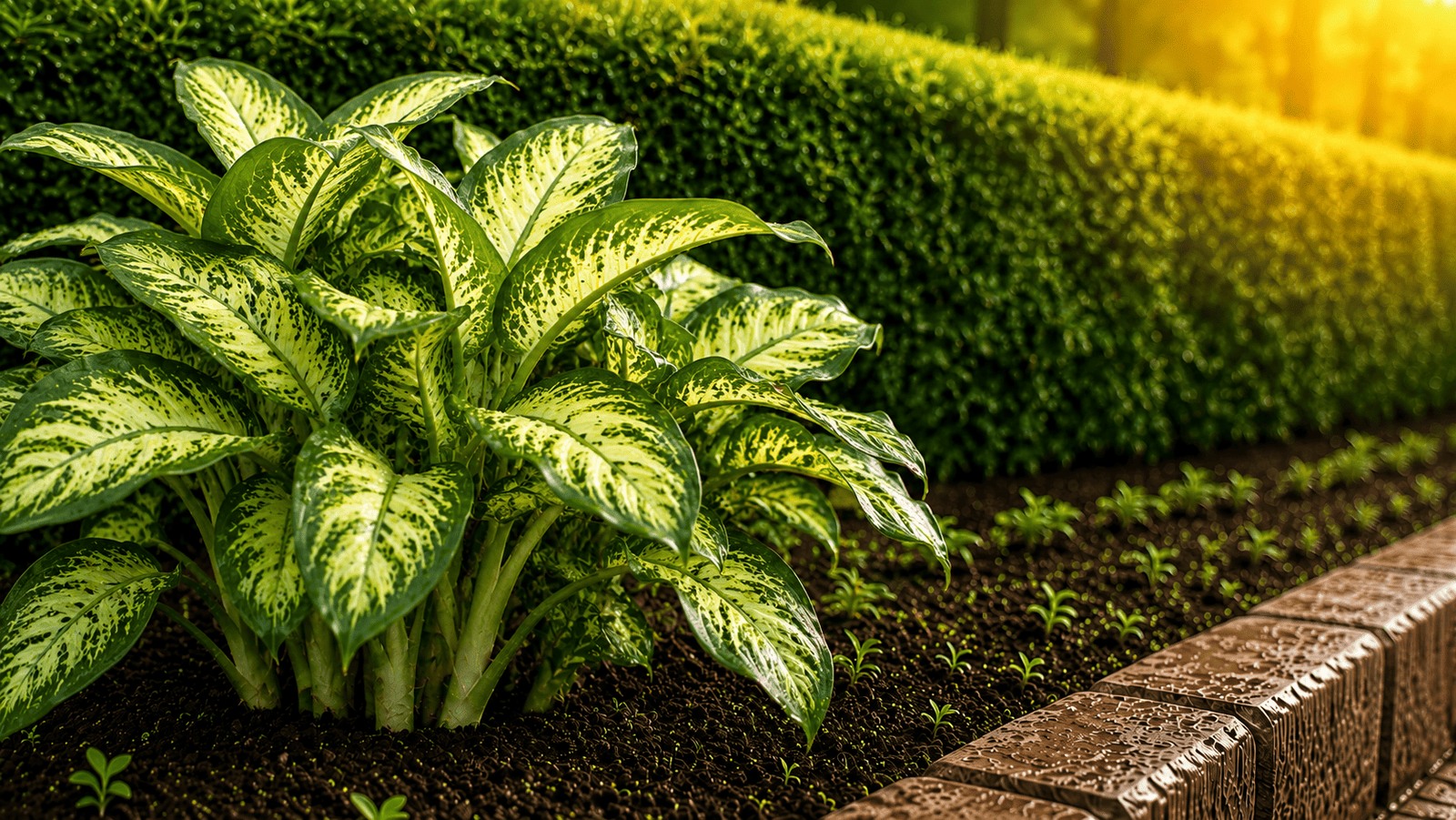
- Watering Guidelines: Allow the top 2 inches of soil to dry out completely between watering sessions. Avoid soggy soil or standing water to prevent root rot, while ensuring consistent moisture during active growth.
- Growth Conditions: Thrives in bright, indirect sunlight. Direct scorching sun will bleach and burn its variegated leaves. Prefers warm indoor temperatures between 18°C and 27°C (65°F to 80°F) and high humidity.
- Vulnerabilities: Sensitive to cold drafts, sudden temperature drops, and overwatering. Susceptible to common indoor pests like spider mites, mealybugs, and scale insects.
- Growth Habit: Upright, single or multi-stemmed evergreen herbaceous perennial featuring thick, fleshy, cane-like stems.
- Root System: Shallow, fibrous root system that prefers slightly tight, well-draining container boundaries.
- Leaf Structure: Large, alternate, oblong to elliptic leaves attached by sturdy sheathing petioles along the main stem.
- Foliage Detail: Richly variegated leaves displaying striking patterns of creamy white, ivory, and shades of deep emerald green, giving them a vibrant ornamental appearance.
- Bloom Lifespan: Mature indoor specimens occasionally produce a greenish-white calla-like spadix inflorescence that persists for a short duration during summer.
- Floral Morphology: Inconspicuous flowers enclosed within a modified pale green leaf spathe, typical of the Araceae family.
- Stem Characteristics: Thick, succulent, jointed green canes that exude a milky, toxic sap containing calcium oxalate crystals when cut or broken.
Toxicity Profile: Dieffenbachia seguine contains needle-like insoluble calcium oxalate crystals (raphides) in all its tissues. Ingestion or direct sap contact causes intense localized irritation, earning it the historical moniker "Dumb Cane."
To Humans & Children
Chewing or swallowing leaves causes immediate oral pain, intense burning, swelling of the tongue and vocal cords, and temporary speech impairment. Keep out of reach of children.
To Household Pets
Highly toxic to cats and dogs. Ingestion leads to severe burning of the mouth, excessive drooling, vomiting, and difficulty swallowing due to mechanical tissue irritation from oxalate crystals.
Handling & Placement Precautions
Always wear gloves and wash hands thoroughly after pruning or propagating to prevent accidental sap transfer to eyes or skin. Position potted plants on elevated stands out of reach of pets and young children.