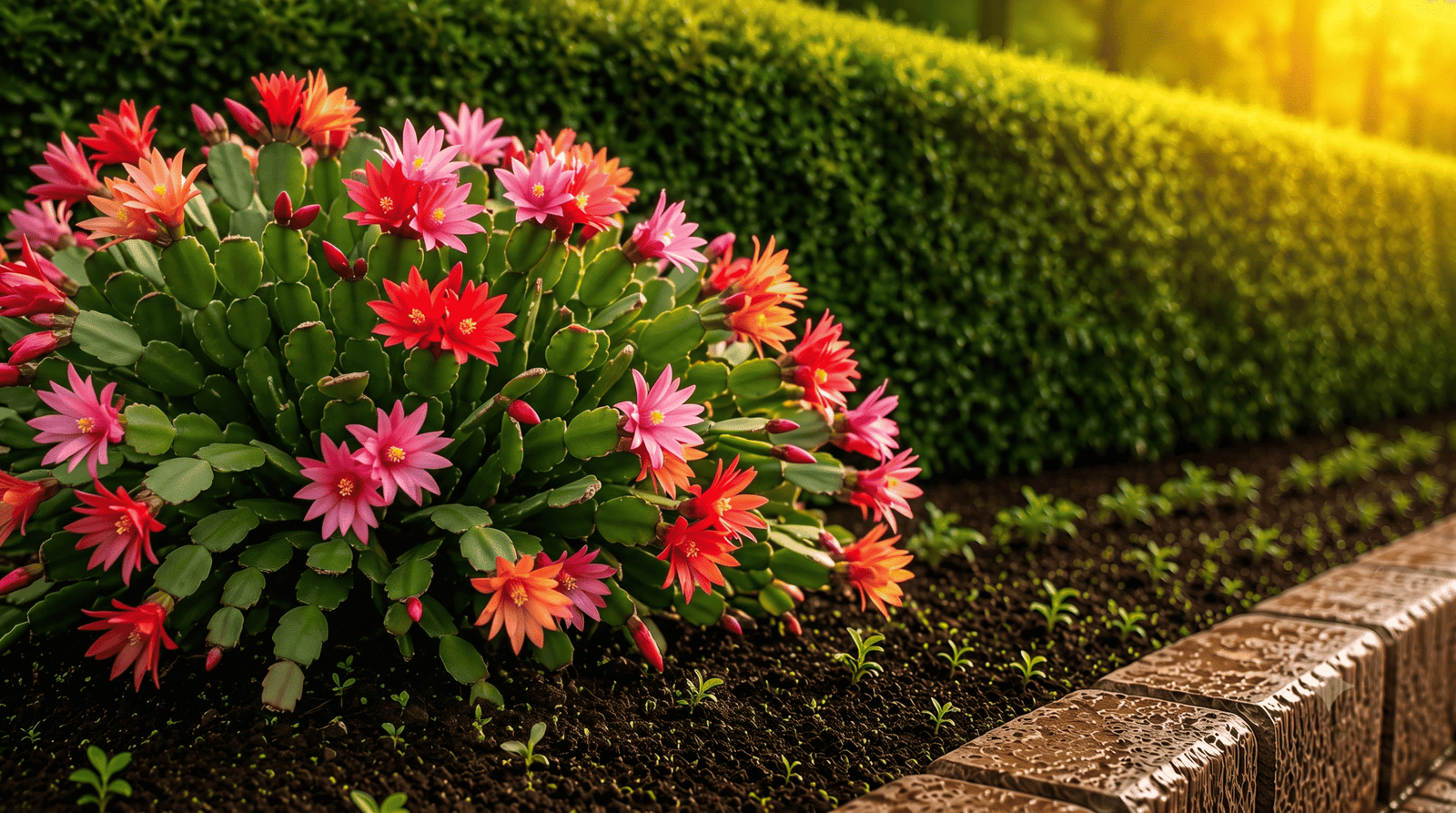
Family: Cactaceae (Cactus Family) Lifespan: Perennial Houseplant

Easter Cactus

Rhipsalidopsis gaertneri (Hatiora gaertneri)
🌸 Spring Blooming 🌳 Epiphytic Habit ✅ Pet Safe

History & Taxonomy
Native to the rainforests of southeastern Brazil, the Easter Cactus (Rhipsalidopsis gaertneri, formerly Hatiora gaertneri) is an epiphytic perennial belonging to the cactus family (Cactaceae). Unlike desert cacti, it grows naturally on trees and rocks under the filtered canopy of tropical forests. It was introduced to European horticulture in the late 19th century and has since become a cherished indoor holiday houseplant, celebrated for its brilliant burst of star-shaped spring blossoms that emerge in shades of pink, red, orange, and white.

Botanical Culture & Distribution
Thriving natively in humid, subtropical tree-canopy microclimates where it absorbs moisture from mist and organic debris, Rhipsalidopsis gaertneri adapts wonderfully to indoor container cultivation. Culturally, it is prized by gardeners worldwide for its distinctive segmented flat stems with bristly areoles and its reliable spring bloom cycle—often coinciding with Easter—differentiating it from its seasonal relatives like the Thanksgiving and Christmas cacti.

Cultural & Practical Usage

Indoor Décor & Hanging Baskets

Widely prized as a premier indoor ornamental houseplant. Its segmented, arching stems make it exceptionally well-suited for hanging baskets or elevated containers where its vibrant spring floral displays can cascade freely.

Seasonal Spring Bloomer

Celebrated for bringing vibrant color into homes during the spring season. Its star-shaped blossoms provide a cheerful, living floral centerpiece that bridges the transition from winter dormancy into active seasonal renewal.

Holiday Gifting Tradition

Frequently cultivated and shared as a traditional Easter and spring holiday gift, symbolizing renewal, enduring care, and bringing natural warmth into indoor living spaces.

Stem Segment Propagation

Easily propagated by gently twisting off healthy stem segments (containing 2 to 3 joints) after the blooming period. Allowing the base to callous for a day before planting in moist, porous soil ensures high rooting success.

Easter Cactus Potted Display
Easter Cactus Blossom Display
  • Watering Guidelines: Keep the soil evenly moist during the active spring and summer growing seasons. Allow the top inch to dry out between waterings, and reduce moisture slightly during winter dormancy.
  • Growth Conditions: Thrives in bright, indirect sunlight. Direct, scorching sun can bleach and damage its green stem segments. Prefers porous, well-draining epiphytic potting mixes and cool to moderate indoor temperatures.
  • Vulnerabilities: Extremely sensitive to overwatering and soggy soil, which easily leads to root rot. Also vulnerable to sudden temperature swings and drafts causing bud drop.
  • Growth Habit: Epiphytic, trailing succulent perennial with segmented stems that arch gracefully over container edges.
  • Root System: Shallow, delicate root system adapted to clinging onto tree bark and organic crevices in its native forest habitat.
  • Leaf Structure: Flat, jointed green stem segments (cladodes) with characteristic rounded or scalloped margins and small bristly areoles along the edges.
  • Foliage Detail: Smooth, glossy green segments that often develop subtle reddish tinges along the margins when exposed to optimal bright light.
  • Bloom Lifespan: Individual star-shaped blossoms open fully in daylight and persist for several days, collectively creating a rich spring bloom display over multiple weeks.
  • Floral Morphology: Distinctive, radiant star-shaped flowers featuring multiple bright petals (in shades of pink, red, or white) surrounding prominent central stamens.
  • Stem Characteristics: Succulent, segmented stems that branch freely as they mature, forming a dense, cascading canopy ideal for hanging baskets.
SAFETY: Non-Toxic Pet-Safe Profile

Generally Safe & Non-Toxic: The Easter Cactus (Rhipsalidopsis gaertneri) is classified by the ASPCA as entirely non-toxic to cats, dogs, and horses. It contains no harmful sap or irritating chemical compounds.

To Humans & Infants

Completely non-toxic upon touch or accidental ingestion. No specialized protective gear or handling precautions are required during pruning or standard care routines.

To Household Pets

Safe around cats and dogs. While chemically non-poisonous, ingestion of large quantities of fibrous stem segments may cause mild, self-limiting stomach discomfort in pets.

Handling & Pet Placement

Safe for placement in any family-friendly or pet-friendly living space. Though non-toxic, hanging baskets or elevated plant stands help protect trailing stems from curious pets and active toddlers.


Easter cactus pet safe display
Pet-Safe Houseplant

Small efforts save a dying plant.

Get instant botanical diagnostics, precise care timetables, and expert structural advice tailored to support your garden's health daily.

Download PlantDecoder App Now

Frequently Asked Questions

Common botanical queries and troubleshooting instructions for the Easter Cactus (Rhipsalidopsis gaertneri).

Why are the stem segments on my Easter Cactus turning purple or red?
Reddish or purplish tinges on the stem segments are often a natural response to bright sunlight exposure or minor temperature stress. If the plant looks healthy otherwise, it is simply reacting to high light levels.
Why are my Easter Cactus flower buds dropping off before opening?
Premature bud drop is usually triggered by sudden environmental changes, such as drafts, moving the plant while in bud, or inconsistent watering habits. Keep conditions stable during the blooming cycle.
How do I get my Easter Cactus to rebloom every year?
To encourage prolific spring blooms, Easter cacti require a cool rest period and shorter day lengths during late winter (temperatures around 10°C to 15°C with reduced watering for about 6 weeks).
How long do individual Easter Cactus flowers last?
Individual star-shaped blossoms typically last for several days, and because buds open sequentially, a healthy plant will put on a vibrant floral display lasting for multiple weeks in spring.
Can I keep my Easter Cactus outdoors during the summer?
Yes, you can place them outdoors in a shaded, protected patio spot once all danger of frost has passed, ensuring they are sheltered from harsh, scorching midday sun.
How often should I water an Easter Cactus?
Water thoroughly when the top inch of soil feels dry. They prefer slightly more moisture than desert cacti, but you must never let them sit in standing water to prevent root rot.
What is the difference between an Easter Cactus and a Christmas Cactus?
Easter cacti feature rounded stem margins with tiny bristles and bloom in spring with star-shaped flowers, whereas Christmas cacti have more scalloped leaf margins and bloom around late autumn to winter.
What pests commonly affect Easter Cacti?
Common pests include mealybugs and fungus gnats (often thriving in damp organic soils). Treat outbreaks early using insecticidal soap or neem oil and adjust your watering routine.
Is the Easter Cactus safe around pets and children?
Yes! Rhipsalidopsis gaertneri is officially classified by the ASPCA as non-toxic to cats, dogs, and horses, making it a wonderful pet-safe addition to any home.
When is the best time to repot my Easter Cactus?
The optimal time to repot is in late spring right after the blooming cycle finishes, using a loose, well-draining potting medium formulated for epiphytes or succulents.