
Elephant Ear Plant


- Watering Guidelines: Demands consistently moist to wet soil. Never let the soil dry out completely; they thrive in boggy conditions, near pond edges, or with frequent, deep watering.
- Growth Conditions: Thrives in full sun to partial shade. Prefers rich, organically dense, highly fertile soils with a slightly acidic to neutral pH and protection from harsh, drying winds.
- Vulnerabilities: Susceptible to spider mites in dry indoor air. Highly sensitive to frost and freezing temperatures; tubers left in cold ground will rot unless lifted and stored indoors for winter.
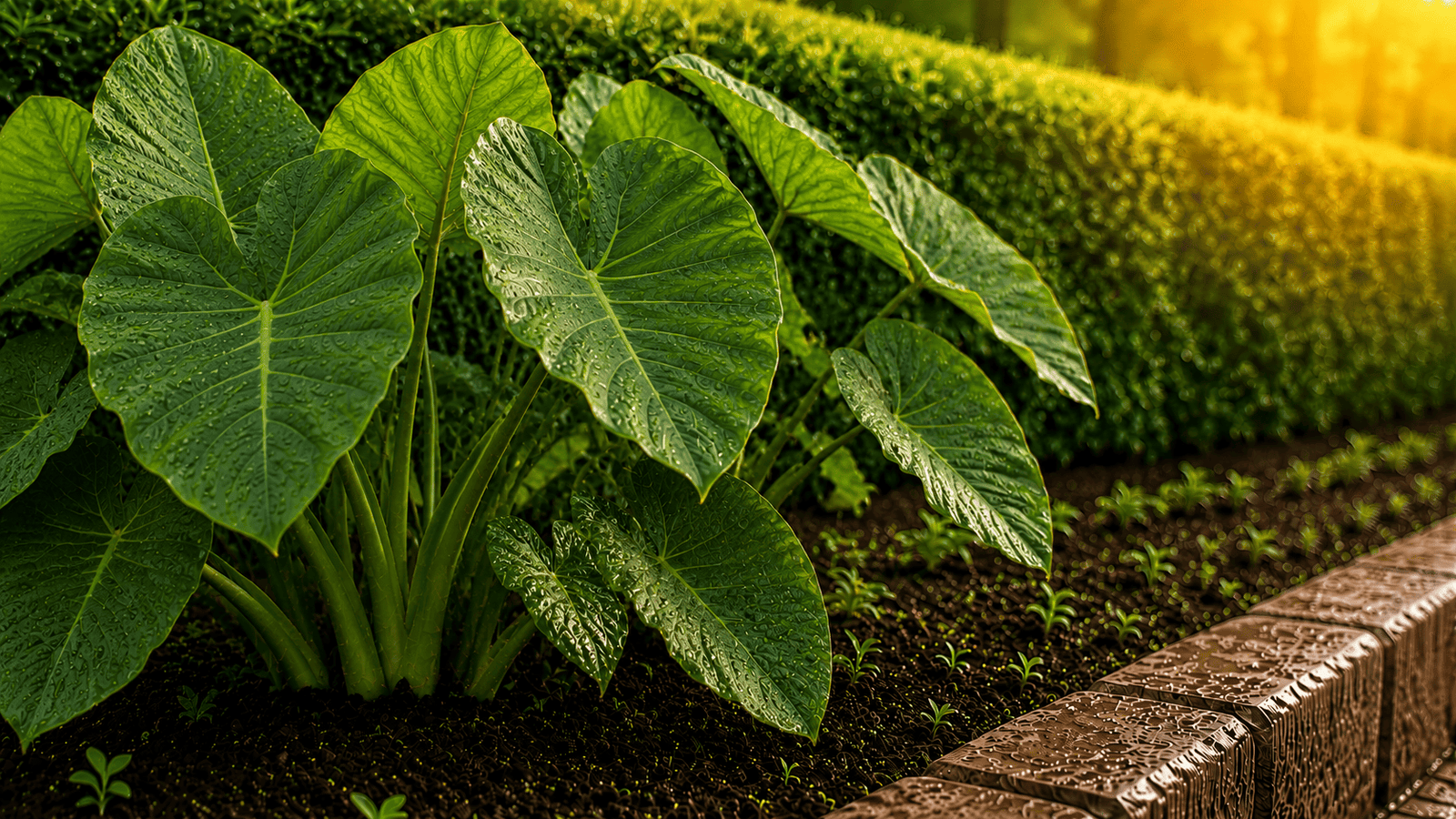
- Growth Habit: Herbaceous perennial growing from underground starchy corms (tubers), forming a massive, lush clump of upright foliage.
- Root System: Thick, fibrous root network anchored around underground corms that store water and nutrients for rapid seasonal regrowth.
- Leaf Structure: Gigantic, peltate (shield-shaped) leaves attached to long, sturdy, succulent petioles that connect near the center of the leaf blade rather than the edge.
- Foliage Detail: Velvety or smooth textured, deep green (or dark purple/black in specific cultivars) leaves featuring prominent, decorative veining.
- Bloom Lifespan: Inconspicuous calla-like inflorescences (spadix wrapped in a green or yellow spathe) that rarely appear on indoor container specimens.
- Floral Morphology: Classic arum-family flower structure consisting of a fleshy spike (spadix) bearing tiny flowers enclosed by a modified leaf bract (spathe).
- Stem Characteristics: Thick, succulent above-ground stems and leaf stalks emerging directly from underground corms without woody branches.
Toxicity Profile: All raw parts of the Elephant Ear Plant (Colocasia esculenta) contain needle-like insoluble calcium oxalate crystals. Raw ingestion causes severe oral irritation and swelling, meaning corms and leaves must always be thoroughly cooked before consumption.
To Humans & Children
Eating raw plant tissues causes intense burning, irritation of the lips, mouth, and throat, and excessive salivation. Keep out of reach of children and never consume raw.
To Household Pets
Toxic to cats and dogs. Ingestion triggers immediate oral pain, intense drooling, vomiting, and difficulty swallowing due to mechanical tissue irritation from oxalate crystals.
Handling & Preparation Precautions
Wear gloves when harvesting or pruning leaves and corms to prevent skin irritation from plant sap. Ensure complete cooking, boiling, or baking before utilizing any part for food preparation.