
Family: Moraceae Lifespan: Long-lived Indoor Tree

Fiddle Leaf Fig

Ficus lyrata
🎻 Architectural ☀️ High-Light Lover ⚠️ Toxic to Pets

Origins & Nomenclature
The Fiddle Leaf Fig (Ficus lyrata) is a member of the Moraceae family, native to the tropical rainforests of Western Africa. Its name is derived from the distinct shape of its large, glossy leaves, which resemble the body of a violin or fiddle. As a member of the fig genus, it begins its life in the wild as an epiphyte, often germinating in the canopy of another tree and slowly strangling its host with its expansive root system as it grows toward the light.

Botanical Culture & Interior Utility
In contemporary indoor gardening, the Ficus lyrata has become an iconic status symbol, prized for its dramatic, sculptural presence and large, leathery foliage. While it has a reputation for being somewhat "fussy" regarding its environment, it thrives when placed in consistent, high-light conditions and provided with a stable routine. It is a slow-growing tree that, given time and proper care, can become a monumental focal point in a home, representing the intersection of botanical artistry and interior architecture.

Cultural & Practical Usage

Interior Design & Decor

The Fiddle Leaf Fig is the definitive architectural plant for high-end interiors. Its massive, violin-shaped leaves create an immediate focal point in modern living rooms, lobbies, and workspaces, serving as a living sculpture that adds height and vertical drama.

Environmental Requirements

While aesthetically stunning, this plant is notoriously particular about its environment. It requires consistent exposure to bright, filtered light and steady ambient conditions. Avoiding frequent relocation or cold drafts is essential to maintain its vibrant, healthy foliage.

Maintenance Routine

Maintenance focuses on hygiene: regular dust removal from the large leaves allows for better photosynthesis, while cautious watering—ensuring the soil is moist but never saturated—protects against the root rot to which this species is highly susceptible.

Propagation Methods

Propagation is possible through stem cuttings featuring at least one node. While slower than many other tropicals, rooting in water or perlite under warm, high-humidity conditions is the most reliable method for creating new, smaller Fiddle Leaf Fig specimens.

Fiddle Leaf Fig interior display
Foliage Architecture Display
  • Watering Guidelines: Allow the top 2-3 inches of soil to dry out between waterings. They are prone to root rot in waterlogged soil; provide thorough irrigation only when the substrate is adequately dry.
  • Growth Conditions: Thrives in bright, filtered light. Avoid harsh, direct afternoon sun which can scorch the leaves. Prefers high humidity and stable temperatures; avoid placing near air vents or drafty doorways.
  • Vulnerabilities: Sensitive to environmental changes—moving the plant often causes leaf drop. Watch for spider mites and scale, especially in low-humidity environments.
  • Growth Habit: A slow-growing, woody, single-trunked tree (or multi-trunked if pruned) that reaches significant heights indoors.
  • Root System: Develops an expansive root system that requires a well-draining, breathable potting mix.
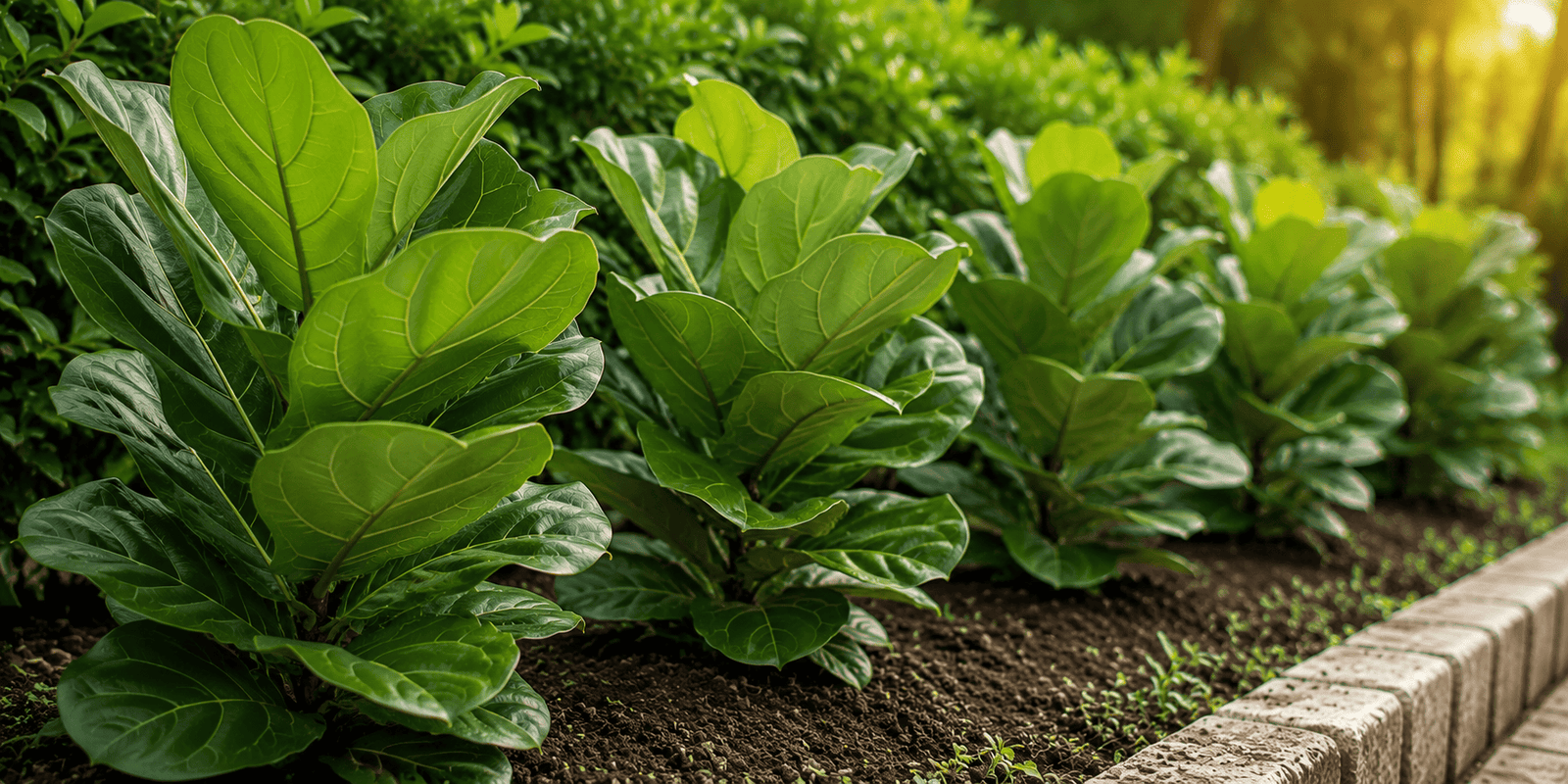
  • Leaf Structure: Large, fiddle-shaped (lyrate) leaves with prominent, wavy margins and deep, attractive veining.
  • Foliage Detail: Leaves have a thick, leathery, dark green texture that develops a beautiful sheen when kept clean of dust.
  • Stems & Bark: The trunk is relatively slender compared to the size of the leaves, covered in a smooth, light-grayish bark that becomes more textured as the tree ages.
  • Architectural Form: The plant is famous for its verticality, naturally growing tall and thin, which makes it a perfect architectural choice for tight corners or focal points.
SAFETY: TOXICITY WARNING

Toxic if Ingested: The Fiddle Leaf Fig (Ficus lyrata) contains insoluble calcium oxalate crystals and ficin, a proteolytic enzyme. All parts of the plant are considered toxic to humans and pets if ingested.

To Humans & Children

Ingestion may cause immediate irritation, burning sensations in the mouth, throat, and tongue, and potentially excessive salivation or vomiting. Contact with sap can also cause skin dermatitis.

To Household Pets

Toxic to cats and dogs. Consuming the leaves or stems often results in severe oral irritation, persistent drooling, vomiting, and loss of appetite. Consult your veterinarian immediately upon ingestion.

Handling & Safety Protocol

Always wear protective gloves when pruning or repotting, as the milky sap can cause significant skin and eye irritation. Keep the plant in an area inaccessible to pets and toddlers, and promptly wipe up any sap drippings.


Fiddle Leaf Fig foliage
Toxic Ornamental

Small efforts save a dying plant.

Get instant botanical diagnostics, precise care timetables, and expert structural advice tailored to support your garden's health daily.

Download PlantDecoder App Now

Frequently Asked Questions

Common botanical queries and troubleshooting instructions for the Fiddle Leaf Fig (Ficus lyrata).

Why are my Fiddle Leaf Fig leaves turning brown at the edges?
Brown, crispy edges are often a symptom of low humidity or inconsistent watering. Fiddle Leaf Figs are tropical plants that struggle in dry indoor air. Try using a humidifier or placing your plant in a bathroom with a window to boost moisture.
Why is my plant dropping leaves?
Leaf drop is usually a stress response caused by frequent movement or sudden environmental changes (like drafts). These trees like stability. Find a permanent, bright spot, avoid moving it, and ensure it isn't near an active air conditioning or heating vent.
How can I keep my Fiddle Leaf Fig upright?
Fiddle Leaf Figs often lean toward their light source. Rotate your plant a quarter turn every time you water it to ensure even light exposure, and consider using a moss pole or stake to provide structural support as it grows taller.
Does it need direct sunlight?
They thrive in bright, filtered light. While they appreciate lots of light, direct, harsh afternoon sun can scorch the delicate leaves. A spot near an east-facing window is often perfect.
How often should I water it?
Water when the top 2-3 inches of soil feel dry. Do not let it sit in standing water, as the roots are highly susceptible to rot. Always ensure the pot has excellent drainage.
Are they toxic to pets?
Yes, Fiddle Leaf Figs contain calcium oxalate crystals and are toxic to both cats and dogs. If ingested, they can cause oral pain, swelling, and vomiting. It is best to keep them in an area your pets cannot access.
How do I clean the large leaves?
The large leaves collect dust, which inhibits photosynthesis. Gently wipe both sides of the leaves with a soft, damp cloth every few weeks to keep them clean, healthy, and glossy.
Why is my plant growing slowly?
Fiddle Leaf Figs are naturally slow growers, especially indoors. If your plant is receiving bright, indirect light and correct water, it is likely healthy. Ensure you aren't over-fertilizing, which can cause more harm than good.
Should I prune my Fiddle Leaf Fig?
Yes, you can prune the top to encourage the plant to branch out and become bushier. Always use clean, sharp shears and make cuts just above a leaf node; note that the plant will bleed a milky sap, so wear gloves.
Can I grow it in a dark corner?
No, Fiddle Leaf Figs will not thrive in low light. In dark corners, they will stop growing, drop leaves, and eventually decline. If you absolutely need a plant in a dark spot, consider an alternative species better suited for low-light conditions.