
Family: Araceae Lifespan: Perennial (Indefinite)

Golden Pothos

Epipremnum aureum
🌿 Fast Grower ✨ Variegated Foliage ⚠️ Toxic (Do Not Ingest)

Origins & Botanical Classification
The Golden Pothos, or Epipremnum aureum, is a member of the Araceae family, native to the Society Islands of French Polynesia. Often mistakenly referred to as a Philodendron, it is distinguished by its unique leaf shape and its resilient, vining nature. In its natural tropical habitat, it is an aggressive climber that can reach massive proportions; however, in indoor settings, it is celebrated for its ability to trail gracefully from shelves or climb vertical structures. It is famously hardy and tolerant of a wide range of light conditions, making it one of the most popular house plants in the world.

Growth Habit & Cultivation
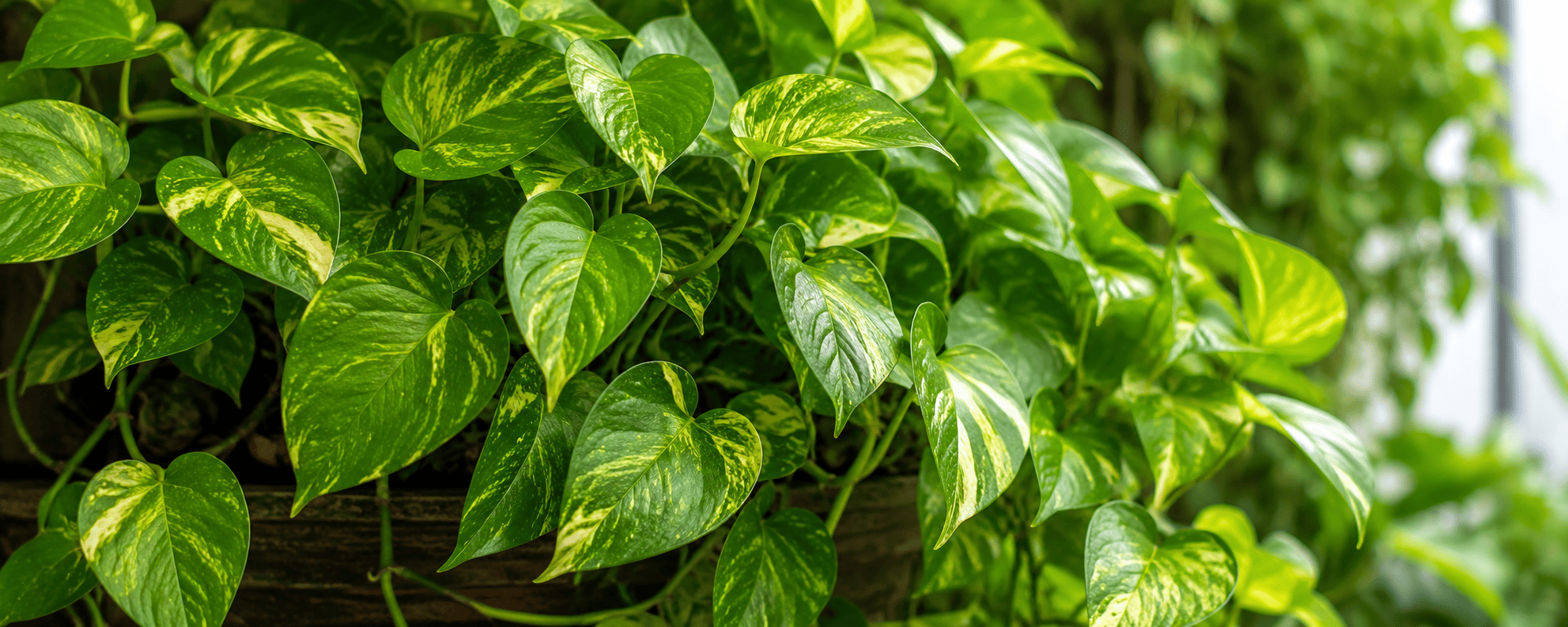
Epipremnum aureum is characterized by its heart-shaped, waxy leaves, which are typically mottled with irregular splashes of yellow or cream-colored variegation. This variegation is a direct response to sunlight; lower light levels often cause the leaves to revert to a solid, darker green. As a hemiepiphyte, it utilizes aerial roots to anchor itself to trees or other structures in the wild. Culturally, it is often associated with prosperity and good fortune in various East Asian traditions, frequently earning it the moniker "Money Plant" in many households.

Cultural & Practical Usage

Interior Decor & Air Quality

Golden Pothos is a premier choice for indoor spaces, frequently used for its trailing vines on bookshelves, mantels, or as a hanging basket plant. It is widely recognized for its ability to help filter common indoor air toxins, including formaldehyde and benzene, contributing to a cleaner home environment.

Feng Shui & Symbolism

In various Asian cultures, the Pothos is often called the "Money Plant." It is a staple in Feng Shui practices, where it is believed to attract good luck, prosperity, and wealth. Placing it in the southeast corner of a room is commonly cited as a way to enhance financial fortune.

Resilient Houseplant Care

Known as "Devil's Ivy" because it is nearly impossible to kill, this plant thrives in almost any indoor setting. It is the perfect choice for novice gardeners, tolerating low-light offices or dim corners where other plants fail, while still rewarding its owner with lush, fast-growing vines.

Propagation Methods

The Golden Pothos is arguably the easiest houseplant to propagate. Simple stem cuttings placed in a jar of water will quickly develop roots. Once rooted, they can be transferred to soil, making it incredibly simple to create new plants for friends or fill in sparse areas in your own pots.

Golden Pothos Interior Display
Environmental Vining Display
  • Watering Guidelines: Prefers a "soak and dry" approach. Allow the top 2-3 inches of soil to dry out completely between waterings. Yellowing leaves often indicate overwatering, while drooping indicates it is time for a thorough drink.
  • Growth Conditions: Highly adaptable, thriving in anything from low light to bright, indirect sunlight. Avoid direct, harsh sun, which can scorch the variegated leaves. It grows best in standard, well-draining indoor potting mixes.
  • Vulnerabilities: Generally pest-resistant but can occasionally attract mealybugs or spider mites if kept in extremely dry or stagnant air. It is not cold-hardy; keep temperatures consistently above 15°C (60°F) for best growth.
  • Growth Habit: A vigorous, vining hemiepiphyte. It naturally climbs trees in the wild using aerial roots but trails beautifully in containers or hanging baskets indoors.
  • Root System: Features strong, thick roots and produces aerial root nodes along the stems, which can easily anchor to moss poles or other vertical supports.
  • Leaf Structure: Heart-shaped (cordate) leaves that are waxy and smooth. They are alternated along the stems, spaced at intervals that allow for a cascading effect.
  • Variegation Detail: The signature "Golden" appearance comes from irregular, cream-to-gold mottled patterns on the leaves, which are genetically linked to the plant's light exposure.
  • Stem Characteristics: Stems are thick, pliable, and green, hardening slightly as they reach maturity. They are highly resilient and can easily be trimmed to maintain a specific size or shape.
  • Adaptive Strategy: Highly efficient at capturing light, which allows it to thrive in the dense shade of forest floors. Its ability to propagate via simple stem cuttings is a key survival and expansion mechanism.
SAFETY: TOXICITY WARNING

Toxic if Ingested: The Golden Pothos (Epipremnum aureum) contains insoluble calcium oxalates. While commonly grown as a houseplant, all parts of the plant are considered toxic to both humans and pets if ingested, causing oral irritation and digestive distress.

To Humans & Children

Ingestion typically causes immediate pain, burning, and swelling of the lips, tongue, and throat. Keep out of reach of young children who may be tempted to chew on the waxy, trailing leaves.

To Household Pets

Toxic to cats and dogs. Ingestion causes oral irritation, excessive drooling, difficulty swallowing, and vomiting. If your pet consumes a significant amount, contact your veterinarian immediately.

Maintenance & Safety Protocol

Ensure the plant is placed on elevated surfaces, such as hanging planters or high shelves, to keep it away from pets and small children. Always wash your hands after pruning to prevent irritation from potential sap contact.


Golden Pothos trailing vine
Toxic Ornamental

Small efforts save a dying plant.

Get instant botanical diagnostics, precise care timetables, and expert structural advice tailored to support your garden's health daily.

Download PlantDecoder App Now

Frequently Asked Questions

Common botanical queries and troubleshooting instructions for Epipremnum aureum.

Why are the leaves turning yellow?
Yellow leaves on a Pothos are most frequently a sign of overwatering or poor soil drainage. Ensure you are allowing the top 2-3 inches of soil to dry out between waterings. Occasionally, older leaves will naturally yellow and drop as part of the plant's aging process.
Why is my Pothos losing its variegation?
Variegation is a light-dependent trait. If your plant is losing its gold and cream splashes and turning solid green, it is not receiving enough light. Move it to a brighter location with indirect sunlight to encourage the plant to produce more variegated foliage.
Why are the vines becoming leggy?
"Leggy" vines—where there are long distances between leaves—are usually reaching for more light. Providing brighter, indirect light will encourage the plant to grow bushier. Additionally, regular pruning or "pinching" of the growing tips will stimulate branching and fuller growth.
How often should I water?
Pothos prefer to be on the drier side. A good rule of thumb is to water only when the top 2 to 3 inches of soil are dry to the touch. In lower light or cooler temperatures, the plant will need water less frequently than in warm, bright summer months.
Is Pothos toxic to pets or children?
Yes, Golden Pothos is toxic if ingested. It contains insoluble calcium oxalate crystals that cause immediate irritation, swelling, and pain in the mouth, tongue, and throat of both humans and pets. Keep the plant in high, inaccessible areas if you have curious children or animals.
Can I propagate my plant in water?
Pothos is one of the easiest plants to propagate in water. Simply take a stem cutting that includes at least one leaf node, place it in a jar of water, and wait for roots to develop. Once the roots are an inch or two long, you can plant it in soil.
Why are brown spots appearing on the leaves?
Brown spots can indicate a few things: low humidity (common in winter), inconsistent watering, or sometimes fungal issues caused by stagnant air. Check the soil moisture first; if it's very dry, try increasing humidity or watering slightly more often.
Does it need direct sunlight?
No, it should avoid harsh direct sunlight, which can scorch the leaves and cause the edges to turn brown. It is happiest in bright, indirect light, though it will survive and grow slowly in lower-light corners of a room.
What kind of soil does it prefer?
Pothos are not picky but they do require excellent drainage. A standard, high-quality indoor potting mix is usually perfect. If the mix seems too dense, you can amend it with perlite or orchid bark to help increase airflow around the roots.
How can I make the vines grow longer?
Consistency is key. Give the plant bright, indirect light, a stable temperature, and regular but moderate waterings. In the wild, they grow much larger when allowed to climb vertical surfaces—giving your Pothos a moss pole to climb can sometimes result in larger, more vigorous leaf development.