Hibiscus


- Watering Guidelines: Requires consistent, even moisture during the active spring and summer growing seasons. Water deeply when the top inch of soil feels dry. Drooping foliage and premature bud drop often indicate severe dehydration.
- Growth Conditions: Thrives in full, direct sunlight (at least 6-8 hours daily) to maximize flower production. Demands fertile, well-draining, slightly acidic soils and benefits immensely from regular applications of high-potassium fertilizer.
- Vulnerabilities: Highly susceptible to sap-sucking pests such as aphids, whiteflies, and spider mites. Extremely sensitive to frost and sudden temperature drops; exposure to cold drafts below 10°C will trigger massive leaf yellowing and structural dieback.
- Growth Habit: Upright, multi-branched evergreen woody shrub that forms a dense canopy. Can be readily trained and pruned into a standardized small tree form.
- Root System: Develops a strong, fibrous, branching root system that anchors the heavy top growth effectively in loamy substrates.
- Leaf Structure: Alternate, ovate to lance-shaped leaves featuring distinctively toothed or serrated margins along the edges.
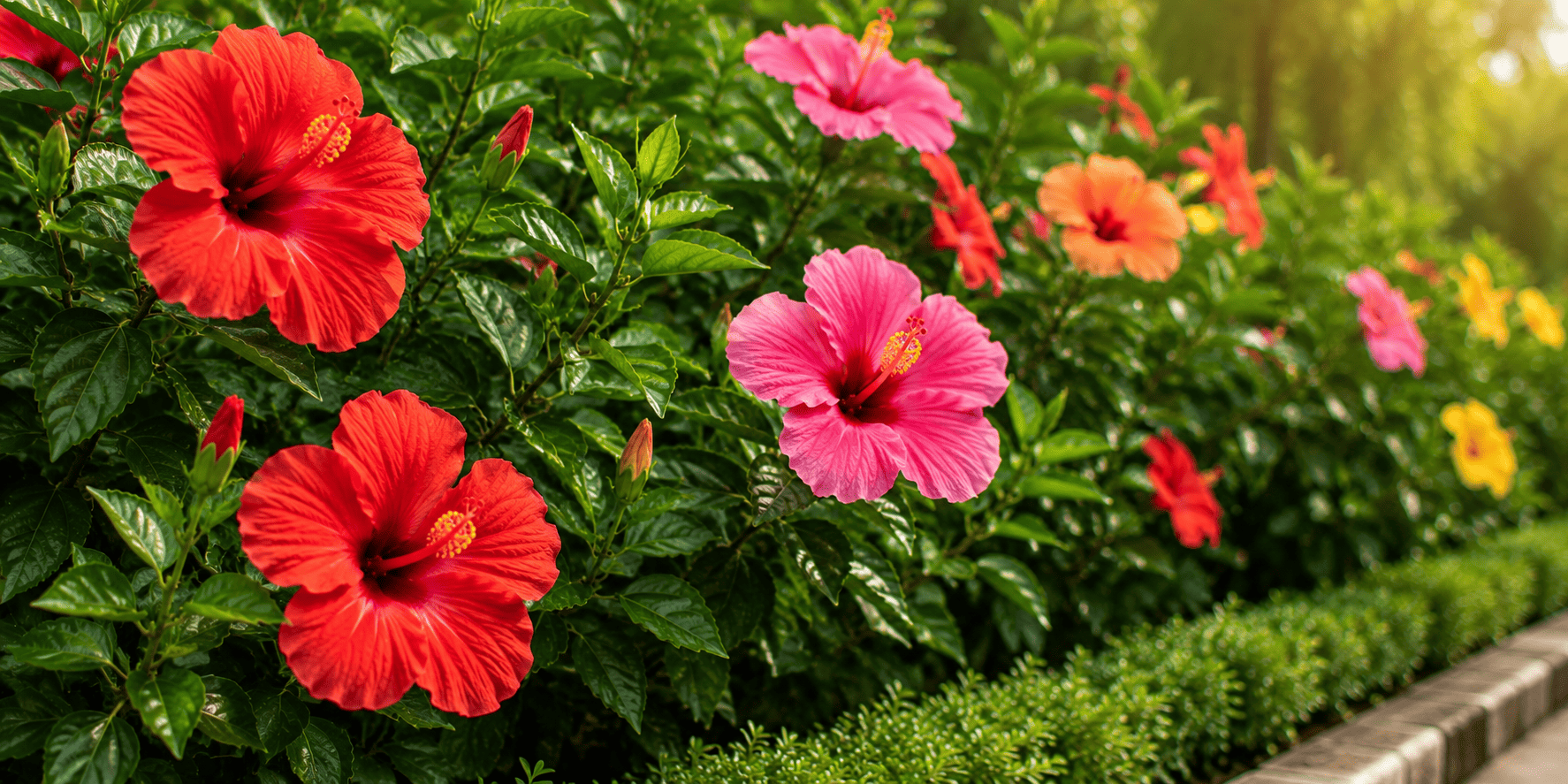
- Foliage Detail: Leaves present a smooth, glossy, deep emerald green surface that serves as a high-contrast background for its vibrant, showy blooms.
- Bloom Lifespan: Ephemeral by nature. Individual blossoms typically unfurl rapidly in the morning hours and last for only a single day before closing and dropping off the stem.
- Floral Morphology: Spectacular, large trumpet-shaped blossoms consisting of five broad, papery petals that radiate outward from a highly prominent, elongated central staminal column bearing both stamens and pistils.
- Stem Characteristics: Vigorous new growth emerges as pliable green stems, which gradually mature and harden into sturdy, woody branches covered in smooth, light-gray bark.
Generally Safe & Edible: The primary vegetative components and flowers of Hibiscus rosa-sinensis are entirely non-toxic. In fact, they are widely celebrated and cultivated globally for culinary and medicinal applications. However, standard precautions should be taken regarding nursery-applied chemicals before consumption.
To Humans & Infants
Non-toxic upon ingestion. The flowers and leaves are safely consumed in teas, jams, and salads. The only risk to infants involves a standard physical choking hazard from tough stems or exposure to commercial pesticide residues.
To Household Pets
Classified as non-toxic to dogs, cats, and horses by the ASPCA. While chemically safe, ingestion of large amounts of any unfamiliar fibrous plant material may cause mild, self-limiting stomach upset in pets.
Cultivation & Culinary Safety
No special protective gear is required for pruning. If you intend to harvest the flowers for edible garnishes or herbal teas, cultivate the shrub organically. Never consume blooms from plants recently treated with systemic insecticides.