
Japanese Maple


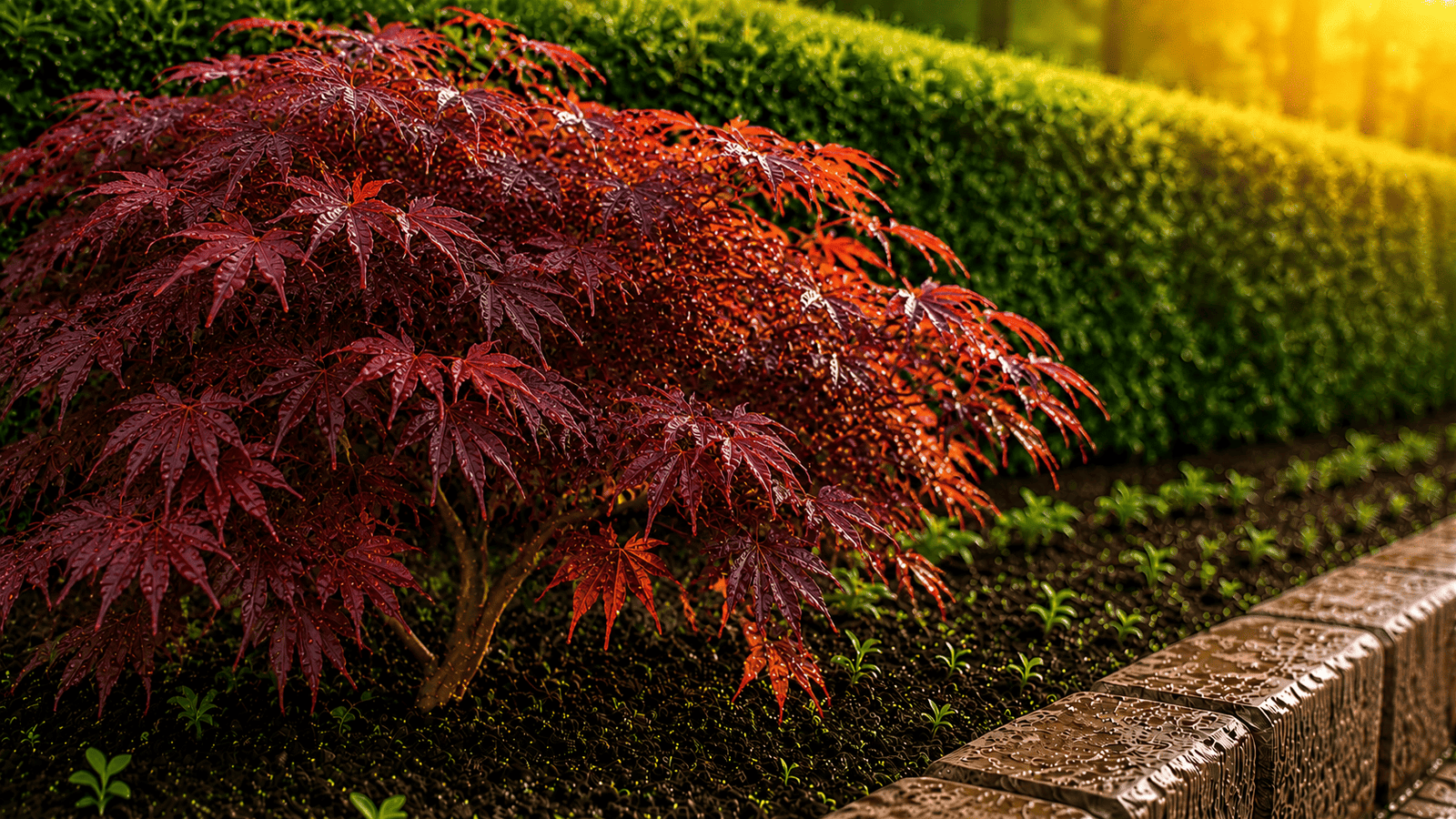
- Watering Guidelines: Requires consistent, evenly moist soil, especially when young or planted in containers. Water deeply whenever the top 2 inches of soil feel dry. Protect from severe drought, which causes leaf scorch and tip burn on delicate lobes.
- Growth Conditions: Thrives in partial shade (particularly protection from harsh afternoon sun) to prevent leaf scorching. Prefers rich, organically fertile, slightly acidic, and exceptionally well-draining soil mulched generously to keep shallow roots cool.
- Vulnerabilities: Susceptible to verticillium wilt, root rot in poorly draining clay soils, and leaf scorch from hot, dry winds or intense direct sun. Protect young trees from late spring frosts.
- Growth Habit: Graceful, deciduous small tree or large shrub featuring elegant, slender branching patterns and a naturally rounded or umbrella-like canopy.
- Root System: Shallow, fibrous root system that spreads widely just beneath the soil surface, requiring careful cultivation around the base.
- Leaf Structure: Deeply lobed, star-shaped palmate leaves featuring 5 to 9 sharply pointed, finely toothed lobes radiating from a central point.
- Foliage Detail: Renowned for breathtaking seasonal color transformations—emerging in brilliant shades of red, pink, or chartreuse in spring, maturing to deep green or bronze in summer, and finishing with fiery crimson, orange, and yellow in autumn.
- Bloom Lifespan: Small, inconspicuous purple-red flowers appear in delicate clusters during mid-to-late spring, lasting for several weeks before giving way to winged samaras (helicopter seeds).
- Floral Morphology: Tiny, paired flowers consisting of five small sepals and five petals, blooming in small umbrella-like cymes hidden amidst the expanding foliage.
- Stem Characteristics: Slender, smooth, and pliable young twigs that mature into refined, gracefully arching woody branches covered in smooth gray-brown bark.
Completely Safe & Pet-Friendly: The Japanese Maple (Acer palmatum) is entirely non-toxic. It poses no chemical hazards or severe toxicity risks to humans or domestic animals, making it an ideal, worry-free choice for residential gardens.
To Humans & Children
Completely safe upon touch or accidental contact. The foliage and wood contain no toxic compounds or irritating saps, presenting zero chemical risk for family environments.
To Household Pets
Classified as non-toxic to cats, dogs, and horses by the ASPCA. While chemically safe, ingestion of large quantities of fibrous fallen leaves may cause mild, self-limiting digestive upset in pets.
Garden Safety & Maintenance
No special protective gear or gloves are required when pruning or maintaining your Japanese Maple. Enjoy cultivating this graceful specimen tree anywhere in your landscape with total peace of mind.