
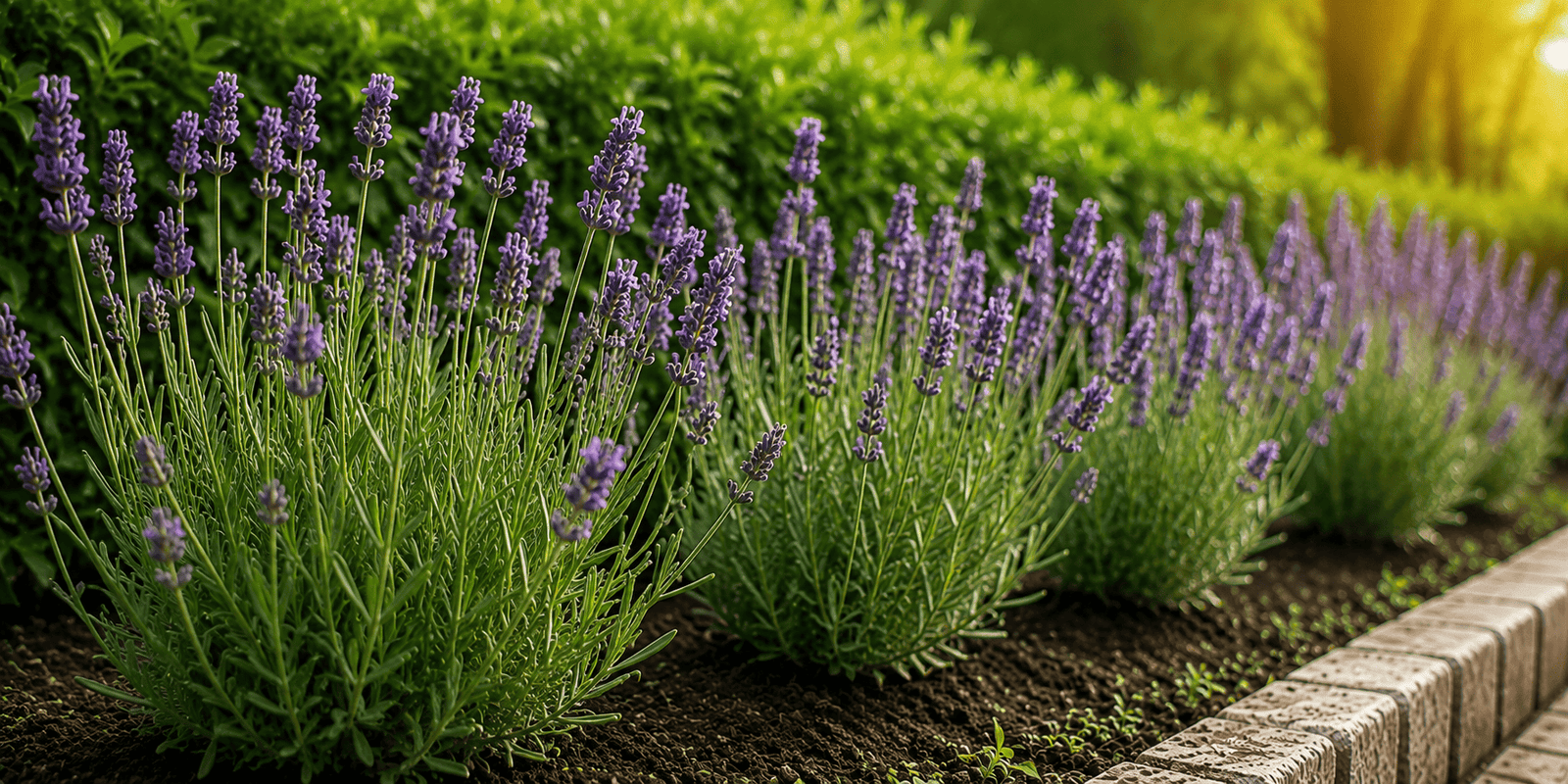
Family: Lamiaceae (Mint Family) Lifespan: Perennial Herb

Lavender

Lavandula angustifolia
💜 Aromatic ☀️ Sun-Drenched 🐝 Pollinator Friendly

Origins & Nomenclature
The genus Lavandula, belonging to the Lamiaceae (mint) family, has been prized since antiquity, with its name derived from the Latin lavare, meaning "to wash"—a nod to its historical use in baths and as a scent for linens. While there are many species, Lavandula angustifolia (English Lavender) is the most iconic. It is native to the Mediterranean region, where it has evolved to thrive in sun-drenched, rocky landscapes, developing its signature narrow, silvery-green leaves and highly fragrant, violet-blue flower spikes as an adaptation to hot, dry climates.

Botanical Culture & Uses
Lavender is a cornerstone of Mediterranean horticulture and a beloved herb globally. Its resilience in poor, fast-draining soil and its status as a premier pollinator attractor make it a favorite for sustainable garden designs. Beyond the garden, its utility is unmatched: it is extensively harvested for essential oils used in perfumery, culinary infusions in teas and baked goods, and traditional holistic medicine, where it is globally renowned for its calming, therapeutic properties and ability to support relaxation.

Cultural & Practical Usage

Ornamental & Garden Utility

Lavender is a classic choice for xeriscaping, fragrant borders, and pollinator-friendly gardens. Its drought tolerance and preference for poor soil make it exceptionally low-maintenance once established, creating stunning purple drifts that thrive in full sun.

Culinary & Therapeutic Uses

Used for centuries, lavender flowers are a staple in culinary arts for floral teas, baked goods, and syrups. In aromatherapy and wellness, its oil is world-renowned for promoting relaxation, reducing stress, and supporting restful sleep.

Historical & Symbolic Significance

Beyond its scent, lavender has historically symbolized serenity, grace, and devotion. From being used as a sacred herb in ancient rituals to its widespread modern use in home fragrance to symbolize purity and peace, it remains deeply embedded in global cultural practices.

Propagation & Care

Lavender is best propagated via semi-hardwood cuttings taken in late summer. Crucial to its health is regular pruning—cutting back a portion of the foliage after blooming prevents the woody base from becoming too sparse and keeps the plant compact and productive.

Lavender field landscape
Mediterranean Garden Landscape
  • Watering Guidelines: Drought-tolerant once established. Water deeply but infrequently; allow soil to dry out significantly between waterings. Overwatering is the most common cause of root death.
  • Growth Conditions: Demands full, direct sun (at least 6-8 hours daily). Requires exceptionally well-draining, gritty, or sandy soil. Thrives in neutral to slightly alkaline pH; avoid heavy, moisture-retentive clays.
  • Vulnerabilities: Highly susceptible to root rot in poorly draining, humid, or waterlogged conditions. Needs excellent air circulation to prevent fungal diseases like leaf spot.
  • Growth Habit: A woody-based, perennial sub-shrub that forms a dense, neat mound. Left unpruned, it tends to develop a woody, sprawling base over time.
  • Root System: Develops a deep, extensive, and fibrous root system designed to forage for water in arid, rocky environments.
  • Leaf Structure: Linear, narrow, and lance-shaped leaves, typically featuring a silvery-gray or woolly texture caused by fine hairs, which help the plant retain moisture.
  • Foliage Detail: The foliage is evergreen and highly aromatic, containing essential oil glands that release a signature scent when brushed against or crushed.
  • Floral Morphology: Produces spikes of small, tubular flowers arranged in whorls. Colors range from deep violet-blue to lighter shades, depending on the variety.
  • Stem Characteristics: Stems are upright and branched, becoming woody and rigid as the plant matures. Annual pruning is required to stimulate new, green growth and prevent excessive woodiness.
SAFETY: Non-Toxic Profile

Generally Safe: True Lavender (Lavandula angustifolia) is considered non-toxic to humans and common household pets. It is widely prized for its therapeutic properties and culinary versatility, though moderation is always recommended.

To Humans & Infants

Non-toxic. Lavender is widely used in teas, baking, and essential oils. While safe, concentrated essential oils should never be ingested directly, and infants may have sensitivities to strong fragrances.

To Household Pets

Classified as non-toxic to dogs and cats by the ASPCA. While safe, eating large quantities of the plant material can cause mild gastrointestinal upset due to the fibrous nature of the plant.

Usage & Handling

No special protective gear is required for gardening. When using lavender for culinary or wellness purposes, ensure you are using culinary-grade plants that have not been treated with synthetic pesticides or herbicides.


Dried lavender culinary harvest
Culinary/Safe Profile

Small efforts save a dying plant.

Get instant botanical diagnostics, precise care timetables, and expert structural advice tailored to support your garden's health daily.

Download PlantDecoder App Now

Frequently Asked Questions

Common botanical queries and troubleshooting instructions for Lavender (Lavandula).

Why is my lavender plant turning woody at the base?
It is natural for lavender to become woody as it ages. However, lack of regular pruning can accelerate this. To keep your lavender compact and productive, prune back about one-third of the green growth annually right after the flowers fade.
Why are my lavender plants dying in the center?
Lavender often "dies back" in the center if it lacks sufficient airflow or sunlight. Ensure your plants have space between them and are not crowded by other garden plants. Good drainage is also critical; sitting in heavy, wet soil will cause root issues that manifest as center dieback.
Can lavender be grown in containers?
Yes, but you must use a well-draining potting mix (often amended with sand or grit) and a pot with drainage holes. Lavender detests "wet feet," so ensure the container is not too large for the plant, as excess soil holds too much moisture.
How much sun does lavender need?
Lavender is a sun-lover that requires full sun (at least 6-8 hours) daily. In low-light environments, lavender will become leggy, lose its silvery-green color, and produce very few flower spikes.
Why is my lavender not flowering?
The most common culprits are too much nitrogen fertilizer (which encourages leaf growth over flowers), poor drainage, or insufficient sunlight. Lavender performs best in lean, somewhat poor soil that isn't overly rich.
How often should I water lavender?
Once established, lavender is drought-tolerant. Water young plants regularly until they are rooted, but after that, allow the soil to dry out significantly between waterings. In high-humidity climates, be especially careful not to overwater.
Is lavender safe for my pets?
Lavender is generally non-toxic to dogs and cats according to the ASPCA. However, as with any plant, eating large amounts of raw plant material can lead to mild digestive upset, vomiting, or diarrhea.
When is the best time to harvest?
For the best scent and color, harvest in the morning once the dew has dried, just as the flower buds are starting to open but before they are fully bloomed out.
Why do my lavender leaves have white powdery spots?
This is likely powdery mildew, a fungal disease favored by high humidity and poor air circulation. Improve airflow by thinning out branches, avoid overhead watering, and ensure your plants are in a spot with plenty of sunlight.
What soil pH does lavender prefer?
Lavender prefers neutral to slightly alkaline soil. If your garden soil is naturally acidic, you can often amend it with a little garden lime to raise the pH and make the environment more hospitable for your plants.