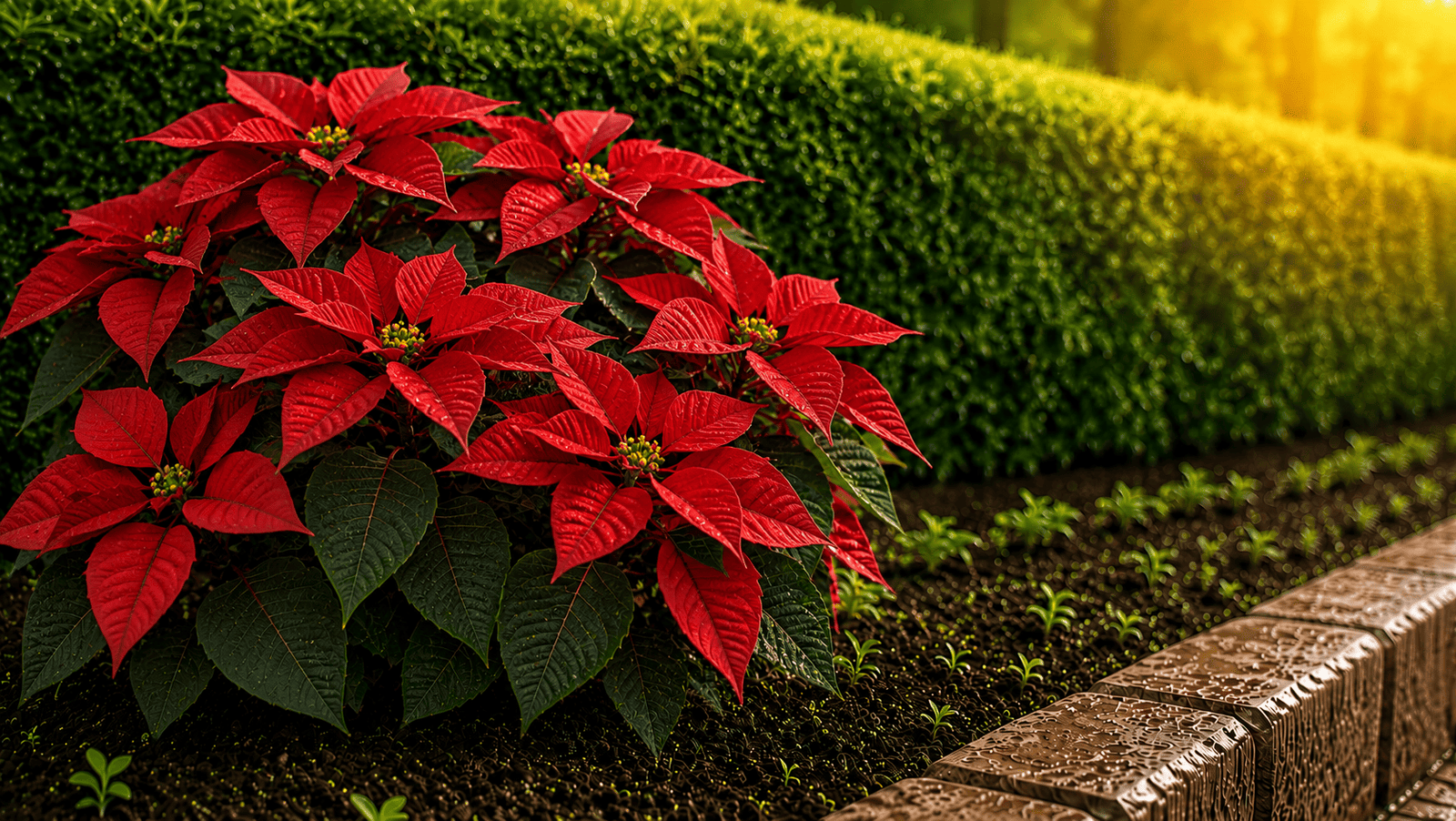
Poinsettia


- Watering Guidelines: Water thoroughly when the top surface of the soil feels dry to the touch. Ensure excess water drains completely, as sitting in waterlogged soil rapidly leads to root rot and premature leaf drop.
- Growth Conditions: Thrives in bright, indirect sunlight (at least 6 hours daily). Prefers stable indoor temperatures between 18°C and 22°C (65°F to 72°F) and must be kept far away from cold drafts or heating vents.
- Vulnerabilities: Sensitive to sudden temperature fluctuations, overwatering, and low light conditions, which trigger yellowing leaves and bract drop. Susceptible to common indoor pests like whiteflies and mealybugs.
- Growth Habit: Upright, branching woody shrub or perennial plant that forms a dense, compact shape when cultivated as a potted holiday specimen.
- Root System: Developing a fibrous, sensitive root system that requires loose, porous, and well-draining soil mixes to thrive.
- Leaf Structure: Alternate, dark green, oval to elliptic leaves with smooth or subtly lobed margins along the stems.
- Foliage Detail: Features large, vibrantly colored upper leaves known as bracts (commonly red, pink, white, or marbled) that surround the true flowers, serving as the plant's primary visual attraction.
- Bloom Lifespan: Long-lasting seasonal display; the colorful bracts persist for several months through the winter holiday season if proper care is maintained.
- Floral Morphology: True flowers are small, inconspicuous yellow clusters called cyathia located at the center of the colorful bract whorls.
- Stem Characteristics: Sturdy woody stems that exude a milky white latex sap when cut, broken, or pruned.
Mild Toxicity Profile: Contrary to urban legend, the Poinsettia (Euphorbia pulcherrima) is not fatally toxic, but its milky white latex sap can cause localized skin irritation and mild gastrointestinal discomfort if ingested.
To Humans & Children
Ingesting leaves can cause minor stomach upset, nausea, or vomiting. Contact with the milky latex sap may trigger localized skin irritation, rashes, or eye discomfort if rubbed.
To Household Pets
Mildly toxic to cats and dogs. Ingestion of foliage or sap typically results in drooling, vomiting, or mild diarrhea, which is usually self-limiting and rarely life-threatening.
Handling & Placement Precautions
Wear gloves when pruning or handling broken stems to avoid contact with the irritating latex sap. Keep potted poinsettias out of direct reach of pets and small children to prevent accidental ingestion or skin contact.