
Family: Apocynaceae (Dogbane Family) Lifespan: Perennial (Tender)

Madagascar Periwinkle

Catharanthus roseus
🌸 Profuse Bloomer 🧪 Medicinal Interest ⚠️ Toxic (Do Not Ingest)

History & Linnaean Nomenclature
Originally classified by Carl Linnaeus as Vinca rosea, the plant was later reclassified as Catharanthus roseus, derived from the Greek words katharos (pure) and anthos (flower). Native specifically to the island of Madagascar, this plant has since naturalized in tropical and subtropical regions across the globe. Beyond its ornamental popularity, it gained massive scientific prominence in the 20th century when researchers discovered its production of unique vinca alkaloids, which led to breakthroughs in chemotherapy treatments, particularly for childhood leukemia.

Botanical Culture & Distribution
A staple of summer garden beds and container displays, the Madagascar Periwinkle (often called Sadabahar in India) is prized for its heat tolerance and constant blooming habit. It thrives in high-light, warm environments and is exceptionally resilient against the intense summer sun that often causes other bedding plants to wilt. While it is technically a perennial in frost-free climates, it is most commonly grown as a summer annual in temperate regions. It is highly valued for its low-maintenance nature, requiring minimal deadheading to continue producing its signature five-petaled, propeller-shaped blooms throughout the growing season.

Cultural & Practical Usage

Ornamental Landscape Utility

Ideally suited as a low-maintenance bedding plant for borders, hanging baskets, and ground cover. Its relentless, heat-resistant blooming habit makes it a favorite for adding constant splashes of color to sunny garden beds where other plants might wilt under extreme summer stress.

Pharmaceutical & Medicinal Value

Historically and commercially significant, this plant is the primary source of vinca alkaloids, such as vinblastine and vincristine. These compounds are critical, life-saving components in modern chemotherapy regimens for treating various forms of cancer, including leukemia.

Cultural & Traditional Usage

Known as Sadabahar in India, meaning "ever-blooming," it is deeply integrated into traditional gardening. While not typically used in floral offerings, it is cherished for its resilience and ability to thrive without constant care, representing endurance and positivity in home gardens.

Propagation & Maintenance

Highly prolific, it propagates easily from seeds, which often self-sow naturally throughout the garden. Cuttings can also be rooted in water or moist soil. It requires very little intervention, though pinching back the tips will encourage a bushier, more compact growth habit.

Madagascar Periwinkle Garden Display
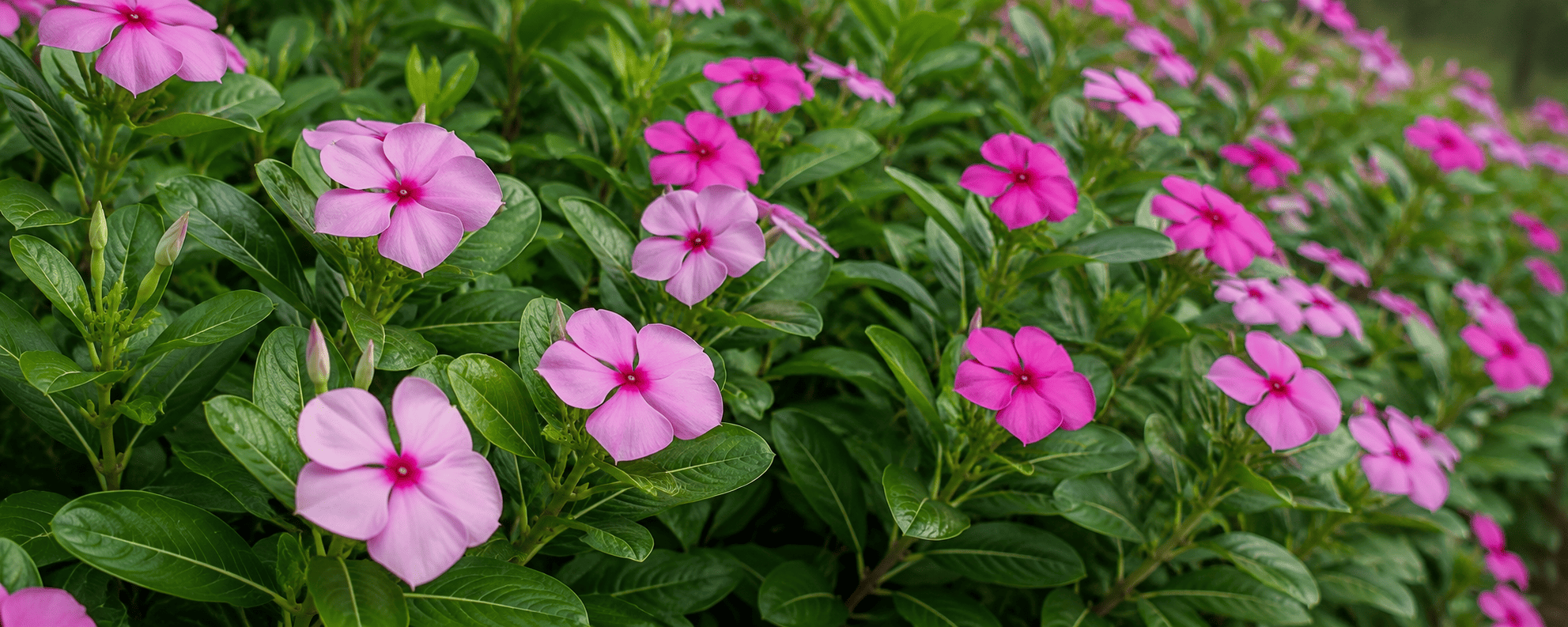
Environmental Garden Display
  • Watering Guidelines: Prefers moderate watering. Allow the soil to dry out between waterings. They are remarkably drought-tolerant once established; overwatering, especially in poor-draining soil, is the most common cause of root and stem rot.
  • Growth Conditions: Thrives in full, direct sun but can tolerate light, dappled afternoon shade. Requires well-draining, average soil; they do not tolerate soggy or waterlogged conditions, particularly in humid or cooler weather.
  • Vulnerabilities: Primary vulnerabilities include soil-borne fungal pathogens (like *Phytophthora*) triggered by excessive moisture or cool, wet conditions. They are also sensitive to heavy frost, which will cause immediate plant collapse.
  • Growth Habit: A compact, upright, or slightly spreading subshrub. It maintains a neat, tidy appearance, making it highly suitable for garden borders or container gardening.
  • Root System: A branching root system that is efficient in well-draining substrates; it can be susceptible to fungal diseases if kept in heavy, saturated soils.
  • Leaf Structure: Glossy, dark green, oval-shaped leaves that are arranged in opposite pairs along the stems. The foliage is robust and provides an excellent, uniform backdrop for the blooms.
  • Foliage Detail: The leaves feature a prominent, lighter-colored midrib, giving the foliage a structured, clean aesthetic throughout the growing season.
  • Bloom Lifespan: Individual flowers are relatively long-lived for an annual/perennial bedder, often staying vibrant for several days, followed by the continuous emergence of new buds.
  • Floral Morphology: Distinctive, five-petaled, propeller-shaped flowers. The blooms typically feature a contrasting center (eye) in shades of white, red, or pink, radiating out to the primary petal color.
  • Stem Characteristics: Stems are herbaceous to slightly woody at the base, and they often root easily if they come into contact with moist soil, allowing the plant to spread naturally.
SAFETY: TOXICITY WARNING

Toxic if Ingested: The Madagascar Periwinkle (Catharanthus roseus) is highly toxic. It contains potent alkaloids, including vincristine and vinblastine. All parts of the plant are poisonous if ingested, and it should be treated with extreme caution in households with pets or small children.

To Humans & Children

Potentially dangerous if swallowed. Ingestion can cause nausea, vomiting, dizziness, and nerve damage. Keep out of reach of children and ensure everyone in the household knows it is for viewing only, not for consumption.

To Household Pets

Toxic to dogs, cats, and horses. Ingestion can lead to severe gastrointestinal distress, cardiac issues, and potential neurological symptoms. Contact a veterinarian immediately if you suspect your pet has eaten any part of the plant.

Handling & Gardening Safety

Always wash your hands thoroughly after handling the plant, as the sap can cause skin irritation in sensitive individuals. It is highly recommended to wear gloves when pruning and to keep the plant in areas where it cannot be accidentally grazed by curious pets or toddlers.


Madagascar periwinkle display
Toxic Ornamental

Small efforts save a dying plant.

Get instant botanical diagnostics, precise care timetables, and expert structural advice tailored to support your garden's health daily.

Download PlantDecoder App Now

Frequently Asked Questions

Common botanical queries and troubleshooting instructions for Catharanthus roseus.

Why is my Madagascar Periwinkle wilting?
Wilting is most often caused by overwatering or root rot, especially if the soil stays saturated. Despite being a tropical plant, it thrives in well-draining soil and will quickly succumb to fungal pathogens like Phytophthora if its roots are waterlogged.
Why do the leaves show yellow spots or patches?
Yellowing leaves or spots can be a sign of fungal disease or poor drainage. Ensure the plant is in a location with excellent air circulation and never allow it to sit in standing water. If spots persist, avoid overhead watering to keep foliage dry.
How much sun does it need?
This plant loves full, intense sun. It is one of the few bedding plants that will bloom continuously even in the hottest, most direct summer sunlight. While it can handle light shade, you will get the most prolific flowering in a bright, sunny spot.
Can I grow it in a container?
Absolutely. They make excellent container plants because of their compact growth habit. Just ensure the pot has drainage holes and use a light, high-quality potting mix. They are perfect for pots on sunny patios or balconies.
Is it really toxic?
Yes, all parts of the Madagascar Periwinkle are toxic if ingested by humans, dogs, or cats. It contains vinca alkaloids which are harmful. Always keep it in a location where curious pets or small children are unlikely to eat the foliage.
Does it need frequent fertilizer?
It is a relatively low-maintenance plant and does not require heavy fertilization. A light application of a balanced, all-purpose fertilizer once at the start of the growing season is usually sufficient to support continuous blooming.
How do I make the plant bushier?
Pinch back the tips of the stems when the plant is young. This encourages it to branch out rather than growing into a single, leggy stalk, resulting in a much fuller, more compact, and more floriferous plant.
Can I save it through the winter?
If you live in a climate with frost, you can bring it indoors as a houseplant before the first freeze. Place it in the sunniest window possible, keep it warm, and reduce watering significantly during the cooler months when it enters a semi-dormant state.
How do I propagate it?
It propagates very easily from seeds, which it produces in abundance and often self-sows. You can also take stem cuttings and root them in a glass of water or directly in a moist, sandy potting mix during the active growing season.
Why does it look "leggy"?
Legginess is usually a sign of insufficient light. Even though it is a sturdy plant, it will stretch toward the light source if it's not getting enough direct sun. Move it to a sunnier location and pinch back the tips to restore its compact form.