
Marigold
(Genda)


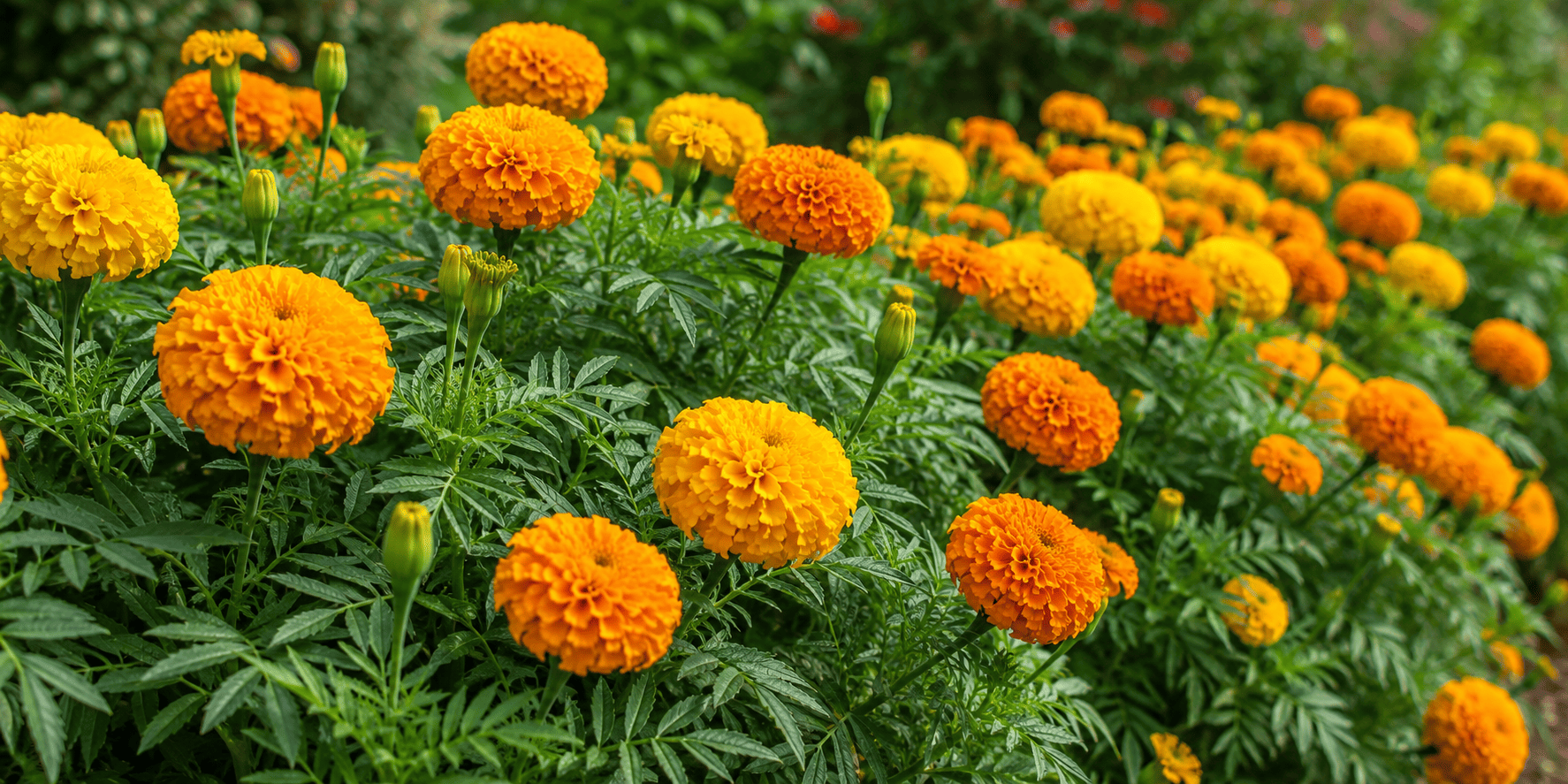
- Watering Guidelines: Prefers consistent, moderate moisture. Water at the base of the plant to keep foliage dry, which helps prevent fungal issues like powdery mildew. Allow the top inch of soil to dry slightly between waterings.
- Growth Conditions: Thrives in full sun (at least 6 hours of direct light daily). They are incredibly adaptable to various soil types but perform best in fertile, well-draining garden soil. Very heat-tolerant once established.
- Vulnerabilities: Primary threats include slugs, snails, and aphids, especially during the seedling stage. Overwatering or poor air circulation can lead to root rot or fungal foliage diseases. Deadheading spent blooms encourages continuous flowering throughout the season.
- Growth Habit: Typically a compact, bushy, multi-branched annual that ranges from low-growing mounds to upright, taller varieties depending on the cultivar.
- Root System: A fibrous, branching root system that effectively captures nutrients and water from the upper layers of the soil.
- Leaf Structure: Deep green, pinnately divided leaves with serrated or toothed edges, possessing a distinct, pungent aroma when crushed.
- Foliage Detail: The foliage provides a dense, lush backdrop that contrasts sharply with the bold, bright colors of the flowers.
- Bloom Lifespan: Individual flowers are long-lasting, often remaining vibrant for several weeks before beginning to fade and develop seeds.
- Floral Morphology: Composite flower heads consisting of numerous ray and disc florets. Blooms are often densely packed and ruffled, ranging in color from deep lemon-yellow to burnt orange and mahogany.
- Stem Characteristics: Sturdy, herbaceous stems that may become slightly woody at the base in older, more mature plants, supporting the weight of heavy, clustered blooms.
Generally Safe & Pet-Friendly: The common Marigold (Tagetes species) is widely regarded as a safe and non-toxic plant for both humans and common household pets. Its strong scent, while pleasant to many, acts as a natural deterrent to garden pests, making it a favorite for organic, family-friendly landscapes.
To Humans & Infants
Non-toxic upon ingestion. While the leaves and petals are generally safe, they possess a pungent flavor that makes them unappealing for consumption. The primary concern for infants is accidental ingestion of soil or potential allergic reactions to foliage oils.
To Household Pets
Classified as non-toxic to dogs and cats by the ASPCA. While ingestion of large amounts of any fibrous plant material can cause mild, self-limiting stomach irritation, the Marigold does not contain systemic toxins.
Cultivation & Skin Sensitivity
While non-toxic, the foliage contains thiophenes and other compounds that can cause "gardener's contact dermatitis" in sensitive individuals. Wear gloves when pruning or deadheading for extended periods to avoid minor skin irritation.