
Crape Jasmine


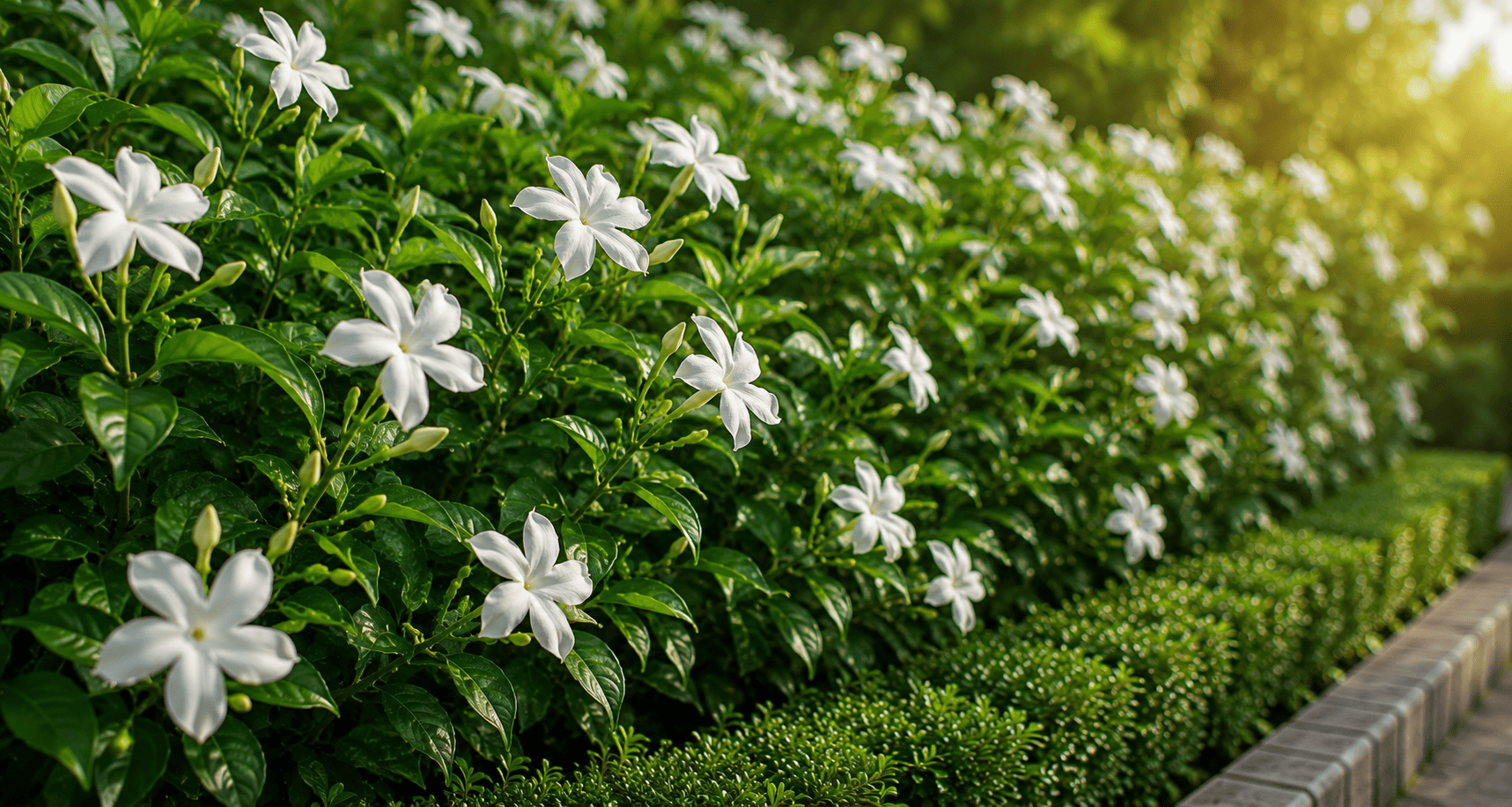
- Watering Guidelines: Best watered in the early morning (AM) to minimize evaporative loss. Requires regular, consistent weekly watering to maintain evenly moist but never waterlogged soil. Significantly reduce watering frequency during the dormant winter months.
- Growth Conditions: Demands fertile, organically rich, well-draining moist substrates.
- Vulnerabilities: Highly vulnerable to sap-sucking scale insects (soft brown and hemispherical scales), mealybugs, and whiteflies. Suffers significantly, loses foliage, and exhibits root rot in stagnant waterlogged soil, extreme prolonged droughts, or freezing sub-zero climates.
- Growth Habit: Upright, multi-branched evergreen woody shrub growing in a dense, bushy mound.
- Latex Exudate: Exudes a thick, sticky, white milky latex whenever leaves or stems are fractured.
- Leaf Structure: Opposite, simple, oblong-oval leaves measuring up to 15 cm in length.
- Foliage Detail: Glossy, deep emerald-green foliage characterized by distinctly wavy, undulate margins and raised venation.
- Floral Morphology: Pure waxy white, five-petaled tubular flowers structured like a miniature pinwheel.
- Petal Orientation: Flower petals showcase a distinctive counterclockwise, left-twisted Orientation.
- Fragrance Profile: Flowers release a delicate, soft, sweet aroma that intensifies significantly during nocturnal hours.
- Inflorescence: Blooms organized in structural, multi-flowered cluster arrangements known as cymes.
- Fruit System: Produces rare, inconspicuous dry, hard, pod-like splitting fruits known structurally as follicles.
- Bark & Branching: Smooth, greyish-brown mature bark with highly elastic, wide-spreading horizontal branching habits.
Strictly Non-Edible: Non-edible across all primary vegetative components due to toxic alkaloid content. While select traditional regions occasionally process specific flower variations into fritters, consumption is generally discouraged due to inherent toxicity risks. The milky sap contains active indole alkaloids (including tabersonine and coronaridine).
To Humans & Infants
Toxic upon ingestion. Causes severe gastrointestinal distress, vomiting, diarrhea, and local oral numbness. Accidental infant exposure triggers intense mucosal inflammation, abdominal pain, nausea, and central nervous system depression.
To Household Pets
In dogs, ingestion leads to heavy salivation, abdominal cramping, intestinal irritation, vomiting, and lethargy. In cats, ingestion causes systemic poisoning severe symptoms include delirium, cardiotoxicity, and neurological issues like paralysis.
Avoidance & Protection Strategies
Keep pots elevated on high shelves or enclosed within gated garden borders away from children and pets. Always wear protective gloves while pruning to prevent contact with the irritating sap.