
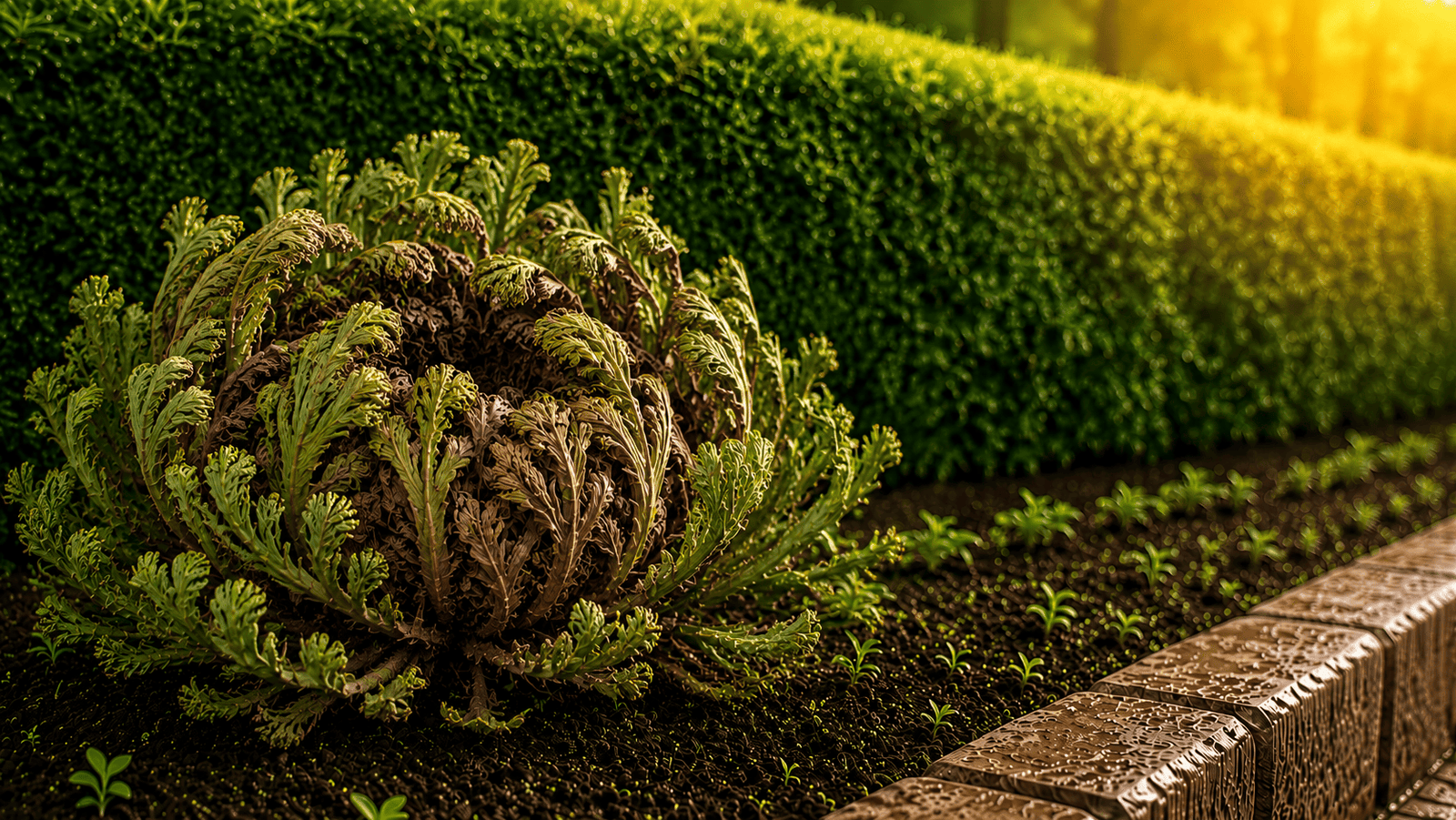
Family: Selaginellaceae (Spike-moss Family) Lifespan: Extreme Resilient Perennial

Resurrection Plant

Selaginella lepidophylla
🏜️ Desiccation Tolerant 🌿 Ancient Pteridophyte ✅ Non-Toxic

History & Taxonomy
Native to the Chihuahuan Desert spanning the southwestern United States and Mexico, the Resurrection Plant (Selaginella lepidophylla) is an ancient, seedless vascular plant belonging to the spike-moss family (Selaginellaceae). Unlike true mosses, it possesses vascular tissue for water transport and is renowned worldwide for its extraordinary physiological adaptation: extreme desiccation tolerance. It can survive complete dehydration for years, curling into a tight, dormant brown ball during prolonged droughts and rapidly uncurling and turning green within hours of receiving water.

Botanical Culture & Distribution
Thriving natively in arid, rocky limestone deserts and desert scrublands, Selaginella lepidophylla relies entirely on ephemeral rain events to hydrate, photosynthesize, and reproduce via spores. Culturally, it has long captured human imagination as a living symbol of resilience, rebirth, and endurance, frequently sold as a novelty botanical specimen that demonstrates dramatic movement upon hydration. In desert ecology, it serves as a fascinating model organism for studying cellular protection mechanisms against extreme drought stress.

Cultural & Practical Usage

Novelty & Educational Display

Widely sold as a fascinating novelty plant for homes and classrooms. Its dramatic ability to transition from a dry, dormant brown ball into vibrant green fronds when hydrated provides a captivating live demonstration of plant desiccation tolerance.

Folk & Traditional Remedies

In traditional indigenous herbalism throughout parts of Mexico and the American Southwest, the plant has historically been steeped in water to create washes or teas intended to ease childbirth or treat cold symptoms.

Symbolism & Holiday Traditions 4

Deeply symbolic across various cultures, it is often referred to as the "Flower of Jericho" and is traditionally displayed during holiday seasons as a powerful emblem of resurrection, endurance, good fortune, and new beginnings.

Spore & Division Propagation

As a seedless fern ally (pteridophyte), Selaginella lepidophylla naturally reproduces via microscopic spores produced on the underside of its fronds, though it can also be divided via healthy rooted clusters during active growth.

Resurrection Plant Hydration Display
Desert Resilient Specimen Display
  • Hydration Cycles: Can remain completely dry for months or years. When displaying as a novelty, place the dry ball in a shallow dish of water to trigger uncurling; refresh the water every few days to prevent mold growth, and allow periods of complete drying out.
  • Growth Conditions: Thrives in bright, indirect light when placed in a container with sandy, rocky, fast-draining soil. Does not require constant moisture and prefers arid to moderate indoor environments.
  • Vulnerabilities: Extremely susceptible to fungal rot and mold if left sitting in stagnant water continuously for more than a few days without drying periods.
  • Growth Habit: Low-growing, terrestrial, seedless resurrection fern ally (pteridophyte) that forms a dense, compact rosette cushion.
  • Root System: Shallow, rudimentary root system designed primarily to anchor the plant in rocky, arid desert limestone substrates.
  • Leaf Structure: Small, overlapping, scale-like microphyll fronds tightly spiraled around stems during desiccation.
  • Foliage Detail: Transforms dramatically from a brittle, brown, tightly curled ball when dry to an expansive, vibrant emerald-green rosette within hours of water absorption.
  • Reproductive Mechanism: Non-flowering ancient vascular plant that produces microscopic spores along the undersides of specialized frond structures.
  • Cellular Adaptation: Features unique trehalose-sugar protection mechanisms within cell walls that prevent cellular rupture during extreme drought stress.
  • Stem Characteristics: Pliable, branching stems covered in small scale-like leaves that flex rapidly in response to changes in ambient moisture.
SAFETY: Non-Toxic Profile & Handling

Generally Safe & Non-Toxic: The Resurrection Plant (Selaginella lepidophylla) is entirely non-toxic to humans and household pets. It poses no chemical hazards or irritating sap, making it safe to display and handle in home environments.

To Humans & Infants

Non-toxic upon touch or accidental contact. However, because dry specimens collect household dust or are displayed in standing water dishes, practice basic hygiene and keep water fresh.

To Household Pets

Completely safe around cats, dogs, and other animals. Ingestion of small amounts of dried or hydrated frond material is non-poisonous, though large fibrous intake might cause mild digestive upset.

Display & Water Hygiene

No protective gear is needed for handling. When utilizing the plant in water hydration displays, refresh the container water every few days to maintain hygiene and prevent stagnation or mold growth.


Resurrection plant display
Non-Toxic Houseplant

Small efforts save a dying plant.

Get instant botanical diagnostics, precise care timetables, and expert structural advice tailored to support your garden's health daily.

Download PlantDecoder App Now

Frequently Asked Questions

Common botanical queries and troubleshooting instructions for the Resurrection Plant (Selaginella lepidophylla).

How many times can a Resurrection Plant come back to life?
The Resurrection Plant can endure repeated cycles of desiccation and rehydration indefinitely over many years, making it one of the most remarkable drought-tolerant organisms in nature.
How long does it take for a dry Resurrection Plant to open up in water?
When placed in water, a dormant, brown ball will typically begin to uncurl and turn green within a few hours, fully opening up within 24 to 48 hours.
Can I grow a Resurrection Plant permanently in soil?
Yes, you can pot them in well-draining, sandy or rocky soil. However, they still require intermittent dry periods and cannot sit in continuously soggy mud without rotting.
Why is my Resurrection Plant turning moldy or smelling bad in water?
Mold or foul odors occur when the plant sits in stagnant water for too long. You should change the water every 2 to 3 days and allow the plant to dry out completely between hydration cycles.
Is the Resurrection Plant a true fern or moss?
No. It is an ancient seedless vascular plant belonging to the spike-moss family (Selaginellaceae), making it more closely related to fern allies than true mosses.
How long can a Resurrection Plant survive completely dry?
They can survive in a completely desiccated, dormant state for months or even several years during severe desert droughts, waiting safely for the next rainfall event.
Does the Resurrection Plant need direct sunlight?
They prefer bright, indirect light when displayed indoors. Intense, scorching direct sun can burn their delicate fronds, while extremely low-light corners will inhibit healthy growth.
What causes the plant to curl up into a ball?
Curling is a natural protective mechanism triggered by dehydration and lack of moisture, protecting its inner tissues from harsh environmental stress until water becomes available again.
Is the Resurrection Plant toxic to cats, dogs, or children?
No. Selaginella lepidophylla is entirely non-toxic and safe to handle around household pets and children, containing no harmful chemicals or irritating saps.
How should I store my Resurrection Plant when not in water?
Simply let the plant air-dry completely on a decorative plate or tray in a cool, dry place. It will naturally curl back into its dormant brown ball state until you choose to rehydrate it.