
Family: Fabaceae (Legume Family) Lifespan: Tender Perennial / Annual

Sensitive Plant

Mimosa pudica
🌿 Thigmonastic Foliage 🌸 Pom-Pom Blooms ⚠️ Mildly Toxic

History & Taxonomy
Native to Central and South America, Mimosa pudica—commonly known as the sensitive plant, touch-me-not, or sleepy plant—belongs to the legume family (Fabaceae). First formally described and classified by Carl Linnaeus in his foundational 1753 work Species Plantarum, the species derives its specific epithet pudica from the Latin word for "bashful" or "shrinking," a direct nod to its astonishing defense mechanism. When touched, shaken, or subjected to heat, its delicate compound leaves rapidly fold inward and droop, transmitting rapid electrical and chemical signals through the plant tissues before gradually reopening minutes later.

Botanical Culture & Distribution
Thriving naturally as a perennial understory herb in tropical and subtropical regions worldwide, Mimosa pudica has also successfully naturalized across various warm parts of Asia, Africa, and the Pacific. Cultivated globally as a fascinating conversational houseplant and botanical curiosity, it produces charming, fluffy pom-pom-like pink or purple flower heads followed by small seed pods. Beyond its famous thigmonastic leaf movement, it has a long history of use in traditional herbal preparations and is widely grown by gardeners seeking an interactive and engaging horticultural experience.

Cultural & Practical Usage

Interactive & Educational Specimen

Widely grown as an engaging indoor houseplant or botanical curiosity. Its unique thigmonastic leaves—which instantly fold and droop when touched—make it a favorite educational tool for demonstrating plant mechanoreception.

Ethnobotanical & Traditional Uses

In traditional herbal practices and Ayurvedic formulations, various parts of the sensitive plant have historically been utilized to create soothing poultices and extracts intended to support wound healing and skin health.

Ecological & Cover Crop Value

As a member of the legume family (Fabaceae), Mimosa pudica forms symbiotic relationships with nitrogen-fixing soil bacteria, helping enrich nutrient-depleted soils in tropical and subtropical regions where it grows naturally.

Seed & Cutting Propagation

Most commonly and successfully propagated from seeds, which germinate rapidly when lightly scarified and planted in warm, moist, well-draining potting soil. Stem cuttings can also be rooted under high humidity.

Sensitive Plant Display
Sensitive Plant Foliage Display
  • Watering Guidelines: Keep the soil consistently moist during active growth periods. Water thoroughly when the top surface begins to dry out, but avoid waterlogged conditions that can cause root rot.
  • Growth Conditions: Thrives best in bright, indirect sunlight or several hours of direct morning sun. Prefers warm indoor temperatures and loose, well-draining, organically rich potting mixes.
  • Vulnerabilities: Sensitive to frost and cold temperatures; typically grown as an annual or indoor potted plant in temperate climates. Excessive handling can also stress the plant by depleting its energy reserves.
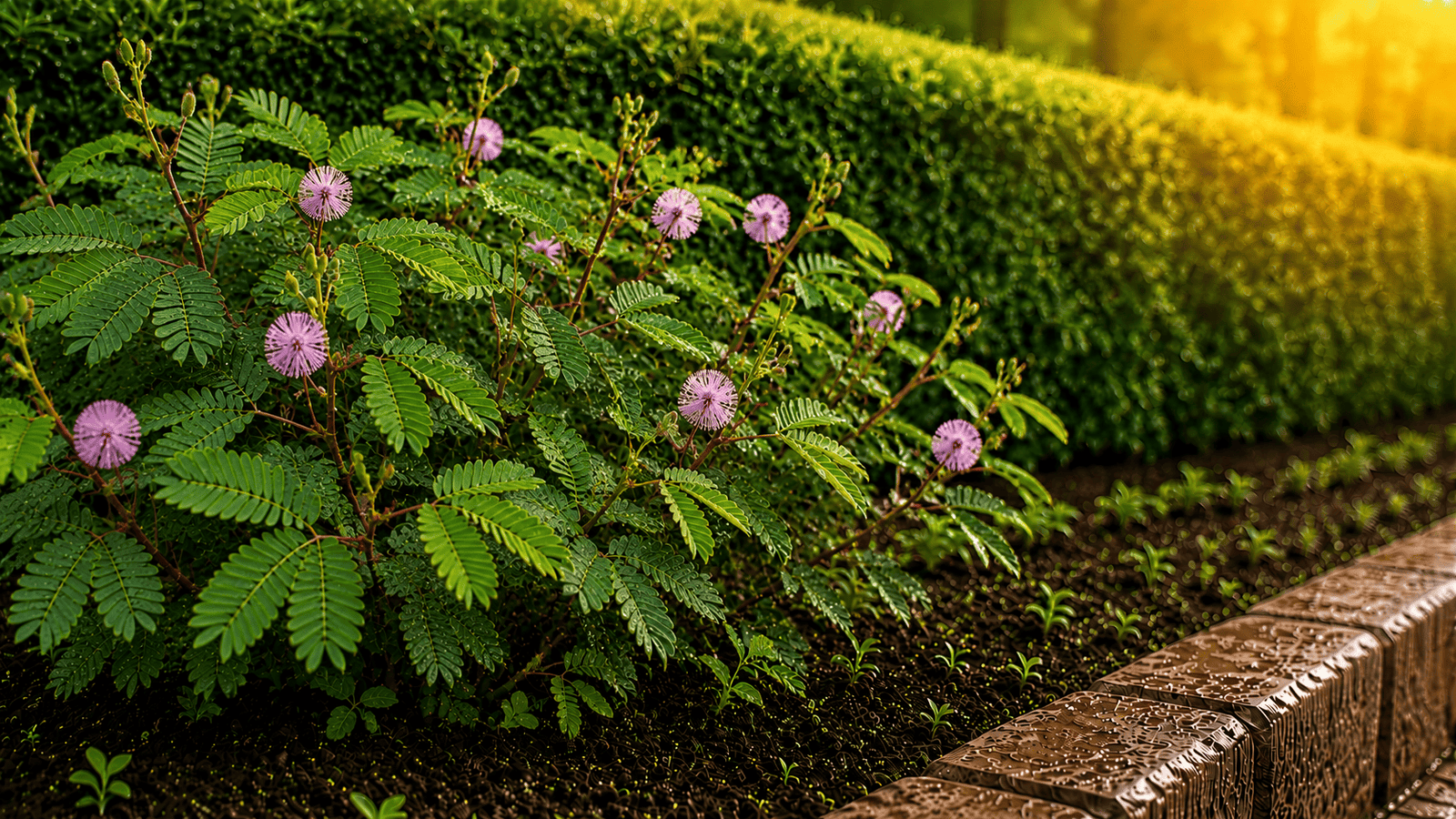
  • Growth Habit: Low-growing, sprawling perennial herb or subshrub featuring delicate, branching stems that can reach up to 1.5 feet in height.
  • Root System: Develops a deep taproot system that makes established plants relatively resilient against brief dry spells.
  • Leaf Structure: Finely divided bipinnate compound leaves consisting of numerous pairs of linear leaflets arranged along sensitive central petioles.
  • Foliage Detail: Features unique thigmonastic leaves that instantly fold inward and droop when touched, shaken, or exposed to heat, reopening after a few minutes.
  • Bloom Lifespan: Individual spherical flower heads bloom over several days, transitioning into clustered small seed pods upon pollination.
  • Floral Morphology: Distinctive, fuzzy, pom-pom-like pink or pale purple flower heads composed of tiny tubular blossoms with prominent stamens.
  • © Stem Characteristics: Slender, reddish-brown stems covered in small, scattered prickles and bristles as the plant matures.
SAFETY: Toxicity & Handling Caution

Mild Toxicity Warning: The Sensitive Plant (Mimosa pudica) contains a toxic alkaloid called mimosine, which can cause adverse health effects if ingested in large quantities or handled excessively.

To Humans & Children

Ingesting leaves or roots can lead to nausea, vomiting, and potential hair loss due to mimosine toxicity. Keep out of reach of young children who might put plant parts in their mouths.

To Household Pets

Toxic to cats, dogs, and grazing livestock. Ingestion can cause excessive drooling, vomiting, lethargy, and digestive distress. Ensure pets cannot graze on indoor or garden specimens.

Handling & Placement Precautions

Place sensitive plants on elevated shelves or in terrariums away from curious pets. While playing with the folding leaves is a popular educational activity, excessive stimulation can stress the plant and deplete its energy reserves.


Sensitive plant foliage display
Toxicity Precaution

Small efforts save a dying plant.

Get instant botanical diagnostics, precise care timetables, and expert structural advice tailored to support your garden's health daily.

Download PlantDecoder App Now

Frequently Asked Questions

Common botanical queries and troubleshooting instructions for the Sensitive Plant (Mimosa pudica).

Why do the leaves of my Sensitive Plant fold up?
Leaf folding is a natural defense mechanism called thigmonasty. When touched, shaken, or exposed to heat or wind, water quickly rushes out of specialized cells at the base of the leaves (pulvini), causing them to collapse.
Why are the leaves on my Sensitive Plant turning yellow?
Yellowing leaves are typically caused by overwatering, poor drainage, or a lack of adequate sunlight. Ensure the potting mix stays evenly moist without becoming waterlogged and provide plenty of bright, indirect light.
Can I grow Mimosa pudica indoors as a houseplant?
Yes, they make fascinating indoor houseplants as long as they are placed near a bright, sunny window (such as south or west-facing) and kept away from cold drafts or dry heating vents.
Is Mimosa pudica a perennial or an annual?
In its native tropical habitats, it grows as a tender perennial. However, in cooler temperate climates, it is frequently grown outdoors as an annual or maintained year-round as an indoor potted plant.
Why are my Sensitive Plant's leaves staying closed all day?
If leaves remain closed for extended periods, it is usually a sign of severe stress, lack of sunlight, or over-stimulation from being touched too frequently, which depletes the plant's energy reserves.
How often should I water my Sensitive Plant?
Water whenever the top surface of the soil begins to dry out. They prefer consistently moist, well-draining soil and will quickly wilt if allowed to dry out completely.
Does Mimosa pudica prefer full sun or partial shade?
They thrive best in bright, direct sunlight or gentle morning sun (at least 6 hours daily). In extremely hot afternoon climates, a bit of filtered light helps prevent heat stress.
What pests commonly attack the Sensitive Plant?
They are occasionally targeted by spider mites and mealybugs, especially when kept indoors with low humidity. Inspect foliage regularly and treat outbreaks promptly with insecticidal soap or neem oil.
Is the Sensitive Plant toxic to pets?
Yes, Mimosa pudica contains a toxic alkaloid called mimosine. Ingestion can cause digestive distress, vomiting, and lethargy in cats and dogs, so keep the plant safely out of reach of pets.
How do I grow Mimosa pudica from seeds?
Lightly scarify (scratch) the seed coats and soak them in warm water for 24 hours before planting. Sow them in warm, moist, well-draining soil, and seedlings will typically sprout within one to two weeks.