
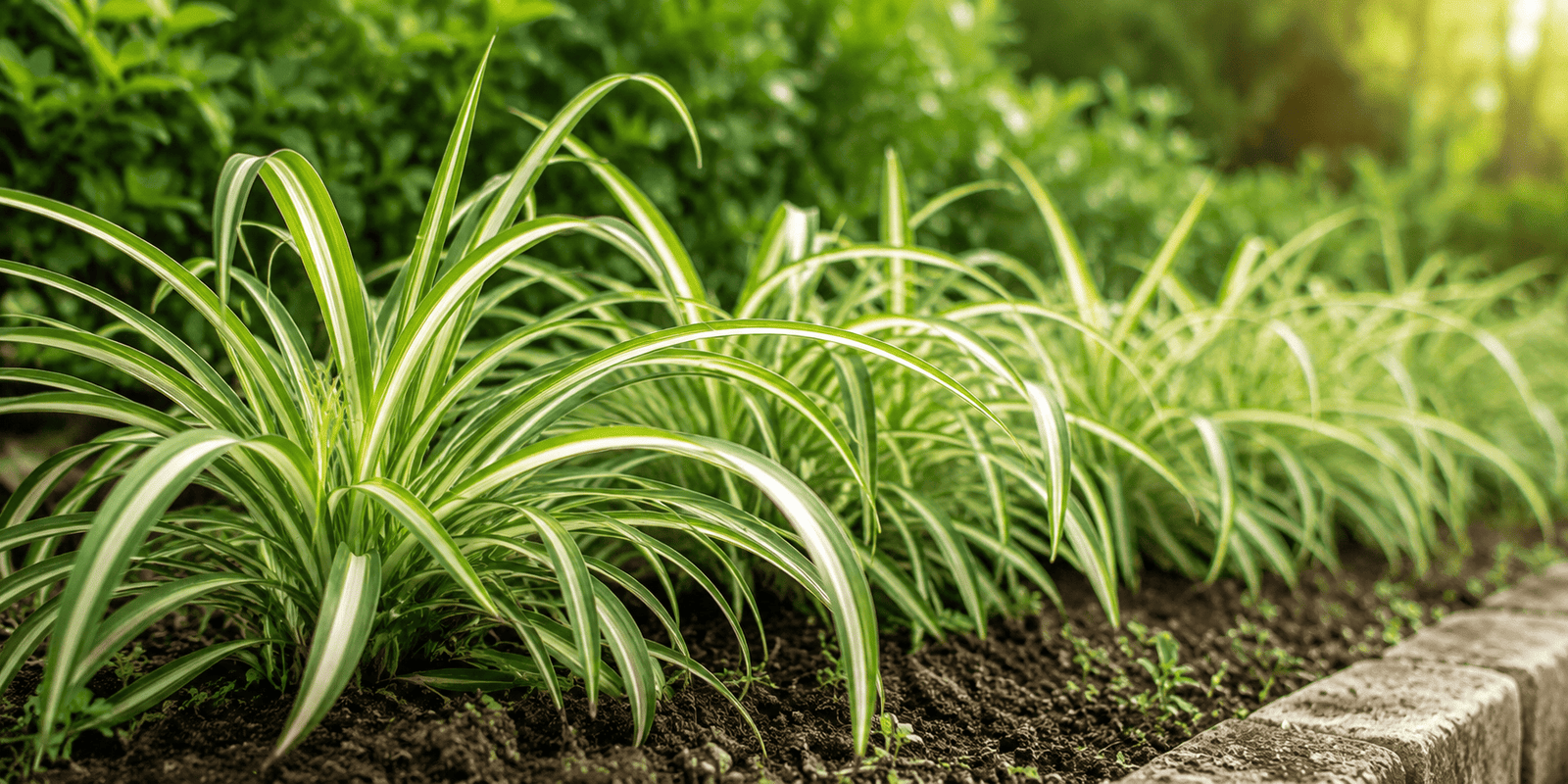
Family: Asparagaceae Lifespan: Perennial

Spider Plant

Chlorophytum comosum
🌱 Easy Care ✨ Air Purifying ✅ Pet Safe

Origins & Classification
The Spider Plant, scientifically known as Chlorophytum comosum, is a popular ornamental houseplant belonging to the Asparagaceae family. Native to the tropical and southern regions of Africa, it has become a global staple in indoor gardening due to its extreme resilience and unique, arching growth habit. It was first described in the scientific literature in the 19th century and has since been extensively cultivated, with several popular variegated cultivars—such as 'Vittatum' and 'Variegatum'—becoming iconic features in homes and offices worldwide.

Growth & Cultural Adaptation
The Spider Plant is perhaps best known for its "spiderettes"—tiny plantlets produced on long, arching stalks that cascade from the parent plant. These plantlets can be easily detached and propagated, contributing to its enduring popularity as a giftable, low-maintenance plant. It thrives in a variety of indoor environments, tolerating a wide range of light conditions, though it performs best in bright, indirect light. Beyond its aesthetic appeal, it is highly regarded for its adaptability and its role in improving indoor air quality, having been famously included in studies regarding the natural filtration of common volatile organic compounds (VOCs).

Cultural & Practical Usage

Ornamental & Indoor Aesthetics

A quintessential indoor favorite, the Spider Plant is celebrated for its arching, ribbon-like leaves and dramatic cascading growth habit. It is an ideal specimen for hanging baskets or elevated plant stands where its unique form and "spiderette" offsets can be fully appreciated.

Air Purification Utility

Widely recognized for its air-purifying capabilities, the Spider Plant is effective at filtering common household toxins such as formaldehyde and xylene from the air. Its dense, grassy foliage makes it a functional and beautiful addition to home offices and living areas.

Non-Toxic Status

Unlike many other popular houseplants, the Spider Plant is officially classified as non-toxic to both cats and dogs by the ASPCA. This makes it an incredibly popular and safe choice for households with inquisitive pets and small children.

Propagation & Growth

Perhaps the easiest plant to multiply, the Spider Plant produces "plantlets" on long, dangling stalks. These miniature versions of the parent plant can be pinned to soil or placed in water to root, making them a fantastic and easy way to expand your collection.

Spider plant indoor display
Environmental Foliage Display
  • Watering Guidelines: Prefers moderate watering. Allow the top 50% of the soil to dry out between waterings. Use distilled or filtered water if possible, as they are sensitive to fluoride, which can cause brown leaf tips.
  • Growth Conditions: Thrives in bright, indirect light; direct sunlight will scorch the leaves. Adaptable to average room temperatures (15°C–25°C) and prefers standard, well-draining potting mix.
  • Vulnerabilities: Generally pest-free but can occasionally attract spider mites in dry, warm air. Overwatering is the primary cause of plant failure, leading to root rot.
  • Growth Habit: A perennial rosette-forming plant with long, thin, arching leaves. It produces long, cascading stolons (runners) that bear miniature plantlets.
  • Root System: Develops thick, fleshy, tuberous roots that are highly efficient at storing water, contributing to the plant's excellent drought tolerance.
  • Leaf Structure: Long, slender, linear-lanceolate leaves that are generally variegated with a white or pale cream stripe running down the center.
  • Reproductive Strategy: Primarily reproduces via vegetative propagation by producing "spiderettes" (small plantlets) at the ends of long flower stalks, which develop roots upon contact with soil.
  • Bloom Characteristics: Produces small, inconspicuous, white, star-shaped flowers that appear on the same stalks as the plantlets.
  • Structural Adaptability: Highly efficient at clumping, making it an excellent candidate for filling out hanging baskets or containers over time.
SAFETY: Pet-Friendly & Safe

Generally Safe: The Spider Plant (Chlorophytum comosum) is widely recognized as a non-toxic houseplant. It is safe to grow in households with curious cats, dogs, and small children, making it one of the most popular choices for indoor greening.

To Humans & Infants

Non-toxic upon ingestion. While not intended as food, accidental ingestion of a leaf or two is unlikely to cause serious harm. The primary risk remains a simple choking hazard from the fibrous foliage.

To Household Pets

Classified as non-toxic to dogs and cats by the ASPCA. Some cats are attracted to the foliage due to its grass-like nature and potential hallucinogenic effect; monitor pet interaction to prevent over-grazing.

Handling & Pet Interaction

No special protective gear is required for pruning or propagation. If your cat persistently grazes on your plant, consider placing it in a hanging basket or on an elevated shelf to protect the plant's health and maintain its aesthetic appeal.


Spider plant in home interior
Pet-Safe Plant

Small efforts save a dying plant.

Get instant botanical diagnostics, precise care timetables, and expert structural advice tailored to support your garden's health daily.

Download PlantDecoder App Now

Frequently Asked Questions

Common botanical queries and troubleshooting instructions for the Spider Plant (Chlorophytum comosum).

Why are the tips of the leaves turning brown?
Brown tips are often caused by tap water sensitivity. Spider plants are sensitive to fluoride and chlorine found in many municipal water supplies. Try switching to filtered, distilled, or rainwater to see if the issue improves. Low humidity can also be a factor.
Why is my Spider Plant drooping?
Drooping is usually a sign that your plant is thirsty. Check the soil moisture; if it feels dry several inches down, give the plant a thorough watering. If the soil is already wet, drooping could indicate root rot from overwatering.
How do I propagate the "spiderettes"?
It's easy! You can either pin the plantlet into a separate pot of soil while it's still attached to the parent plant, or snip it off once it has developed small "nubs" (aerial roots) and place it directly into water or moist soil until it takes root.
Does it need direct sunlight?
No, they prefer bright, indirect light. Too much direct sunlight, especially in the afternoon, can cause the leaves to bleach or develop unsightly brown scorch marks. They are very adaptable and can even survive in lower light, though growth will be slower.
Why are the leaves turning pale or losing their stripe?
If your variegated plant is losing its white stripes and turning solid green, it is likely not getting enough light. Move it to a spot with brighter, indirect light to encourage the white or cream variegation to return.
Is it safe for pets?
Yes, Spider Plants are non-toxic to cats and dogs. However, some cats are particularly attracted to the long, grass-like leaves and may chew on them, which can lead to mild digestive upset if they consume a large amount.
How often should I repot?
Spider plants are fast growers and have thick, fleshy roots that can quickly fill a pot. You should repot them when you see roots growing out of the drainage holes or if the plant seems to stop growing, typically every 1-2 years.
Why is my plant not producing plantlets?
Spider plants usually produce plantlets when they feel slightly root-bound. If your pot is too large, the plant may focus on root growth instead. Additionally, ensure it is receiving enough bright, indirect light to have the energy for reproduction.
What should I do about yellowing leaves at the base?
If it's just the oldest leaves at the base that are turning yellow and drying out, this is perfectly normal. Simply trim them off with clean scissors. If younger leaves are yellowing, it may be a sign of overwatering or nutrient deficiency.
Can I trim the long stems?
Yes, you can trim the stems (stolons) once they become unsightly or after you have harvested the plantlets. It will not harm the parent plant to remove these runners.