
Umbrella Plant


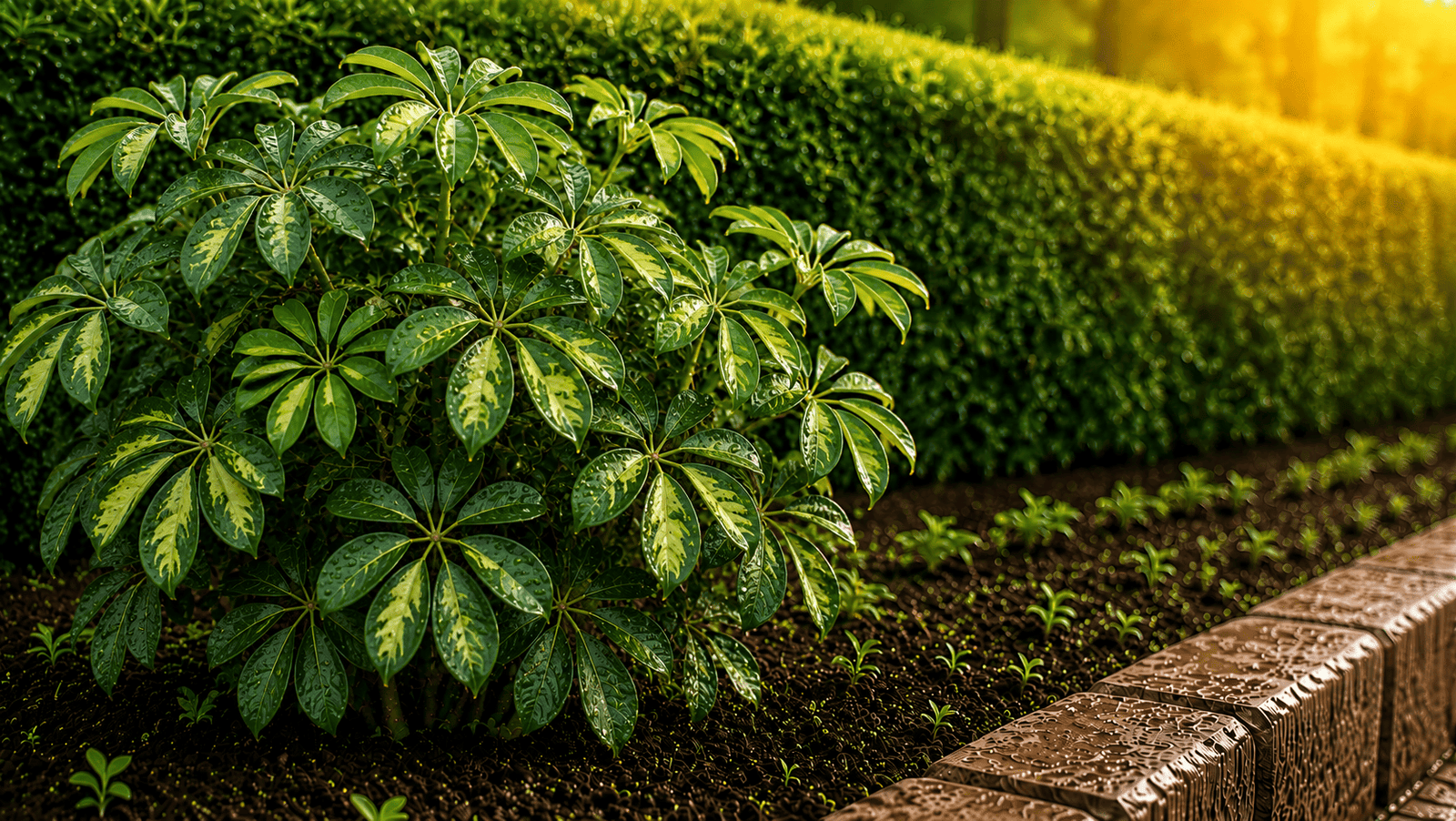
- Watering Guidelines: Allow the top 2 inches of soil to dry out completely between waterings. Water thoroughly until it drains out the bottom, but avoid soggy soil to prevent root rot.
- Growth Conditions: Thrives in bright, indirect sunlight. Prefers well-draining, organically rich potting mixes and temperatures between 16°C and 27°C (60°F to 80°F). Protect from cold drafts.
- Vulnerabilities: Prone to root rot if overwatered. Susceptible to indoor sap-sucking pests like spider mites, mealybugs, and scale insects, especially in dry indoor winter air.
- Growth Habit: Upright, woody evergreen shrub or small tree featuring a single or multi-stemmed trunk with a lush, spreading umbrella-like canopy.
- Root System: Strong, spreading root system that adapts well to container boundaries while requiring adequate pot depth as the plant matures.
- Leaf Structure: Palmate compound leaves featuring 7 to 16 glossy, oval leaflets radiating outward from a central point like the ribs of an open umbrella.
- Foliage Detail: Smooth, leathery, dark emerald green leaves that provide a striking, tropical architectural appearance.
- Bloom Lifespan: Mature outdoor specimens occasionally produce umbrella-like clusters of small red or pink flowers followed by small dark fruits, though indoor plants rarely flower.
- Floral Morphology: Distinctive terminal panicles consisting of showy, tentacle-like spikes bearing small, radially symmetrical flowers and stamens.
- Stem Characteristics: Smooth, light gray-brown woody stems and branches that branch outward to form a dense canopy structure.
Toxicity Profile: The Umbrella Plant (Schefflera actinophylla) contains insoluble calcium oxalate crystals throughout its tissues, which can cause intense irritation and discomfort if ingested or handled improperly.
To Humans & Children
Ingesting leaves or stems causes immediate oral pain, burning sensation of the mouth and tongue, excessive drooling, and localized swelling. Keep out of reach of young children.
To Household Pets
Toxic to cats and dogs. Ingestion leads to intense oral irritation, vomiting, difficulty swallowing, and excessive drooling due to the sharp needle-like oxalate crystals piercing tissue.
Handling & Placement Precautions
Place potted umbrella plants on elevated plant stands or shelves out of reach of curious cats, dogs, and toddlers. Wear gloves when pruning to avoid skin contact with plant sap.