
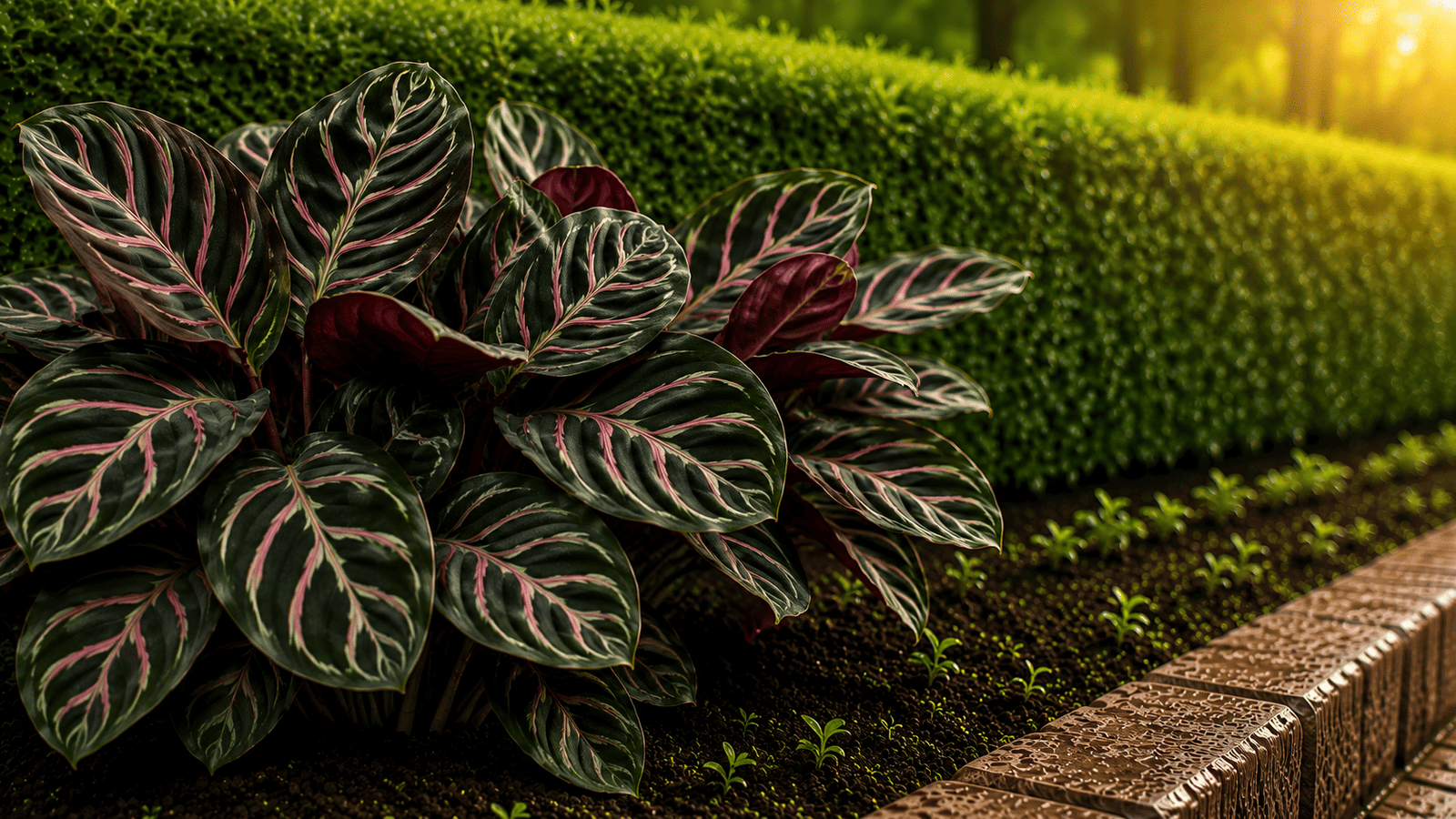
Family: Marantaceae (Prayer Plant Family) Lifespan: Perennial Houseplant

Velvet Calathea

Goeppertia warszewiczii
🌿 Velvety Foliage ✨ Prayer Plant ✅ Pet Safe

History & Taxonomy
Native to the tropical rainforests of Central and South America (specifically Costa Rica and Nicaragua), the Velvet Calathea (Goeppertia warszewiczii, formerly classified under Calathea) belongs to the prayer plant family (Marantaceae). It was named in honor of the 19th-century plant collector Józef Warszewicz. Celebrated for its velvety, quilted foliage featuring dark green patterns above and deep burgundy-purple undersides, it is also famous for its nyctinastic behavior—raising its leaves upward at night like hands in prayer.

Botanical Culture & Distribution
Thriving naturally in the humid, shaded understory of tropical jungles, Goeppertia warszewiczii requires high humidity, warm temperatures, and consistently moist, well-draining soil to mimic its native habitat. Culturally, it is prized by indoor plant enthusiasts for its soft, tactile texture and striking ornamental appeal, making it a beloved statement piece for humid indoor environments and terrariums.

Cultural & Practical Usage

Indoor Specimen & Foliage Décor

Widely cultivated as a prized indoor statement plant. Its soft, velvety, quilted green leaves with deep burgundy undersides provide rich tactile and visual contrast for indoor living spaces, offices, and protected indoor garden rooms.

Worry-Free Pet-Safe Living

Because Goeppertia warszewiczii is completely non-toxic to cats and dogs, it offers plant lovers a luxurious, jungle-like aesthetic for their homes without posing any toxic ingestion risks to household pets.

Nyctinastic Leaf Movement

Exhibits fascinating "prayer plant" behavior, folding its velvet leaves upward at night and opening them flat during the morning daylight hours in response to changes in light levels, adding an interactive element to plant care.

Root Division Propagation

Propagated primarily through careful root division during repotting in spring. Each separated section must feature healthy roots and viable stems to successfully establish independent growth.

Velvet Calathea Indoor Display
Goeppertia Warszewiczii Foliage Display
  • Watering Guidelines: Keep the soil consistently moist but never waterlogged. Water thoroughly when the top half-inch of soil feels dry. Use distilled, filtered, or rainwater, as tap water minerals cause brown leaf tips.
  • Growth Conditions: Thrives in bright, indirect light. Direct sunlight will scorch and fade its velvety patterns. Demands rich, highly organic, moisture-retentive yet well-draining soil and high ambient humidity (60% or higher).
  • Vulnerabilities: Extremely sensitive to low humidity, underwatering, and cold drafts below 15°C (60°F), which cause crispy leaf edges, curling, and leaf drop. Susceptible to spider mites if air circulation is poor.
  • Growth Habit: Upright, clump-forming perennial tropical houseplant that develops a dense, lush cluster of broad foliage emerging from central rhizomes.
  • Root System: Shallow, fibrous root system featuring small rhizomes and water-storing tubers that require a well-aerated pot.
  • Leaf Structure: Elongated, velvety lance-shaped leaves featuring a distinctive quilted or corrugated surface texture with wavy margins.
  • Foliage Detail: Upper leaf surface exhibits rich gradient shades of velvety emerald and olive green with pale green feather patterns; undersides display a striking deep burgundy-purple tone.
  • Nyctinastic Movement: Displays active circadian leaf movement ("prayer plant" behavior), folding its leaves upward vertically at night and flattening them out during daylight hours.
  • Bloom Characteristics: Mature plants can produce unusual, cone-shaped inflorescences near the base featuring velvety white or yellow-orange bracts nestled low among the foliage.
  • Stem Characteristics: Slender, flexible green petioles that attach the velvety leaves directly to the underground rhizomatous base.
SAFETY: Non-Toxic Pet-Safe Profile

Generally Safe & Non-Toxic: The Velvet Calathea (Goeppertia warszewiczii) is completely non-toxic to humans, cats, and dogs. It contains no hazardous saps, toxins, or chemical irritants, making it entirely safe for domestic home environments.

To Humans & Infants

Completely safe upon touch or accidental contact. No specialized protective gear or handling precautions are necessary when pruning or caring for the velvet foliage.

To Household Pets

Classified as completely non-toxic to cats, dogs, and horses by the ASPCA. Ingestion of occasional leaves is harmless, though eating large amounts of fibrous plant material may cause mild stomach upset.

Child & Pet-Friendly Placement

Safe to display in any family-friendly or pet-friendly interior space. Placing the pot on an elevated plant stand or tabletop keeps the lush velvet foliage secure and tidy from curious pets.


Velvet calathea pet safe display
Pet-Safe Houseplant

Small efforts save a dying plant.

Get instant botanical diagnostics, precise care timetables, and expert structural advice tailored to support your garden's health daily.

Download PlantDecoder App Now

Frequently Asked Questions

Common botanical queries and troubleshooting instructions for the Velvet Calathea (Goeppertia warszewiczii).

Why are the edges of my Velvet Calathea leaves turning brown and crispy?
Crispy brown tips are almost always caused by low ambient humidity or mineral buildup from tap water. Ensure humidity stays above 60% and use distilled or filtered water for watering.
Why are the velvety leaves on my Calathea curling inward or drooping?
Leaf curling is a stress response triggered by underwatering, dry air, or cold drafts. Check your soil moisture and ensure the plant is kept in a warm, draft-free room with stable humidity.
Why do the leaves move up and down throughout the day and night?
This natural phenomenon is called nyctinasty (prayer plant movement). The plant raises its leaves vertically at night to mimic prayer hands and lowers them flat during the day to maximize light absorption.
How much light does a Velvet Calathea need indoors?
They thrive best in bright, indirect light. Avoid harsh, direct sunlight at all costs, as direct rays will quickly scorch and bleach their soft, velvety texture and dark green patterns.
How often should I water my Velvet Calathea?
Water when the top half-inch of soil feels slightly dry to the touch. Keep the soil evenly moist but never soggy or waterlogged to prevent root rot.
What is the best type of soil for a Velvet Calathea?
They require a rich, organic, yet well-draining potting mix. A blend combining peat moss, perlite, and orchid bark retains sufficient moisture while allowing excess water to escape freely.
Why are yellow leaves appearing on my Velvet Calathea?
Yellowing leaves are typically a sign of overwatering, poor drainage, or natural lower leaf senescence as the plant produces fresh new growth from its central rhizome.
What pests are common targets for Calathea plants?
Due to their love for high humidity and soft foliage, they can occasionally attract spider mites or fungus gnats. Wipe leaves down regularly and treat outbreaks promptly with insecticidal soap.
Is the Velvet Calathea safe for cats and dogs?
Yes! Goeppertia warszewiczii is completely non-toxic to cats, dogs, and horses, making it a wonderful, pet-safe houseplant choice for jungle-themed interior spaces.
When and how should I propagate a Velvet Calathea?
Propagation is done exclusively through root division in early spring during repotting. Carefully separate the rhizome clumps, ensuring each section has strong roots and healthy stems attached.