Tulsi - Holy Basil Plant
The Tulsi plant (Holy Basil, Ocimum sanctum / Ocimum tenuiflorum) holds a sacred place in Indian homes valued for its spiritual significance, Ayurvedic medicinal properties, air-purifying ability, and calming fragrance. So when a healthy, fragrant Tulsi suddenly turns yellow, dries up, or drops its leaves, it understandably causes real worry.
The good news: Tulsi rarely fails because of bad luck or neglect. Almost every case traces back to one of a small set of physical causes — incorrect watering, poor drainage, low sunlight, fungal infection, seasonal stress, or pests — and nearly all of them are fixable once correctly diagnosed.
This guide covers:
- Why Tulsi plants die, and how to read the warning signs
- A step-by-step emergency revival protocol
- The botanical science behind root rot and leaf drop
- Watering, soil, and fertilizer guidelines by season
- Pest and fungal disease treatment (aphids, whiteflies, powdery mildew)
- Indoor vs outdoor care, and manjari (flower spike) pruning
- Rama Tulsi vs Krishna (Shyama) Tulsi
- Vastu placement guidance
- A quick-reference troubleshooting table
- The 10 most frequently asked Tulsi care questions, answered directly
Quick Diagnostic Matrix
Before troubleshooting a specific symptom, check your plant’s basic growing conditions against this baseline. Most Tulsi problems are simply one of these factors drifting out of range.
|
Factor
|
Baseline Requirement
|
|---|---|
|
Sunlight
|
4–6 hours of direct morning sunlight. Avoid harsh afternoon sun (12 PM–4 PM) in summer.
|
|
Watering
|
Let the top 1–2 inches of soil dry out completely before watering again. No fixed daily schedule.
|
|
Water quality
|
Sensitive to salt buildup. Hard borewell or heavily chlorinated water can cause leaf-tip burn.
|
|
Soil
|
Light, airy, well-draining: ~50% garden soil, 30% organic compost/vermicompost, 20% sand or perlite.
|
|
Pets
|
Prone to black aphids, whiteflies, spider mites, and powdery mildew — especially in humid or stagnant air.
|
|
Vastu placement
|
North, East, or North-East corner of the home, terrace, or balcony.
|
Why Is My Tulsi Plant Dying?
A Tulsi plant usually declines because of:
- Overwatering and poor drainage
- Root rot from waterlogged soil
- Lack of sunlight
- Extreme summer heat or winter cold shock
- Fungal infections (root rot, powdery)
- Aphids or whiteflies
- Heavy, compact clay soil
- Excess moisture during monsoon
"The single most common cause is waterlogged soil, which suffocates the roots and invites fungal infection"
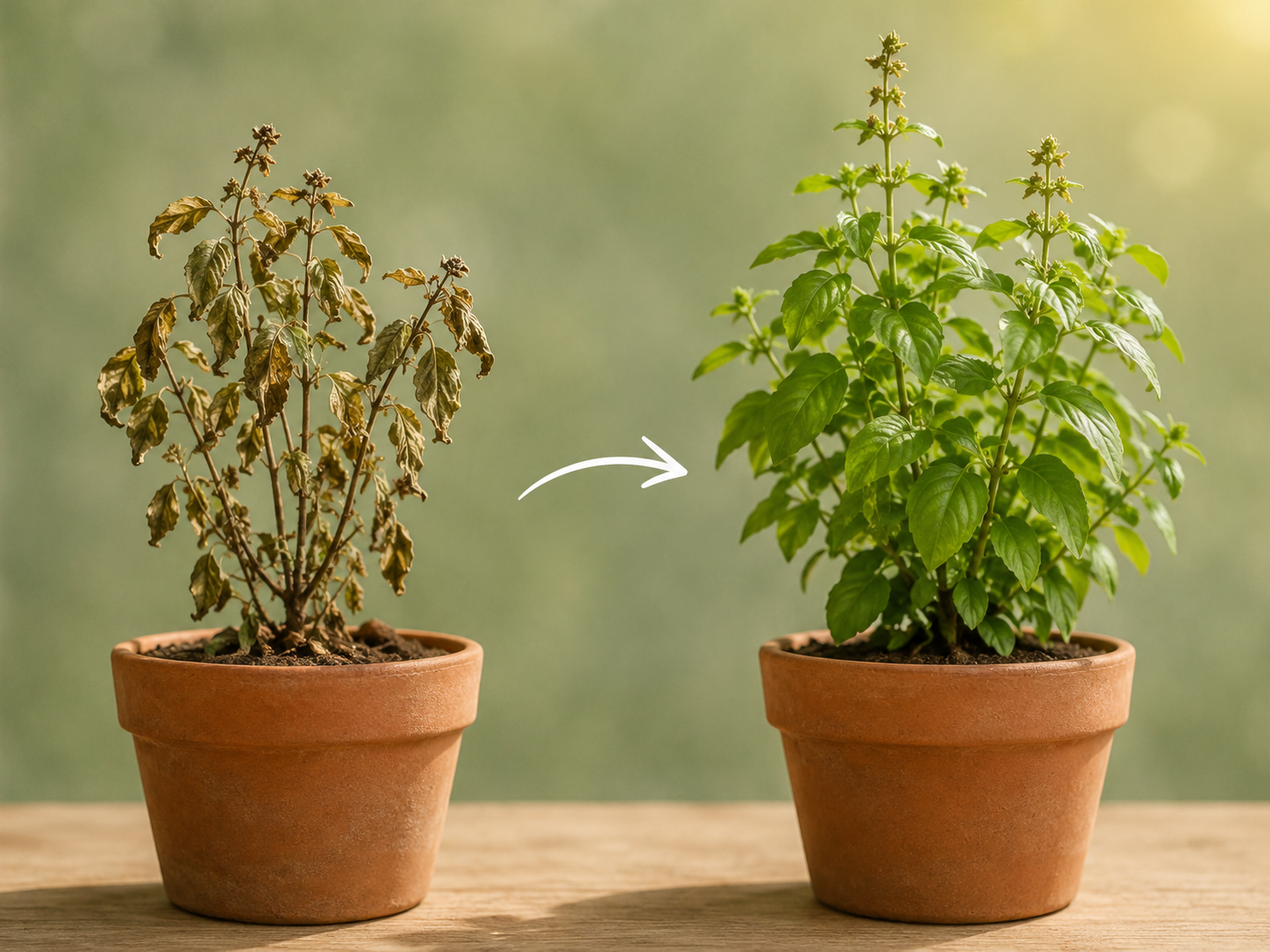
Healthy Plant vs. Symptomatic Plant
|
Healthy Tulsi
|
Symptomatic / Dying Tulsi
|
|---|---|
|
Dark green or rich purple leaves
|
Brittle, paper-dry brown leaves (dehydration / hot wind scorch)
|
|
Upright, sturdy stems
|
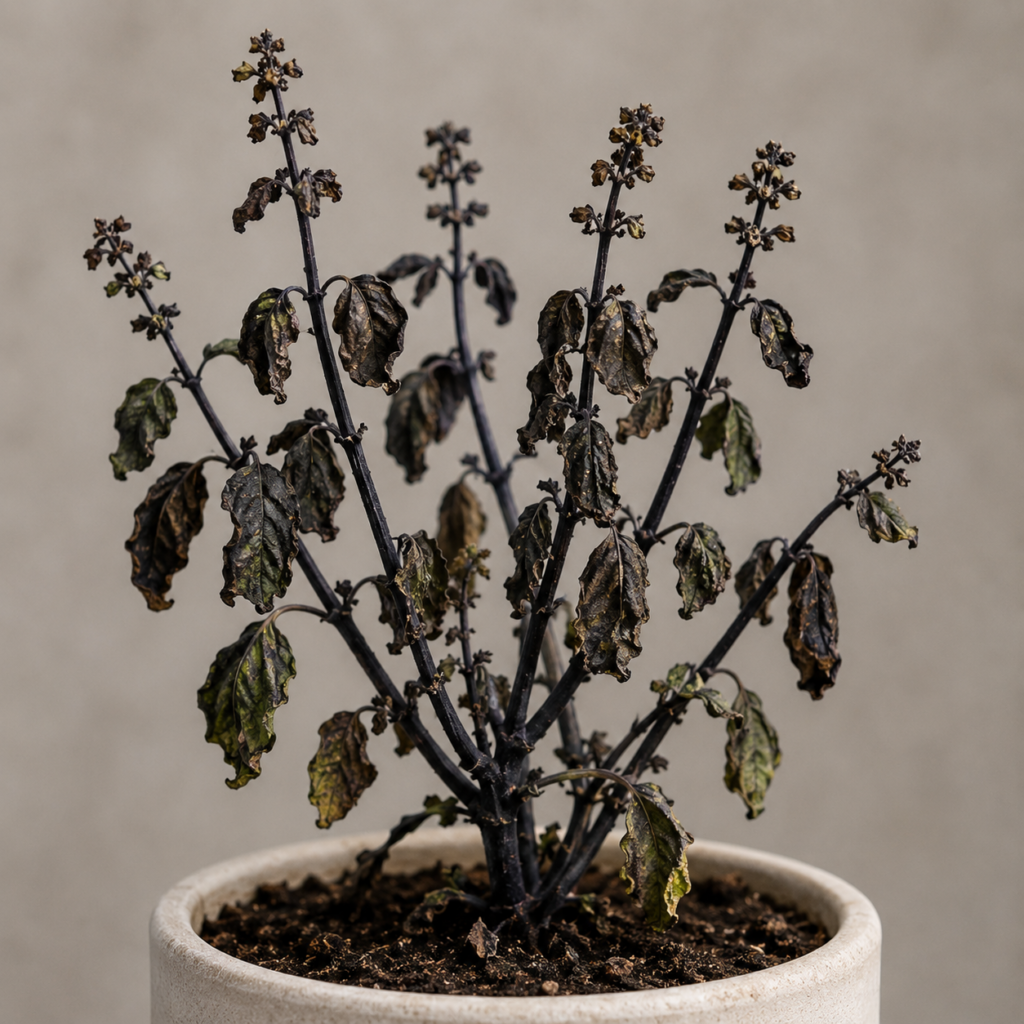
Soft, mushy, black-spotted leaves (root rot)
|
|
Vigorous new leaf shoots
|
White, powdery film on leaf surfaces (fungal attack)
|
|
Firm, cream-white roots
|
Dense clusters of tiny black dots on stems (aphids)
|
How to Revive a Dying Tulsi Plant: 4-Step Emergency Protocol
If your Tulsi is actively dropping leaves, developing black stems, or wilting, intervene quickly — fungal root infections can spread within days in warm, humid conditions. Follow these steps in order.
Step 1: Inspect the Roots (15 minutes)
Gently ease the plant out of its pot without slicing the main taproot. Healthy roots are cream or light brown, firm, and have a fresh earthy smell. Rotten roots are black or dark brown, mushy, and smell sour. If the root ball smells sour and feels mushy, your plant has root rot — wash away the wet, toxic soil under slow running water to expose the damaged roots.
Step 2: Prune Diseased Roots, Stems, and Manjari
Using sterilized scissors or pruning shears (wipe blades with rubbing alcohol first):
- Cut away all black, mushy roots
- Remove dead or blackened stems
- Remove yellow or infected leaves
- Trim off mature, browning flower spikes (manjari)
Removing manjari is important: letting seed spikes mature tells the plant its life cycle is complete, which slows leaf growth and speeds up dieback. Pinching them redirects the plant’s energy into fresh roots and leaves.
Step 3: Repot in Fresh, Well-Draining Soil
Discard the old soil entirely — it likely contains fungal pathogens. Scrub the pot and confirm the drainage holes are unblocked (a curved piece of broken earthenware, or thikri, placed over the holes helps prevent clogging). Rebuild the potting mix with:
- 50% garden soil
- 30% vermicompost or organic compost
- 20% river sand or perlite
Dust the remaining healthy roots with turmeric powder or a mild organic fungicide before repotting, as extra antifungal protection.
Step 4: Water Once, Then Hold Back
Water thoroughly until it drains from the bottom holes, then wait until the top 1–2 inches of soil are dry before watering again. Place the pot somewhere warm and bright with filtered morning sun, away from harsh midday heat or cold drafts. Expect 7–14 days before new growth appears — this is the plant recovering from repotting shock, not a sign of failure.
The Science Behind Tulsi Root Rot
Botanically, Tulsi (Ocimum sanctum / O. tenuiflorum) is a tropical perennial subshrub adapted to warm climates with predictable seasonal rhythms — but it is poorly equipped to handle compact soil or frequent overwatering.
Tulsi roots need access to oxygen in the soil to respire and absorb water and nutrients. When soil stays waterlogged, those air pockets fill with stagnant water, the roots are starved of oxygen, and root cells begin to collapse. Once roots are compromised, opportunistic soil-borne fungi — commonly Pythium, Rhizoctonia solani, or Fusarium oxysporum — take hold and rot the remaining tissue. These are well-documented basil pathogens, not folk explanations.
This is why a Tulsi plant in soaking-wet soil can still look dehydrated: damaged roots can no longer pump water upward, so leaves droop and dry out even though the soil itself is saturated.
In winter, low temperatures push Tulsi into a semi-dormant state — internal water transport and cell division slow down. Watering at the same summer rate during this period keeps soil wet for weeks, which is one of the most common causes of winter root rot.
Tulsi Leaves Turning Yellow: Causes & Solutions
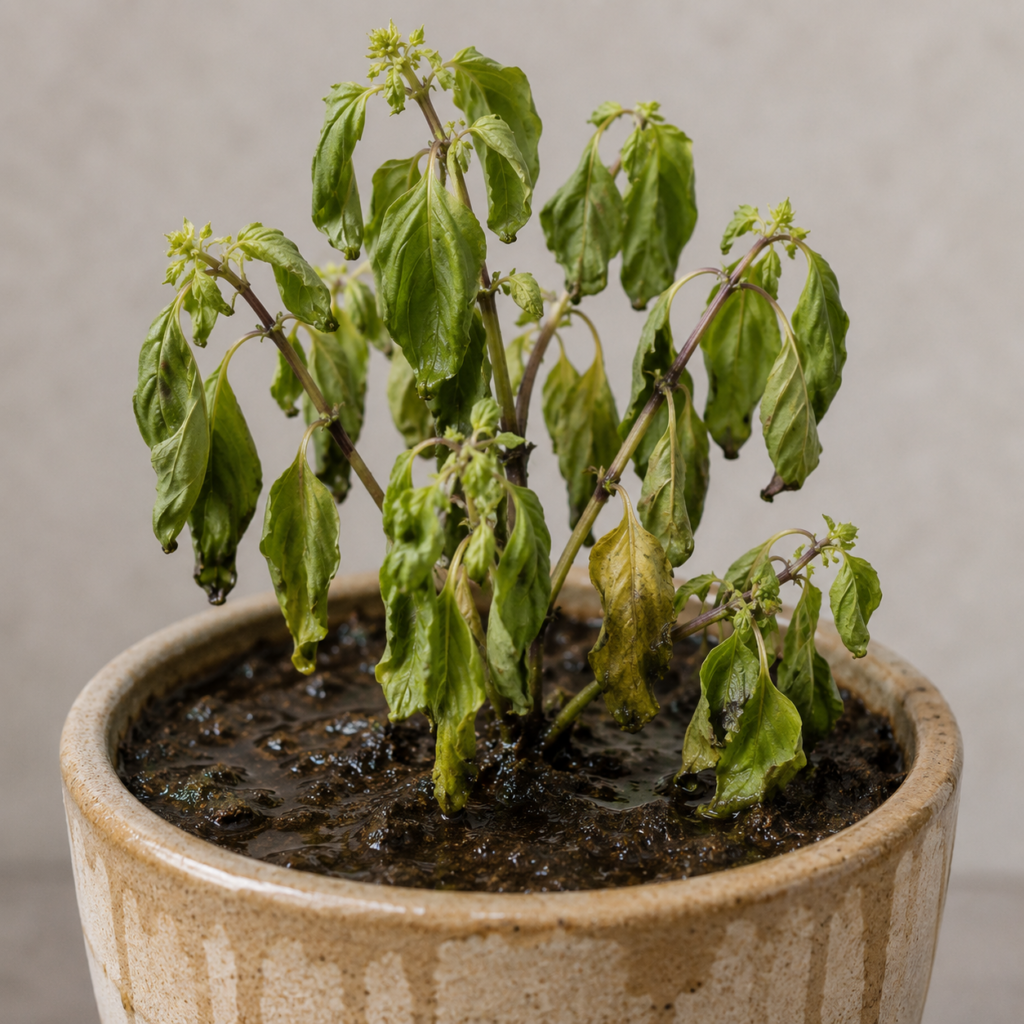
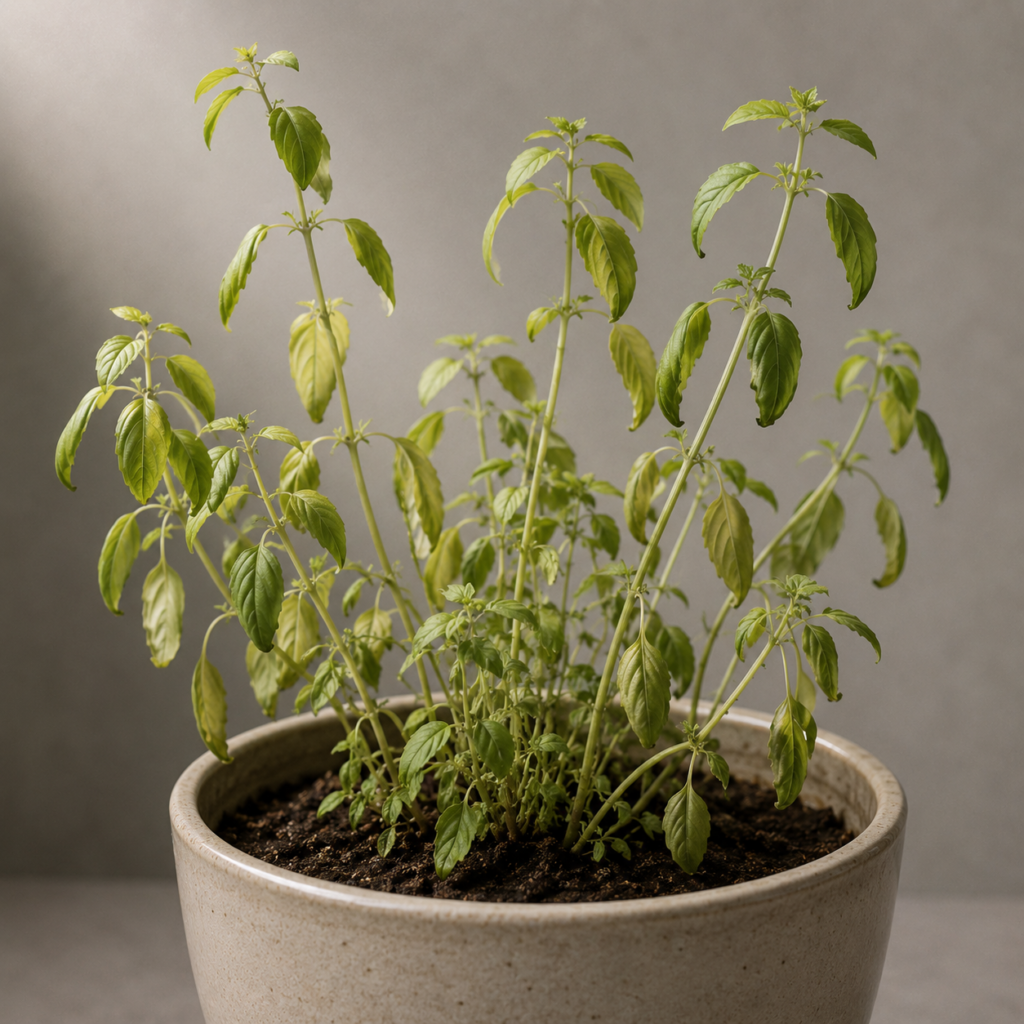
Overwatering (most common)
Saturated soil cuts off oxygen to the roots, fungal growth begins, and lower leaves turn soft and pale yellow before dropping. Solution: Reduce watering frequency, improve drainage, and switch to a looser, airier soil mix.
Lack of Sunlight
Without enough light, chlorophyll production drops, leaves fade, stems weaken, and growth slows. . Solution: Provide 4–6 hours of direct morning sunlight daily. .
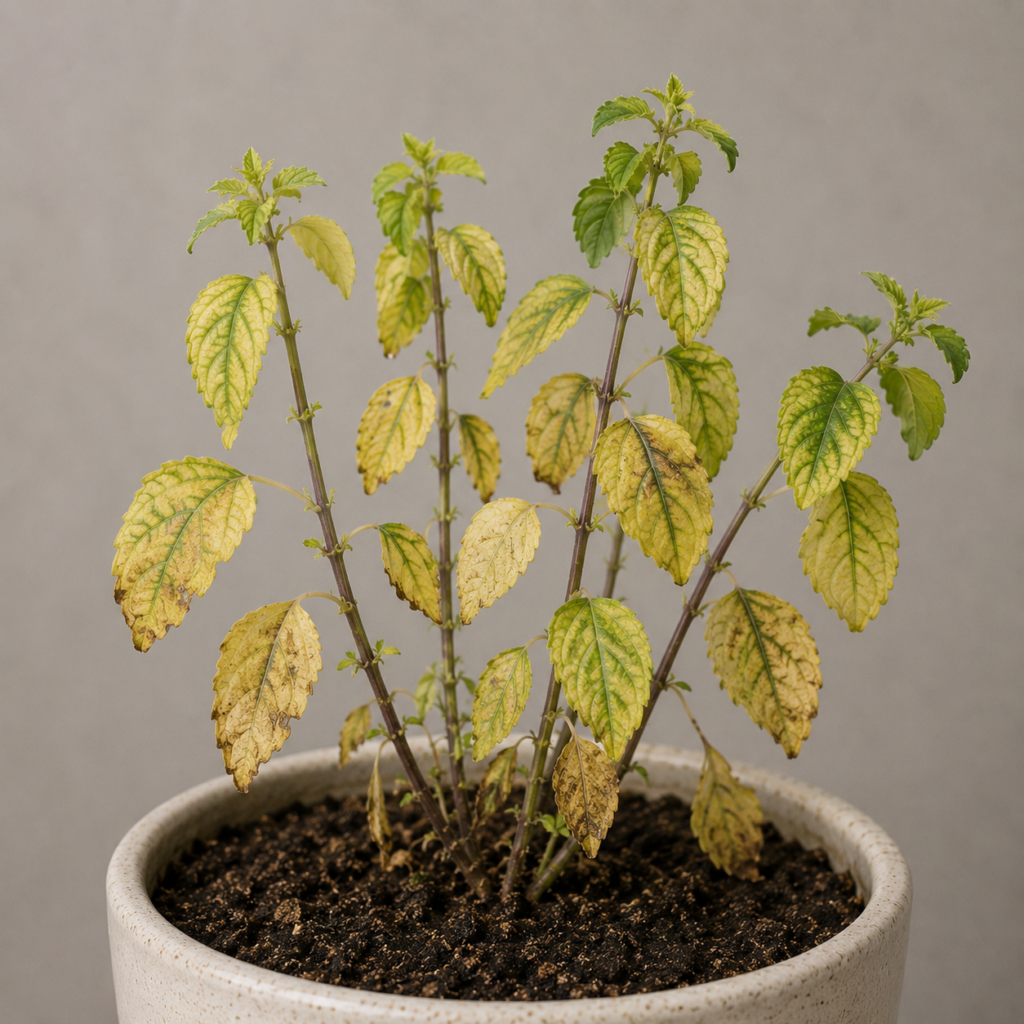
Nutrient Deficiency
Pale yellow leaves, especially on new growth, often signal low nitrogen or iron. Solution: Add vermicompost, cow dung manure, or organic compost once a month.
Tulsi Leaves Turning Brown or Black
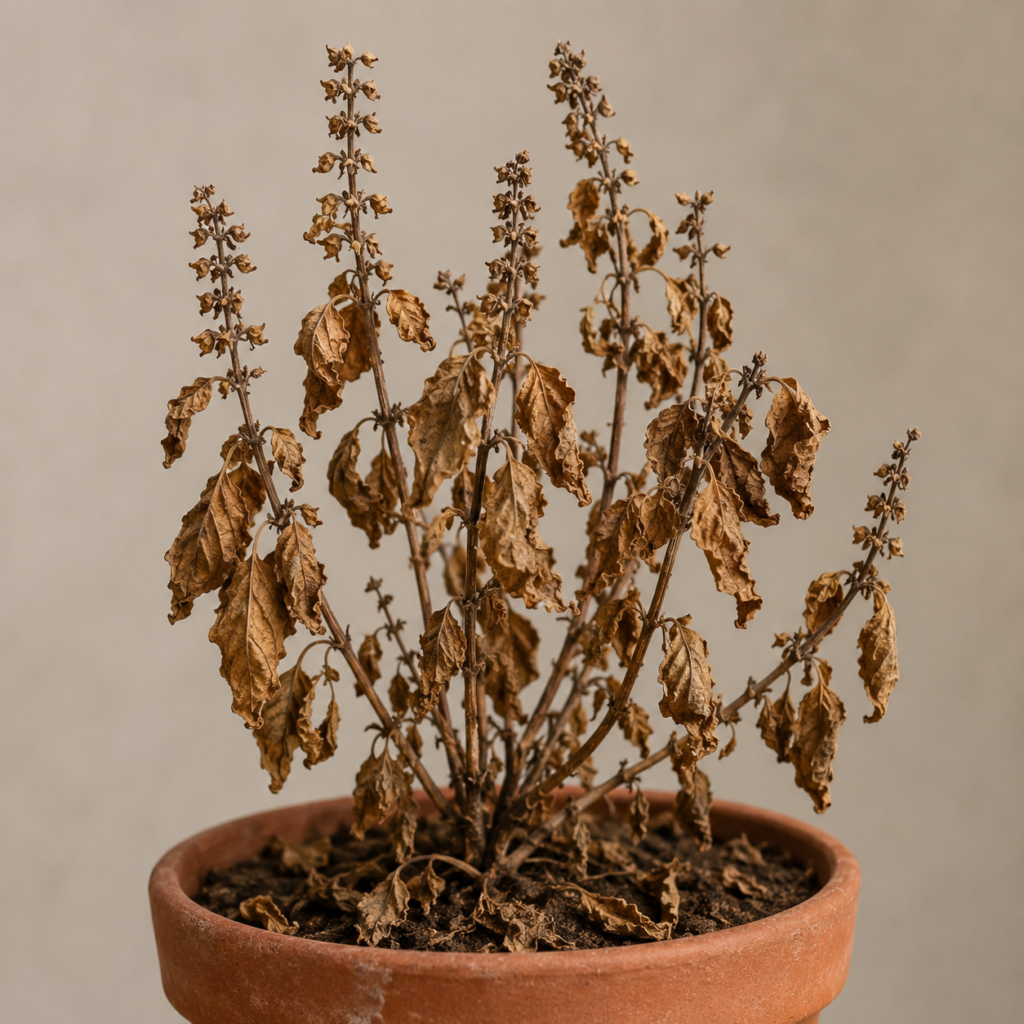
Dry, Crispy Brown Leaves
Usually caused by heat stress, dehydration, hard or heavily chlorinated water, hot dry winds (loo), or low humidity.
- Move the plant to semi-shade during peak summer
- Water early morning, not midday
- Let chlorinated tap water sit overnight before using it
- Group plants together to raise local humidity
Tulsi Watering Guide by Season
There’s no single fixed watering schedule for Tulsi — India’s climate varies too much across the year. Always check the soil before watering: only water when the top 1–2 inches feel dry.
Summer
Usually once daily; extremely hot regions may need twice-daily watering, early morning and evening.
Monsoon
Water only when soil is dry. Remove saucer trays so rainwater doesn't sit and waterlog the pot.
Winter
Once every 5–7 days in colder regions. Use room-temperature water, never cold.
Best Soil and Fertilizer for Tulsi
Avoid compact clay soil, waterlogged pots, and poor drainage — Tulsi roots are highly sensitive to trapped moisture.
50% Garden Soil
30% Organic compost
20% Sand
Best Fertilizer
Organic compost is best. Recommended options: vermicompost, cow dung manure (gobar ki khaat), homemade compost, or neem cake powder. Apply once every 3–4 weeks during the growing season (roughly March–October). Avoid heavy chemical fertilizers, which can burn Tulsi’s sensitive roots.
Seasonal Tulsi Care in India
Summer (April–June)
- Provide morning sun only; protect from harsh afternoon heat
- Water early morning; consider a second light watering in the evening during heatwaves
- Use a green shade net or filtered light if temperatures become extreme
- Avoid hot, dry loo winds
Monsoon (July–September)
- Remove bottom water trays so rain doesn’t pool and waterlog the pot
- Improve airflow around the plant
- Reduce watering and watch for powdery mildew
Winter (October–February)
- Reduce watering significantly — water only when soil is dry to 2–3 inches deep
- Cover the canopy with a light, breathable cloth (chunari) after sunset; remove it the next morning
- Use only room-temperature water, never cold
"Tulsi enters semi-dormancy in winter, so slower growth during this period is normal, not a problem."
Indoor Tulsi Plant Care
Tulsi can survive indoors temporarily, but it’s fundamentally an outdoor, full-sun plant and struggles long-term without direct sunlight.
- Place near an east- or north-facing window with strong morning light
- Maintain airflow; avoid air-conditioning drafts
- Expect legginess (long, thin stems with few leaves) if light is insufficient
For sustained health, keep Tulsi outdoors whenever possible and treat indoor placement as a short-term arrangement.
Tulsi Pest Control: Aphids, Whiteflies & Fungus
Tulsi commonly attracts black aphids, whiteflies, spider mites, and powdery mildew — especially in poor airflow or high humidity.
Natural Neem Oil Spray
Because Tulsi leaves are often used in teas and home remedies, avoid harsh chemical pesticides. Mix:
- 1 teaspoon organic cold-pressed neem oil
- 4–5 drops mild liquid soap or baby shampoo
- 1 liter warm water
Spray thoroughly under leaves, on stems, and on infected areas. Repeat every 4 days for two weeks.
Powdery Mildew Treatment
White powder on leaves is powdery mildew, a fungal infection common during high humidity and cool nights. Prune the worst-affected leaves first, then spray weekly with:
- 1 tablespoon baking soda
- 1 teaspoon vegetable oil
- 2 liters water
Also improve airflow and avoid letting leaves stay wet overnight. A diluted buttermilk spray (1 part curd to 10 parts water) is a useful organic alternative — the beneficial bacteria help outcompete the fungus.
Why You Should Remove Tulsi Manjari (Flower Spikes)
If flower spikes are left to mature and brown on the stem, the plant receives a signal that its reproductive cycle is complete — growth slows, leaves yellow, and stems turn woody.
Best practice: inspect the plant twice a week, and pinch off green, tender manjari as soon as they appear. This redirects growth hormones toward branching, producing a denser, bushier plant — unless you’re intentionally letting it seed for religious use (such as Tulsi Vivah) or propagation.
Rama Tulsi vs Krishna (Shyama) Tulsi
|
Rama Tulsi
|
Krishna (Shyama) Tulsi
|
|---|---|
|
Bright green leaves and stems
|
Dark purple to near-black leaves and stems
|
|
Milder, sweeter fragrance
|
Stronger, spicier, clove-like aroma
|
|
Most common household variety
|
Higher concentration of medicinal volatile oils
|
Both belong to the same species and require similar day-to-day care.
Vastu Tips for Tulsi Plant Placement
According to Vastu Shastra, Tulsi is believed to promote positivity and harmony in the home:
- Place it in the North, East, or North-East direction
- Keep the surrounding area clean and clutter-free
- Avoid placing it near dustbins or footwear
Quick Troubleshooting Table
Problem | Likely Cause | Solution |
Yellow leaves | Overwatering | Reduce watering frequency |
Brown crispy tips | Heat stress / hard water | Move to partial shade; use rested water |
White powder on leaves | Powdery mildew | Baking soda spray weekly |
Black stems | Root rot | Repot immediately, remove rotten roots |
Drooping leaves | Root suffocation | Improve drainage |
Tiny black bugs | Aphids | Neem oil spray every 4 days |
Weak, leggy stems | Lack of sunlight | Increase morning sun exposure |
Leaf drop in winter | Cold stress | Reduce watering, protect from frost |
Frequently Asked Questions
These are the questions Tulsi owners most commonly search for — answered directly so this section can also serve as FAQ-schema content when published.
Q1. How often should I water my Tulsi plant to avoid root rot?
There’s no fixed schedule, since evaporation rates change with the weather. Water only when the top 1–2 inches of soil feel completely dry. In Indian summers this is typically once daily (early morning); in monsoon, roughly every 2–3 days; in winter, once every 5–7 days. If water pools on the surface for more than 30 seconds after watering, your soil is too dense and needs more sand or perlite.
Q2. Why are my Tulsi leaves turning yellow and dropping off?
Most often overwatering — saturated soil suffocates the roots and causes lower leaves to pale and drop. If leaves yellow while the soil is dry, suspect insufficient sunlight. If new growth is pale while older leaves stay green, suspect nitrogen or iron deficiency.
Q3. Can a Tulsi plant survive indoors permanently?
Not well. Tulsi needs at least 4–6 hours of direct, unfiltered morning sunlight to produce its essential oils and stay structurally healthy. Permanent indoor placement, especially in air-conditioned rooms, tends to cause legginess, leaf drop, and fungal issues. If indoors is unavoidable, use the brightest east- or north-facing window available.
Q4. What’s the difference between Rama Tulsi and Shyama (Krishna) Tulsi?
Both are the same species. Rama Tulsi has bright green leaves and a milder aroma, and is the most common household variety. Shyama/Krishna Tulsi has dark purple leaves, a stronger clove-like fragrance, and a higher concentration of medicinal compounds, making it more prized in Ayurvedic use.
Q5. How do I get rid of the tiny black bugs (aphids) on my Tulsi?
Since Tulsi leaves are often consumed, avoid chemical pesticides. Spray a mix of 1 teaspoon neem oil, a few drops of mild liquid soap, and 1 liter of warm water — focus on leaf undersides and stem joints. Repeat every 4 days for about two weeks.
Q6. My Tulsi has a white, powdery film on its leaves. What is it?
This is powdery mildew, a fungal infection common during humid, cool periods. Prune the worst-affected leaves, then spray weekly with 1 tablespoon baking soda and 1 teaspoon vegetable oil in 2 liters of water, and improve airflow around the plant.
Q7. Why are my Tulsi leaf tips turning dark brown and crispy?
Usually hard or chlorinated water, or hot, dry summer winds (loo). Let tap water rest overnight before using it, and move the pot to semi-shade or group it with other plants to raise humidity during heatwaves.
Q8. What’s the best organic fertilizer for a bushy Tulsi?
Well-rotted vermicompost or aged cow dung manure (gobar ki khaat), applied once a month during the growing season (roughly March–October). Avoid synthetic fertilizers like urea, which can burn Tulsi’s sensitive roots.
Q9. Should I let my Tulsi grow flower spikes (manjari)?
Only if you intend to harvest seeds or use them ritually (such as for Tulsi Vivah). Letting manjari mature signals the plant’s life cycle is complete, which slows leaf growth and speeds up dieback. For a bushier, longer-lived plant, pinch off green manjari as soon as they appear.
Q10. How do I protect my Tulsi from dying in severe winter?
Cover the canopy with a light, breathable cloth before sunset and remove it the next morning so the plant gets sunlight. Cut watering down to the bare minimum, and use only room-temperature water — never cold — since cold shock combined with frost is a leading cause of winter dieback.
Final Thoughts
Tulsi is a resilient plant once its basic needs are understood. The overwhelming majority of problems trace back to four things: excessive watering, poor drainage, low sunlight, or seasonal stress.
Get those four right — morning sunlight, airy well-draining soil, watering based on soil moisture rather than habit, and quick response to early warning signs like yellowing or blackening — and your Tulsi will stay lush, bushy, and healthy through every season.
Stop Guessing. and Start Rescuing.
Join over 1,000+ plant parents who have permanently eliminated watering anxiety. Access instant Gemini AI leaf diagnostics and custom environmental care systems completely free.