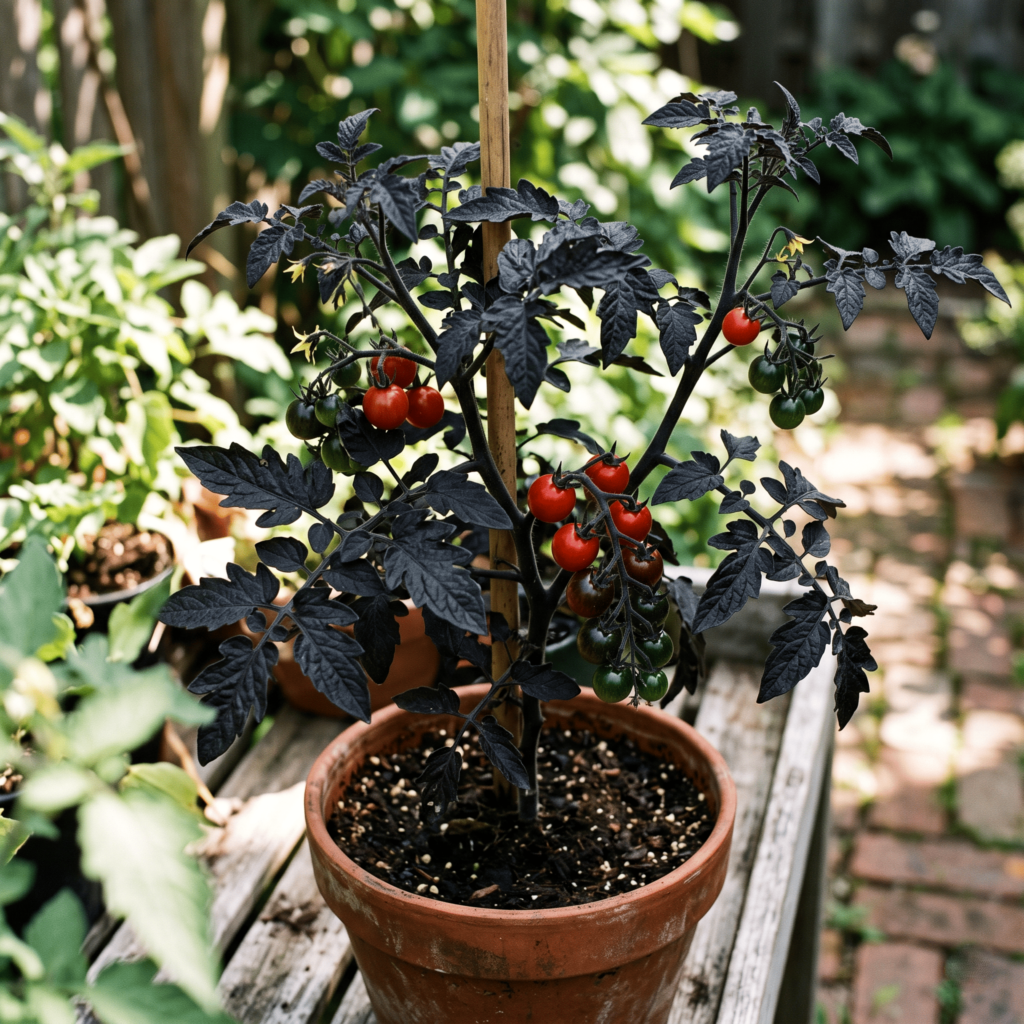
Tomato Plant
Tomato plants (Solanum lycopersicum) hold a highly valued place in home gardens, celebrated across the world for their incredible culinary versatility, heavy seasonal yields, fresh homegrown taste, and exceptional nutritional benefits. Learning how to grow tomatoes at home brings immense satisfaction and a steady supply of juicy, vibrant fruits to your kitchen table.
However, when a once-thriving tomato vine suddenly turns yellow, dries up, or unexpectedly drops its leaves, it causes real distress and anxiety for any plant parent. Rest assured, a failing tomato vine rarely stems from bad luck or simple neglect. It almost always traces back to explicit, physical causes that can be readily resolved once properly diagnosed.
This guide covers:
Why tomato plants die, and how to read the warning signs
A step-by-step emergency revival protocol
The botanical science behind root rot and leaf drop
Watering, soil, and fertilizer guidelines by season
Pest and fungal disease treatment (blight, whiteflies, powdery mildew)
Indoor vs outdoor care, and how to care the tomato plant effectively
Pruning non-productive suckers and managing early flower spikes
Determinate vs. Indeterminate cultivar traits
A quick-reference troubleshooting table
The 10 most frequently asked tomato care questions, answered directly
Quick Diagnostic Matrix
Before troubleshooting a specific symptom, check your tomato plant’s basic growing conditions against this baseline requirement checklist. Most common issues stem from one of these key environmental factors drifting outside its optimal range.
|
Factor
|
Baseline Requirement
|
|---|---|
|
Sunlight
|
Requires 6–8 hours of direct, unobstructed sunlight daily; essential for fruit development.
|
|
Watering
|
Let the top 1–2 inches of soil dry out completely between sessions; avoid rigid daily schedules.
|
|
Water quality
|
Highly sensitive to salt buildup; avoid chlorinated or hard municipal water to prevent leaf-tip burn.
|
|
Soil
|
Light, airy, well-draining loamy texture rich in organic matter to encourage deep root expansion.
|
|
Pests
|
Prone to whiteflies, aphids, hornworms, and spider mites; owners often wonder, does it invite too many pests?
|
|
Placement
|
Sheltered outdoor spot with strong stake/cage support; south or west-facing orientation works best.
|
Why Is My Tomato Plant Dying?
A tomato plant usually declines because of:
- Severe overwatering and poor container drainage
- Destructive root rot arising from waterlogged soil
- Extreme light deprivation or lack of direct sun
- Sharp temperature shocks from unexpected cold snaps or blistering heatwaves
- Lethal fungal pathogens such as early blight, late blight, or fusarium wilt
- Heavy, compact clay soil that completely restricts root zone airflow
- Excess ambient moisture & water accumulation during the monsoon season
- Severe pest insect infestations left entirely untreated
"The single most common cause is waterlogged soil, which suffocates the roots and invites fungal infection."
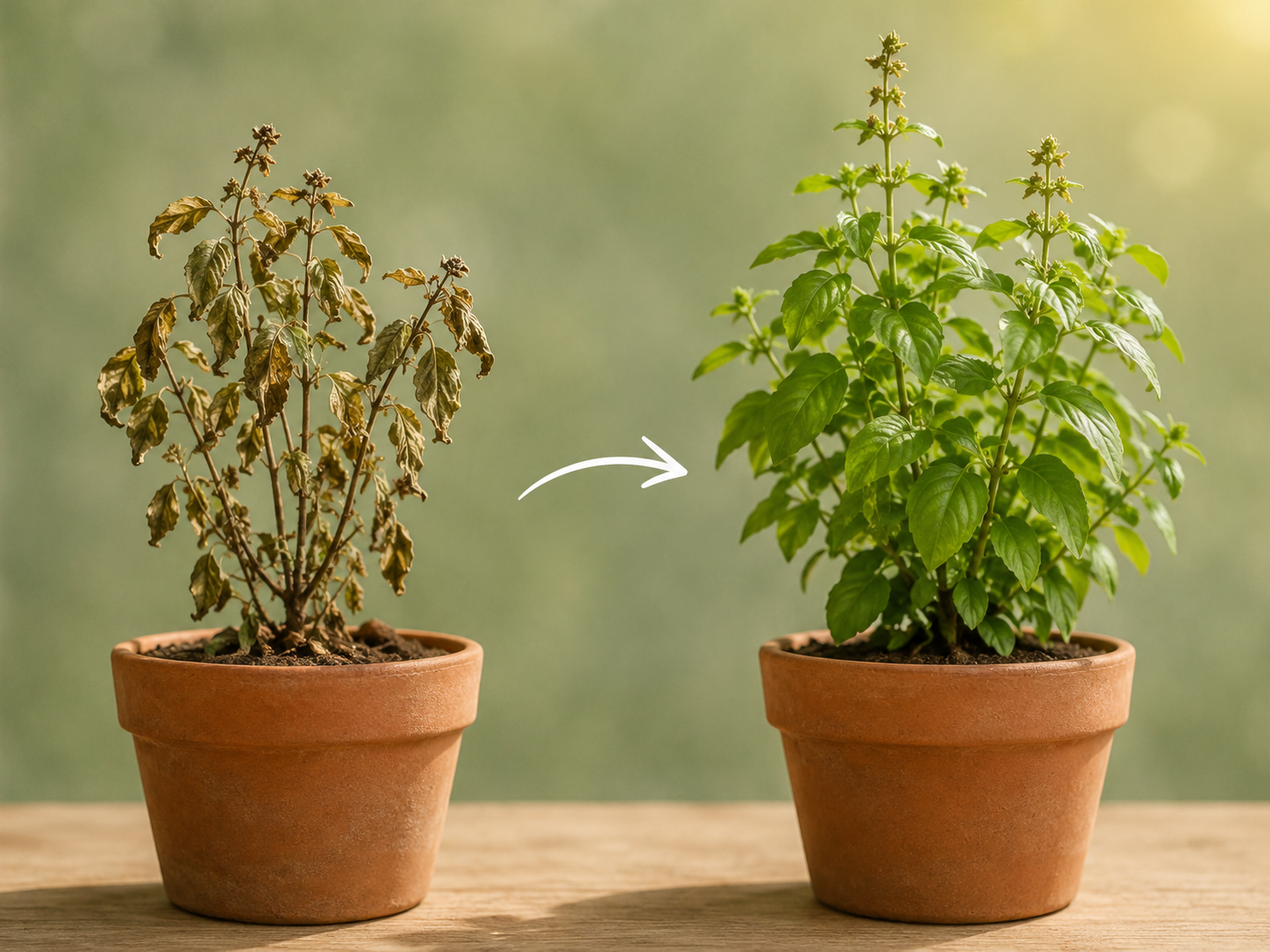
Healthy Plant vs. Symptomatic Plant
|
Healthy Tomato Plant
|
Symptomatic / Dying Tomato Plant
|
|---|---|
|
Vibrant, dark green, turgid leaves
|
Brittle, dry, or dehydrated paper-brown leaves (heat stress/scorching)
|
|
Upright, thick, sturdy green stems
|
Soft, mushy, or dark-spotted stems (advanced root rot)
|
|
Vigorous new leaf shoots and firm fruit
|
Fungal film, blight spots, or powdery growth on foliage surfaces
|
|
Firm, extensive, cream-white roots
|
Pest clusters or insect infestation covering stems and leaves
|
How to Revive a Dying Tomato: 4-Step Emergency Protocol
If your tomato vine is actively dropping leaves, developing dark lesions, or wilting severely, you must intervene quickly before fungal root infections advance irreversibly.
Step 1: Inspect the Roots (15 minutes)
Gently ease the tomato plant out of its container without damaging the main taproot structure. Healthy roots are firm, cream-white or light tan, and smell cleanly of fresh earth. Rotten roots appear black or dark brown, feel completely mushy, and emit a distinctly sour, foul odor. If the root ball feels mushy and smells sour, wash away the contaminated, toxic soil under slow running water to fully expose the damaged root tissue.
Step 2: Prune Diseased Roots, Stems, and Foliage
Using sharp, sterilized scissors or pruning shears—always wiping the blades with rubbing alcohol first to eliminate pathogens:
Cut away all black, mushy, or decaying root strands
Remove dead, hollow, or severely blackened stems
Clip off yellowed, spotted, or heavily infected blight leaves
Trim off mature, browning flower clusters or stunted early fruits
Removing these spent reproductive elements and early fruit spikes is a foundational step because it halts reproductive strain. Forcing the plant to stop supporting fruit or flowers redirects vital metabolic energy directly back into structural root recovery and vegetative survival.
Step 3: Repot in Fresh, Well-Draining Soil
Completely discard the old potting soil, as it likely harbors active fungal pathogens. Cleanly scrub the container and ensure all bottom drainage holes are entirely unblocked to guarantee rapid water outflow. Rebuild your ideal potting substrate using this strict percentage breakdown list:
50% Garden Soil30% Organic Compost / Vermicompost20% River Sand or Perlite
As an extra organic antifungal tip, lightly dust the remaining healthy roots with natural turmeric powder or cinnamon before replanting to ward off residual spores.
Step 4: Water Once, Then Hold Back
Water the newly potted tomato thoroughly until it flows freely from the drainage holes, then completely hold back until the top 1–2 inches of soil are dry. Place the container in a warm, sheltered location receiving filtered morning sun, away from intense midday heat or drying winds. Expect a 7–14 day recovery shock window where the plant may appear stagnant; this is a normal adaptation period and not a sign of failure.
The Science Behind Tomato Root Rot
Botanically, the tomato (Solanum lycopersicum) is a tender perennial subshrub belonging to the Solanaceae family. It is evolutionarily built for highly aerated, nutrient-dense soils and cannot tolerate stagnant water around its root zone.
Tomato roots undergo regular cellular respiration, requiring pocketed oxygen within the soil matrix to generate ATP and actively pump water and vital minerals upward. When soil becomes consistently waterlogged, these micro-aeration pockets fill entirely with stagnant water, starving the cells of oxygen and causing root tissue to collapse. Once compromised, opportunistic soil-borne fungal pathogens—specifically Pythium, Rhizoctonia solani, Fusarium oxysporum, and Phytophthora species—quickly invade the dying tissue, accelerating systemic rot.
This creates the biological paradox of a drowning tomato plant looking visually dehydrated: because the rotten root cells are completely destroyed, they can no longer transport water up the stem, causing the leaves above to wilt, crisp, and droop despite sitting in fully saturated soil.
Tomato Leaves Turning Yellow: Causes & Solutions
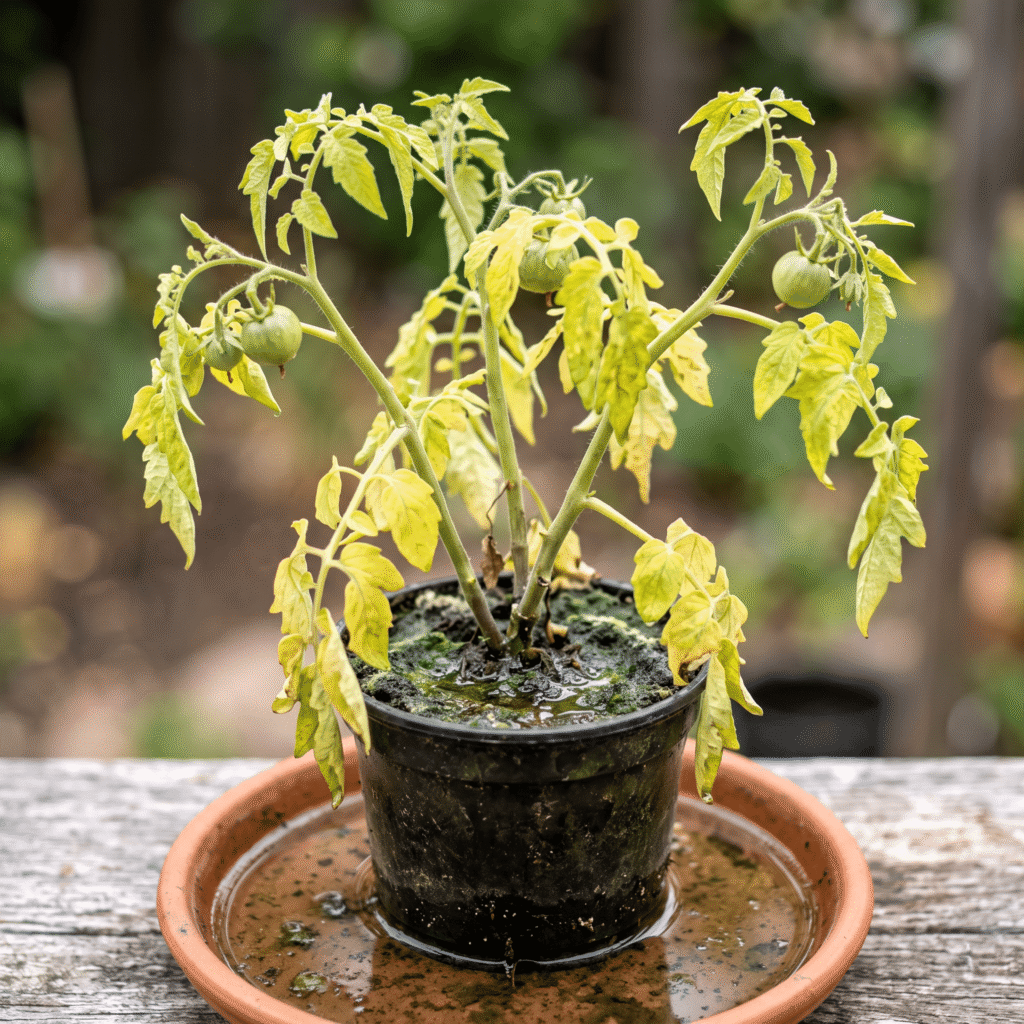
Overwatering
Saturated soil cuts off essential oxygen to the roots, inducing root dieback and causing lower foliage to turn soft and pale yellow..
Solution: Cease watering immediately, maximize drainage hole efficiency, and transition the plant into a looser, perlite-heavy substrate.
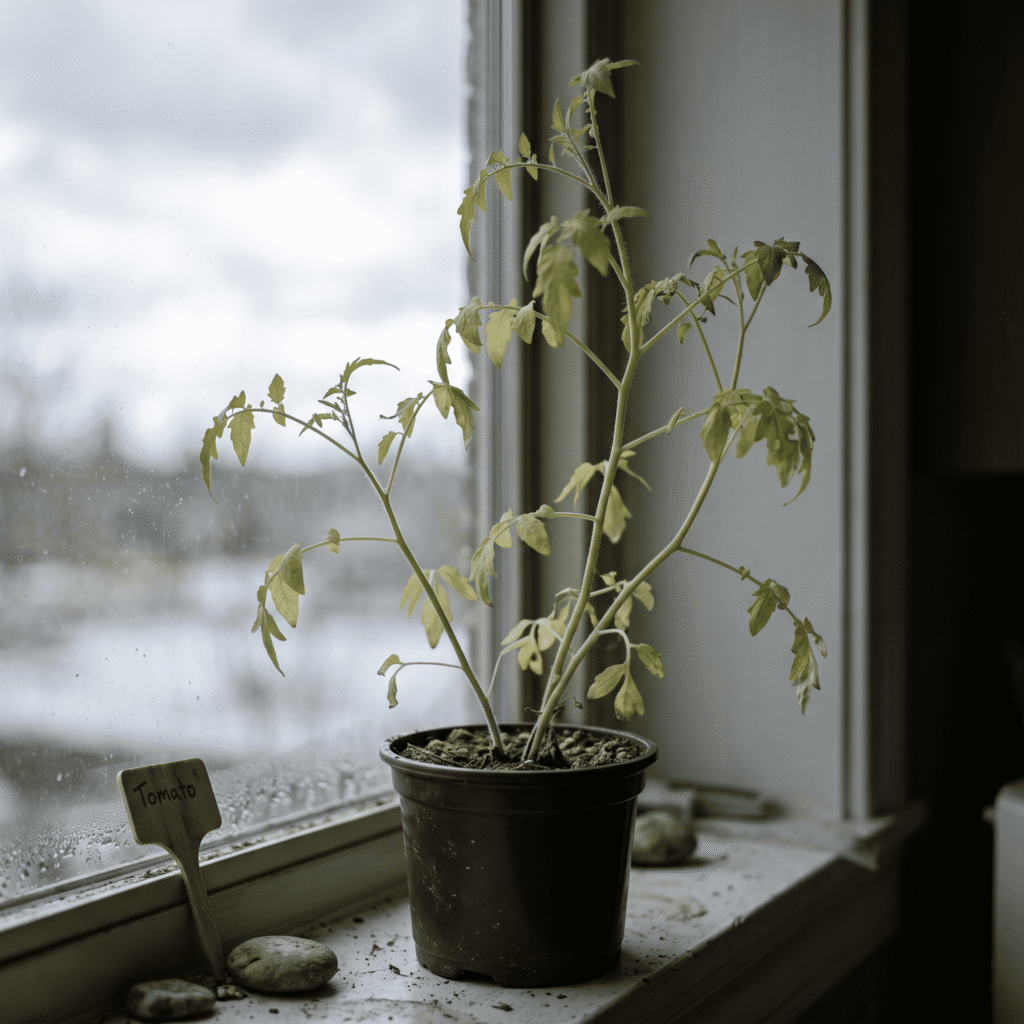
Lack of Sunlight
Insufficient light drops chlorophyll production dramatically, causing middle and lower leaves to fade to a dull yellow. . Solution: Relocate the vine to a position that guarantees 6–8 hours of direct, unobstructed sunlight every day.
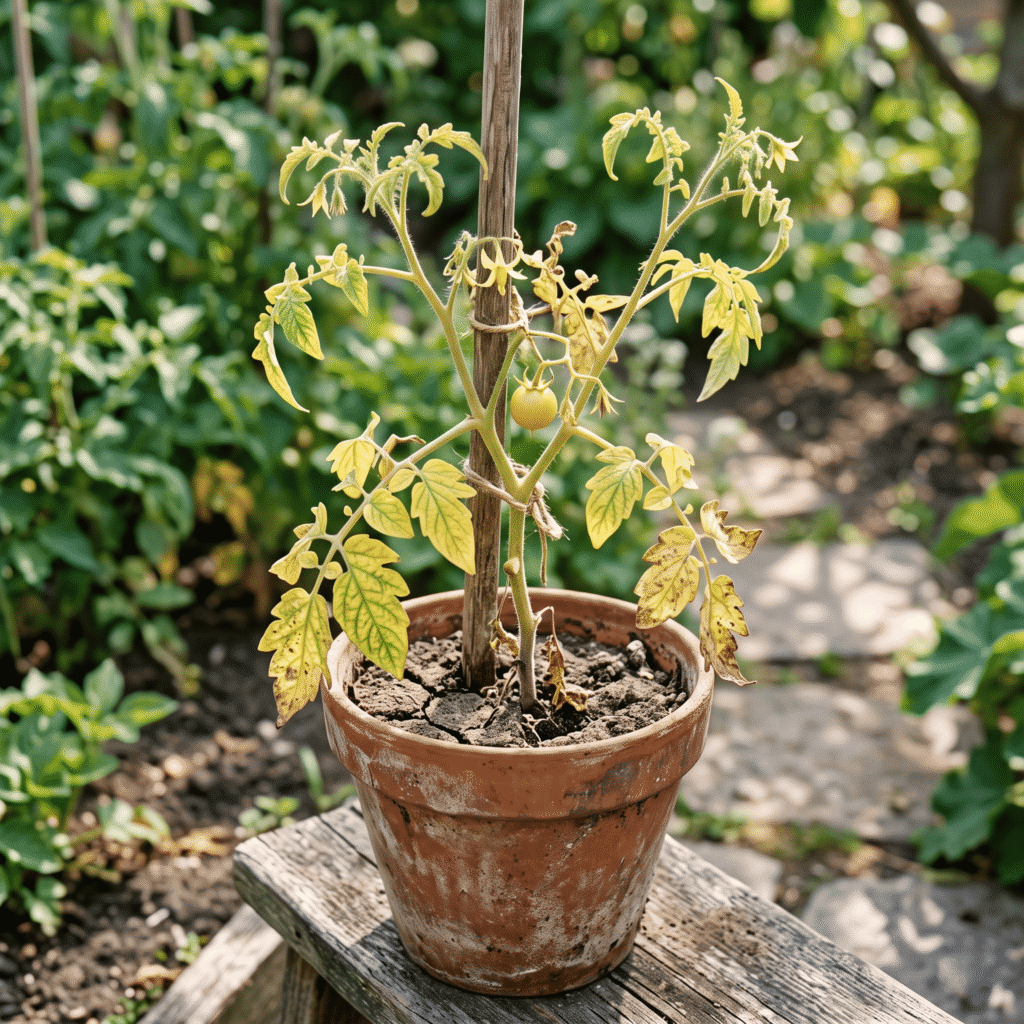
Nutrient Deficiency
A distinct lack of nitrogen or magnesium causes widespread chlorosis, leaving older leaves pale yellow while veins remain faint green. Solution: Amend the topsoil immediately with aged vermicompost, balanced organic compost, or blood meal once a month.
Tomato Leaves Turning Brown or Black
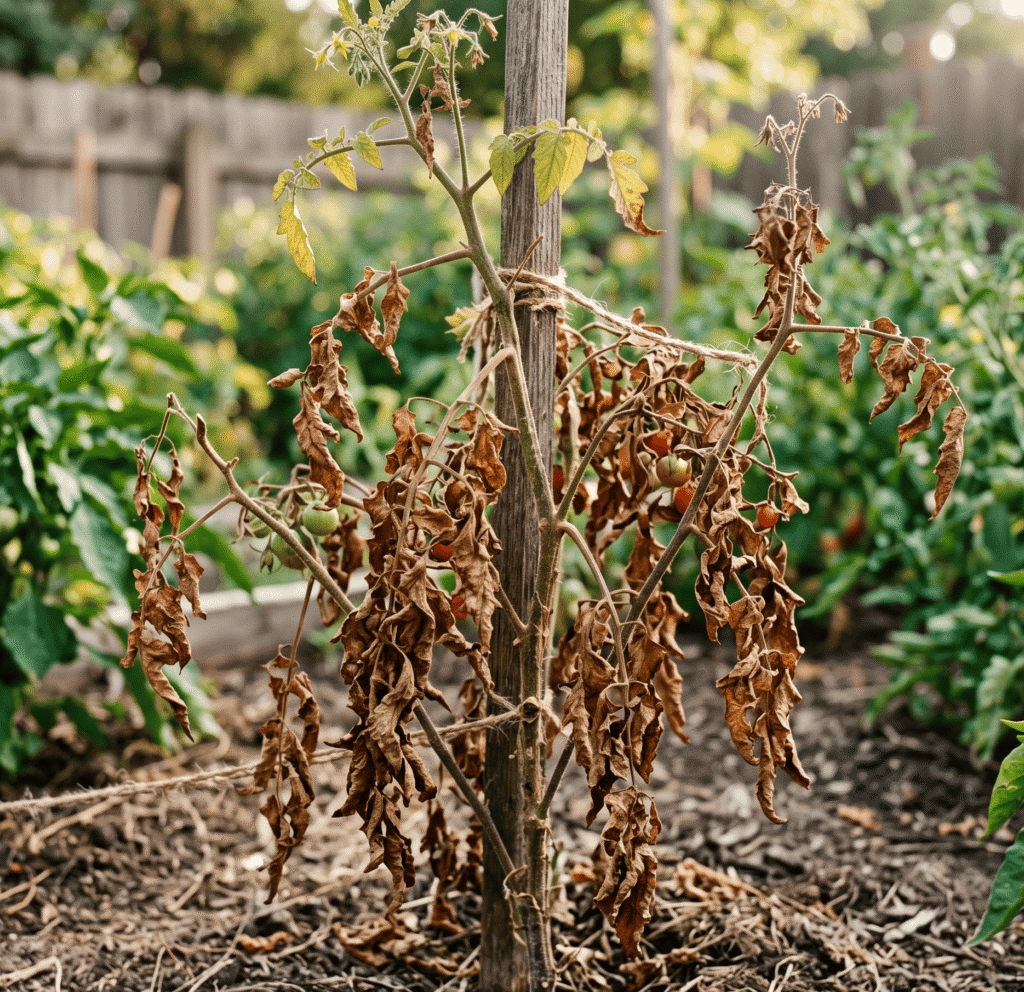
Dry, Crispy Brown Leaves
Shift the container into a semi-shaded zone during extreme midday summer peaks.
Always water early in the morning rather than during high-evaporation midday hours.
Allow heavily chlorinated tap water to sit uncovered overnight before application.
Group multiple containers closely together to naturally elevate localized ambient humidity.
Black Stems or Leaves
Perform an immediate emergency repotting and ruthlessly remove all rotten roots.
Space out plants and prune low branches to drastically improve structural airflow.
Reduce watering frequency to allow the potting medium to dry out significantly.
Provide an insulated, sheltered enclosure on freezing winter nights to prevent frost damage.
Tomato Watering Guide by Season
Tomato irrigation demands shift drastically across macro-climatic changes throughout the year; never water on habit, but rather by checking soil dryness.
Summer
Water deeply once or twice daily during intense heatwaves (early morning and late evening) to prevent blossom drop and fruit cracking.
Monsoon
Restrict manual watering entirely; clear away saucer trays to prevent standing water and root suffocation.
Winter
Reduce frequency heavily to once every 5–7 days; use only lukewarm or room-temperature water to avoid root shock.
Best Soil and Fertilizer for Tomato
Ideal Soil Mix
To grow healthy tomatoes at home, avoid heavy, compact clay soils which trap excessive moisture and strangle fragile roots. Combine your substrate using this highly aerated ratio:
50% Loamy Garden Soil
30%
Organic Vermi compost
20% River Sand / Perlite
Best Fertilizer
Stick to organic-only options to nourish your tomatoes safely. Apply well-composted manure, bone meal (for calcium to prevent blossom end rot), or fish emulsion at steady 3–4 week intervals during the active spring and summer growing seasons. Explicitly avoid harsh synthetic chemical fertilizers with excessive nitrogen, which burn roots and trigger lush green foliage at the absolute expense of fruit production.
Seasonal White Lily Care in India
Summer (April–June)
- Provide shade cloth during scorching afternoons, apply thick organic mulch to preserve soil moisture, and water twice daily during severe heatwaves.
Monsoon (July–September)
- Elevate pots onto bricks to ensure free drainage, spray organic antifungals proactively, and maintain open spacing for rapid leaf drying.
Winter (October–February)
- Move plants to catch full southern exposure, decrease watering significantly, and shelter vulnerable vines from overnight frost.
"Tomato enters semi-dormancy in winter, so slower growth during this period is normal, not a problem."
Indoor Tomato Plant Care
Growing tomatoes indoors comes with structural limits, as they fundamentally require high-intensity light. If you are learning how to care the tomato plant inside, position it exclusively next to a bright south-facing window that gets a full 6 hours of sun, or supplement with a dedicated LED grow light. Ensure active ventilation using a small indoor fan to mimic natural breezes, prevent stagnant humidity pockets, and facilitate self-pollination of the blossoms.
Tomato Pest Control: Insect & Fungal Management
Natural Neem Oil Spray
Because home-grown tomatoes are meant for your dinner table, avoid harsh chemical sprays. If people ask does it invite too many pests?, you can reassure them with this simple, safe chemical-free home remedy:
1 Teaspoon of organic cold-pressed neem oil
4–5 Drops of mild organic liquid soap
1 Liter of warm water
Mix thoroughly and spray generously over stem joints and under leaves every 4 days to eradicate aphids and whiteflies.
Fungal / Powdery Mildew Treatment
To eliminate powdery mildew or early blight spores without toxins, treat weekly using this high-volume kitchen blend:
1 Tablespoon of baking soda
1 Teaspoon of vegetable oil
2 Liters of water
As an effective natural alternative, spray a diluted organic buttermilk solution (1 part sour curd mixed into 10 parts water); its beneficial live bacteria naturally outcompete aggressive fungal spores.
Why You Should Remove Tomato Suckers and Early Flower Spikes
Pruning out non-productive side shoots (suckers) that emerge in the V-joints of branches keeps the vine managed and open. Pinching off early flower spikes on young transplants redirects vital growth hormones away from premature fruit production and pushes it straight into establishing an extensive, robust root architecture capable of supporting massive future yields.
Determinate vs. Indeterminate Tomatoes
|
Determinate Varieties
|
Indeterminate Varieties
|
|---|---|
|
Compact, bush-like structure stopping at a fixed height.
|
Long, sprawling vine that crawls continuously.
|
|
Sets all fruit at once, providing a rapid harvest.
|
Produces fruit continuously along the stem all season.
|
|
Concentrated, rich classic tomato scent profile.
|
Complex, varying sweet-to-acid flavor profiles.
|
|
Uniform ripening ideal for canning and sauces.
|
Extended fresh culinary use over several months.
|
Placement Tips for Tomato
- Situate containers in a high-exposure zone facing South or West to optimize solar energy capture.
- Keep the surrounding air clean and completely clear of weeds to minimize insect staging grounds.
- Avoid placing containers next to dense concrete walls that radiate stifling heat during summer peaks.
- Ensure pots are positioned clear of low-lying mud areas where water aggregates during storms.
Quick Troubleshooting Table
| Problem | Likely Cause | Solution |
| Yellowing lower leaves | Overwatering and root oxygen lack | Reduce watering frequency, check drainage holes immediately. |
| Brown crispy edges | Dehydration or intense heat scorch | Move to partial midday shade; water deeply at dawn. |
| White powder on leaves | Powdery mildew fungal infection | Apply organic baking soda or buttermilk spray weekly. |
| Black lower stems | Advanced fungal root rot | Repot immediately into fresh soil, cutting away mushy roots. |
| Drooping, soft foliage | Severe root suffocation | Drill extra drainage holes and loosen compact soil. |
| Tiny crawling clusters | Aphid or spider mite infestation | Mist with natural neem oil remedy every 4 days. |
| Leggy, thin growth | Light deprivation | Relocate vine to receive 6–8 hours of direct morning sun. |
Frequently Asked Questions
Q1. How often should I water to avoid root rot?
There is no single fixed calendar schedule. Water strictly when the top 1–2 inches of soil feel completely dry. In peak summer, this means watering deeply once or twice daily; in monsoon or winter, pull back to every 3–5 days.
Q2. Why are my tomato leaves turning yellow and dropping?
The primary culprit is chronic overwatering, which completely floods soil air pockets, starves roots of oxygen, and induces lower leaf drop. If soil is dry, look into light deprivation or nitrogen deficiencies instead.
Q3. Can a tomato plant survive indoors permanently?
It is highly challenging. Tomatoes are full-sun field crops requiring 6–8 hours of direct, intense solar radiation to drive photosynthesis and set fruit. Long-term indoor cultivation without strong artificial LED grow lights results in weak, leggy stems and zero fruit production.
Q4. Is the tomato plant toxic for pets?
Yes, the green parts of the tomato plant—including the leaves, stems, and unripened green fruit—contain an alkaloid called solanine, which is toxic to dogs and cats if ingested. Always place your pots out of reach of curious pets, though fully ripe red tomatoes are generally safe in small amounts.
Q5. Does it invite too many pests into the home garden?
Tomatoes can attract common garden insects like whiteflies, aphids, and fruit borers, but they do not naturally overrun your space if managed correctly. Keeping open structural spacing, pruning suckers to enhance airflow, and utilizing defensive neem oil sprays keeps pest pressures completely under control.
Q6. How do I get rid of aphids or whiteflies naturally?
Since you will eat the harvest, avoid chemical pesticides. Use an organic mix of 1 teaspoon cold-pressed neem oil, 4–5 drops of mild dish soap, and 1 liter of warm water. Spray the entire vine thoroughly, concentrating heavily on leaf undersides, every 4 days for two weeks.
Q7. My vine has a white, chalky film on the leaves. What is it?
This is powdery mildew, a fungal infection that thrives during humid days and cool, damp nights. Safely prune away the most congested leaves to optimize ventilation, then apply a weekly homemade baking soda or diluted buttermilk spray to change the surface pH and stop the fungus.
Q8. What is the best organic fertilizer to boost fruit yields?
Use a combination of aged vermicompost or well-rotted manure mixed with bone meal once a month. Bone meal delivers vital calcium, which is chemically required by the plant to prevent blossom end rot (unsightly black bottoms on fruits).
Q9. Should I prune off the suckers and early flower spikes?
Yes, removing the small suckers growing in the branch joints creates an organized, highly productive vine. Pinching off flower spikes on young, immature plants prevents early fruiting stress, redirecting vital resources to build a solid root network first.
Q10. How do I protect my tomato plant from dying in winter frost?
Cover the canopy with a light, breathable horticultural cloth or blanket after sunset to insulate it against freezing air, and uncover it at sunrise. Drastically reduce watering and use only room-temperature water to safeguard roots from thermal shock.
Final Thoughts
Saving a struggling tomato plant is entirely achievable once you align with its botanical realities. By prioritizing the four foundational pillars of tomato wellness abundant direct sunlight, airy well-aerated soil, observation-based watering, and rapid intervention at the first sign of pests or yellowing leaves you will successfully transform a wilting vine into a robust, high-yielding backyard treasure.
Stop Guessing. and Start Rescuing.
Join over 1,000+ plant parents who have permanently eliminated watering anxiety. Access instant Gemini AI leaf diagnostics and custom environmental care systems completely free.