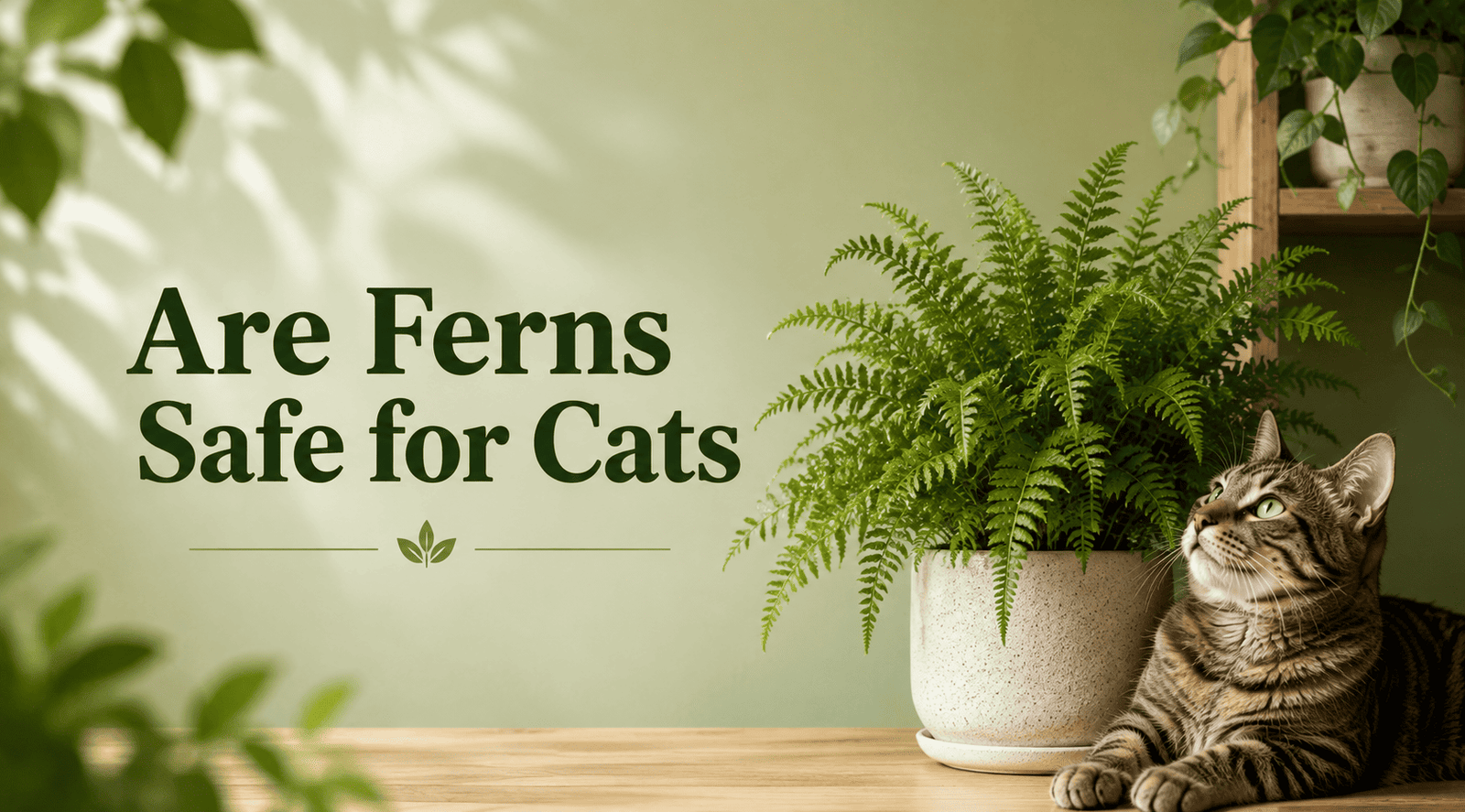
Are Ferns Safe for Cats? What Every Cat Owner Needs to Know
By PlantDecoder | Plant Safety & Prevention
Here's the problem with ferns and cats: the name "fern" covers an enormous number of plants that are not actually related to each other at all.
Boston fern. Asparagus fern. Button fern. Staghorn fern. Rabbit's foot fern. Maidenhair fern. Each one called a fern. Each one a completely different species, from different plant families, with different toxicity profiles — and some of them aren't even true ferns biologically.
So when a cat owner types "are ferns safe for cats?" into a search engine (or, increasingly, into an AI chatbot), the answer they need isn't a simple yes or no. It's: which fern?
This guide untangles that question properly, because the difference between getting it right and getting it wrong is the difference between a harmless afternoon and a vet visit.
The Short Version: True Ferns vs. "Ferns"
Before the plant-by-plant breakdown, here's the framework that makes everything else make sense:
True ferns
Plants that are actually in the fern family (Pteridophyta) — are almost universally non-toxic to cats. Boston fern, maidenhair fern, button fern, staghorn fern, bird's nest fern: all true ferns, all safe.
Plants called "fern" that aren't true ferns
This is where the danger lives. Asparagus fern is the most significant example. It's called a fern because it looks fern-like. It is not a fern. It is in the lily family (Asparagaceae) — and it is toxic to cats.
This single distinction — true fern vs. fern-in-name-only — resolves most of the confusion around this topic.
Fern by Fern: The Complete Safety Breakdown
Boston Fern (Nephrolepis exaltata)
The most popular fern in the world is completely safe for cats and dogs. The ASPCA lists it as non-toxic to both.
Boston fern is a true fern, native to tropical regions, and a beautiful bathroom and hanging basket plant. Cats are sometimes attracted to its feathery fronds — the movement and texture seem to appeal to their instincts — but eating it causes no harm. Mild stomach upset is possible if they eat a large amount of plant material, but this is true of almost any plant consumed in quantity.
If you want a lush, trailing, pet-safe fern — Boston fern is the answer.
Asparagus Fern (Asparagus setaceus, Asparagus densiflorus)
This is the one that trips people up, and it's worth spending time on because asparagus fern is extremely common in Indian homes and gardens.
It looks delicate and feathery — like a softer, airier fern. It's sold alongside true ferns in nurseries. Its name contains the word "fern." And it is toxic to cats.
The berries of asparagus fern are the most toxic part, but the whole plant can cause gastrointestinal issues (vomiting, diarrhoea, abdominal pain) and skin irritation from repeated contact. The berries, if available (the plant does sometimes berry indoors), are more seriously problematic.
The mechanism is different from the calcium oxalate crystals of pothos or peace lily. Asparagus fern contains sapogenins — steroidal compounds that are genuinely toxic to cats and dogs.
What it looks like:
Fine, needle-like leaflets on arching, feathery stems. Sometimes tiny white flowers and small red-orange berries. Frequently used in bouquets and flower arrangements — which means it arrives in your home unexpectedly.
What to do:
If you have cats, either rehome the asparagus fern or keep it in a room your cat cannot access. Check mixed bouquets before displaying them — asparagus fern is a common filler green in arranged flowers.
Maidenhair Fern (Adiantum)
One of the most beautiful of all ferns — delicate, fan-shaped leaflets on thin black stems, almost impossibly elegant — and completely non-toxic to cats and dogs.
Maidenhair fern is notoriously difficult to keep alive (it demands consistent humidity, filtered water, and indirect light), but for cat owners who want a genuinely stunning fern without toxicity concerns, it's worth the effort.
Bird's Nest Fern (Asplenium nidus)
A true fern with bold, strap-like undivided fronds that radiate from a central rosette. It looks nothing like the stereotypical feathery fern, which is part of what makes it interesting. Safe for cats and dogs. Tolerates lower light than most ferns, making it a good bathroom or office plant.
Staghorn Fern (Platycerium)
The staghorn fern is one of the most dramatic plants available — it grows as a wall-mounted epiphyte, its large antler-shaped fronds projecting outward from a mounted wooden board. It looks prehistoric and completely extraordinary on a wall.
Safe for cats and dogs. And because it's wall-mounted, typically out of reach of floor-level investigation.
Button Fern (Pellaea rotundifolia)
Small, compact, with round dark green leaflets on arching fronds. Safe for cats and dogs. Good for terrariums and small spaces.
Rabbit's Foot Fern (Davallia fejeensis)
Named for its fuzzy, creeping rhizomes that extend over the pot's edge and resemble rabbit's feet. A genuinely charming plant that cats will absolutely be fascinated by — the fuzzy rhizomes are irresistible. Safe to eat, safe to bat around.
Delta Maidenhair Fern (Adiantum raddianum)
A smaller, more compact version of the maidenhair fern. Same delicate beauty, same safety profile. A good choice if you want the maidenhair look in a smaller pot.
The Plants That Aren't Ferns But Are Called Ferns
Beyond asparagus fern, here are the other common "ferns" that aren't actually ferns:
Foxtail fern (Asparagus densiflorus 'Myersii')
Another asparagus family member, shaped like a bottle brush rather than a traditional fern. Also toxic to cats for the same reasons as asparagus fern.
Plumosa fern (Asparagus plumosus / Asparagus setaceus)
You've almost certainly seen this in flower arrangements — it's the fine, feathery green used as filler. Same family as asparagus fern, same toxicity concerns.
Lace fern
Usually refers to Asparagus setaceus, another asparagus family member. Not a true fern, not safe for cats.
The Naming Rule of Thumb
The pattern: if it has "asparagus" in the botanical name, it is not a true fern and is toxic to cats and dogs. If it has fern family names in the botanical name (Nephrolepis, Adiantum, Asplenium, Davallia, Platycerium, Pellaea), it is a true fern and almost certainly safe.
What Happens If My Cat Eats an Asparagus Fern?
Symptoms to watch for:
What to do:
Remove the plant from your cat's access.
If your cat has eaten any berries specifically, contact your vet immediately — berries are the most concentrated source of the toxic compounds. For leaf consumption without berries, monitor symptoms. If vomiting is persistent or your cat seems genuinely unwell, call the vet.
Identify the plant if you're not certain what they ate — this is the most important step, and PlantDecoder can confirm species from a photograph if you have any doubt.
The Identification Problem: Why This Matters
The fern safety question highlights a problem that comes up constantly with houseplant toxicity: common names are unreliable.
"Asparagus fern" sounds like a fern. It is not a fern. It is not related to ferns. Its name is essentially an accident of resemblance, and that accident has caused real harm to real cats whose owners assumed "fern = safe."
The only reliable way to know what you're dealing with is the botanical name — the two-part Latin name that is standardised globally and doesn't change based on what a nursery decides to put on a label.
A Boston fern labelled "decorative fern" at a nursery is still Nephrolepis exaltata — safe.
An asparagus fern labelled "table fern" or "fluffy fern" is still Asparagus setaceus — not safe.
The label doesn't change the plant.
This is exactly what PlantDecoder is built for: photograph the plant, get the botanical name and species confirmation, and know with certainty rather than assumption. For cat owners who are serious about pet safety, it's a habit worth building with every new plant.
The Safest Approach for Cat Households
Before buying any fern
Check the botanical name, not just the common name. If it has "asparagus" in the name, don't bring it home.
For existing plants you're unsure about
Photograph them and identify them properly. Don't assume that because something looks like a safe fern, it is one.
For bouquets
Check any arrangement for asparagus fern, foxtail fern, or plumosa fern before displaying it. These are extremely common floristry filler plants and arrive in homes constantly.
For safe fern lovers
Boston fern, bird's nest fern, staghorn fern, and rabbit's foot fern are all wonderful, cat-safe choices that cover a huge range of aesthetics — from the classic to the dramatic to the delightfully weird.
Quick Answers: Ferns and Cats
Direct answers to common questions about fern toxicity and cat safety:
Are ferns toxic to cats?
Is Boston fern safe for cats?
Is asparagus fern toxic to cats?
What ferns are safe for cats?
My cat ate a fern — what should I do?
Keep Your Cats Safe with PlantDecoder
Instantly identify any houseplant or bouquet filler by photo and check verified ASPCA pet toxicity status in seconds.
The Bottom Line
Most ferns are safe for cats. The ones to worry about aren't really ferns at all.
Knowing the difference is simple once you know what to look for — and it's the kind of knowledge that genuinely protects your cat, rather than the vague "be careful around plants" advice that doesn't actually help anyone.
Know your plants by their real names. The rest follows.
Stop Guessing. and Start Rescuing.
Join over 1,000+ plant parents who have permanently eliminated watering anxiety. Access instant Gemini AI leaf diagnostics and custom environmental care systems completely free.