How to Identify If Houseplant Is Toxic: A Complete Step-by-Step Guide
By PlantDecoder | Last updated: 2026
Let me describe a scene that happens thousands of times every day across the world.
A parent walks into the living room to find their toddler crouched next to a trailing plant, holding a chewed leaf and looking enormously pleased with themselves. Or a cat owner notices their tabby nibbling on something green on the windowsill. Or someone moves into a new flat and discovers a lush collection of mystery plants left behind by the previous tenant — no labels, no names, no idea.
In each of these moments, the same urgent question surfaces: is this plant safe?
The answer, in many cases, is findable within minutes. But only if you know where to look — and what to look for.
This is a guide for that moment. Not just the emergency version (though we cover that), but the before-the-emergency version: how to systematically identify every plant in your home, understand its toxicity profile, and build a household where you know exactly what you're living with.
Because the honest truth about houseplant toxicity is this: most people have no idea what half their plants actually are.
Why Plant Identification Is a Safety Issue, Not Just a Hobby
Here's something the houseplant industry doesn't advertise loudly: many of the most popular, most widely sold houseplants in the world are toxic.
Pothos
The lush trailing pothos that features in nine out of ten apartment décor inspiration accounts? Toxic to cats and dogs, mildly irritating to children.
Elephant Ear
The dramatic, large-leafed elephant ear plant? Contains calcium oxalate crystals that cause intense burning in the mouth.
Peace Lily
The stunning peace lily, given as a housewarming gift at some point in probably every home in the world? Toxic to cats and dogs, mildly toxic to humans.
Dieffenbachia ("Dumb Cane")
The beautiful dieffenbachia — found in every hotel lobby, every office, every plant shop? It's called "dumb cane" because ingesting it can temporarily cause swelling severe enough to prevent speech.
None of this means you should fear your plants. It means you should know your plants.
In the world of houseplant safety, knowledge is the only meaningful protection. And knowledge starts with identification.
Conduct a Plant Audit of Your Home
Before anything else, walk through your home and photograph every plant you have.
Not just the ones you know. Every plant.
The one on the landing you've stopped really seeing. The one inherited from a previous resident. The one that was a gift and came with no label. The ten-year-old specimen that started as a cutting and you've long since forgotten what it was. All of them.
The Goal: A Complete Inventory
For each plant, you want to identify three crucial details:
- ✓ Its common name (and preferably its botanical name)
- ✓ Its toxicity status for humans, children specifically, cats, and dogs
- ✓ Where it sits in your home relative to who has access to it
This might take an afternoon. It might reveal plants you've been living with for years without realising they were mildly toxic. It's worth every minute.
Identify Unknown Plants
For plants you can't identify by memory or label, you have several options.
Method 1: PlantDecoder (Fastest)
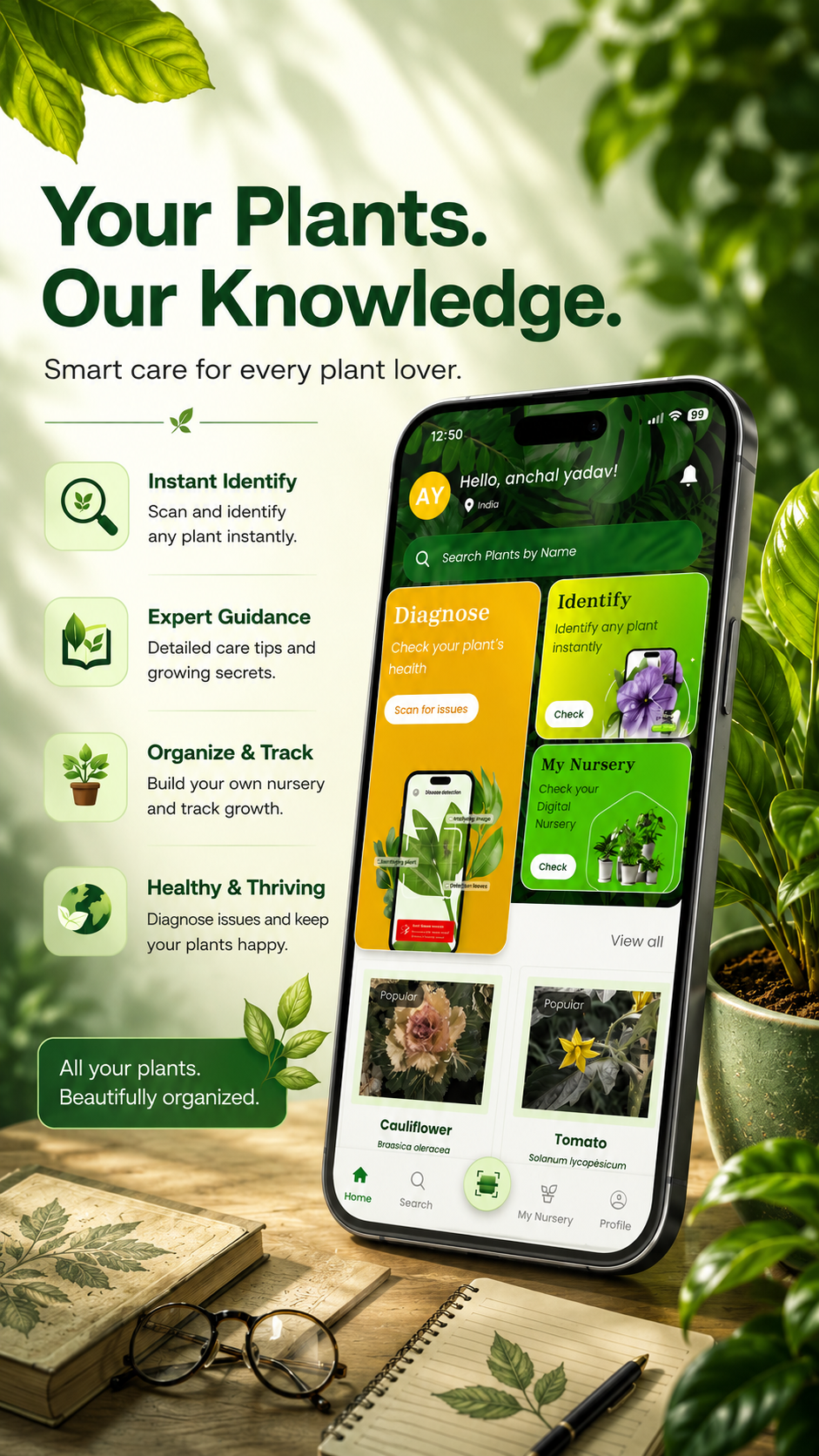
Photograph the plant — ideally one clear shot of the leaves, and one of any flowers or distinctive markings — and use PlantDecoder's identification tool. Our AI-powered system cross-references against a database of thousands of species and returns the plant's identity, its care profile, and critically, its full toxicity profile for humans, children, cats, and dogs.
This is the fastest method, works on any smartphone, and gives you safety information immediately alongside the identification.
Method 2: Visual Keys — What to Look For
If you want to learn to identify plants yourself, there are specific visual characteristics that will help you narrow things down significantly:
Leaf shape and arrangement:
- Opposite leaves (pairs facing each other on the stem) vs. alternate leaves (staggered) is one of the most useful initial filters in plant identification.
- Palmate leaves (radiating from a central point, like a hand) vs. pinnate leaves (leaflets arranged along a stem, like a feather) helps narrow the family.
Leaf texture and surface:
- Waxy leaves suggest adaptation to low humidity — common in succulents, ficuses, and hoya.
- Velvety or fuzzy leaves suggest African violet family, some gesneriads, and certain begonias.
- Glossy leaves are common in pothos, peace lily, and many tropical aroids.
Stem characteristics:
- Milky white sap when a stem is broken is a strong indicator of the Euphorbia family — many of which have irritant, sometimes seriously toxic sap.
- Clear sap is neutral in terms of this specific indicator.
- No visible sap from a clean break suggests grasses, palms, or many ferns.
Root structure (if repotting):
- Rhizomatous roots (thick, horizontal underground stems) are characteristic of calatheas, some begonias, and ginger family plants.
- Bulbous roots suggest amaryllis, oxalis, or similar bulb plants — worth noting because some bulb plants are significantly toxic.
Flowers (if present):
- Spathe and spadix flowers (a white or coloured petal-like sheath wrapped around a central spike) immediately identify aroid family plants — which includes pothos, philodendron, peace lily, anthurium, and dieffenbachia. Noting that you have an aroid is immediately useful for toxicity assessment.
- Tiny flowers in umbels (flat-topped clusters) are characteristic of the carrot/parsley family — relevant because this family includes some seriously toxic outdoor plants.
Method 3: Reverse Image Search
Google Lens and similar reverse image search tools have become impressively good at plant identification. Photograph your plant, run it through Google Lens, and you'll usually get several candidate species. The limitation: it gives you a name, but not a safety assessment. You'll need to do that research separately.
Method 4: Online Plant Communities
Communities like r/whatsthisplant on Reddit, or the iNaturalist platform, have knowledgeable communities who can identify plants from good photographs. This is slower but particularly useful for unusual or rare specimens.
Understand the Toxicity Framework
Once you've identified a plant, you need to understand what "toxic" actually means for that plant — because the word covers an enormous range of severity.
The Toxicity Spectrum
Category 1 — Non-toxic
No known toxicity to humans, children, cats, or dogs. Safe to handle, safe if accidentally ingested.
Examples: spider plant, areca palm, calathea, African violet, Boston fern, most herbs.
Category 2 — Mildly irritating
Causes localised irritation — typically in the mouth, on the skin, or to the eyes — without systemic effects. Uncomfortable but not dangerous. Usually causes self-limiting symptoms (the burning sensation stops the child or animal from eating more).
Examples: pothos, philodendron (calcium oxalate crystals), rubber plant sap (skin irritant).
Category 3 — Moderately toxic
Can cause significant symptoms that require medical attention but are rarely fatal in small exposures.
Examples: peace lily (moderately toxic to cats and dogs), dieffenbachia (significant oral swelling), certain begonias.
Category 4 — Significantly toxic
Can cause serious organ damage, particularly in animals, with even small exposures. Requires immediate veterinary or medical attention.
Examples: sago palm (liver toxicity), lily species in cats (kidney failure), foxglove, autumn crocus.
Category 5 — Highly toxic
Can be fatal in small amounts. These should not be kept in homes with children or pets under any circumstances.
Examples: oleander, yew, certain mushrooms occasionally growing in houseplant pots.
The Key Variables That Determine Real Risk
The category of a plant is not the whole story. Real-world risk is determined by:
Amount ingested
A child who chews one leaf of pothos and spits it out because it burns has a very different exposure to one who eats a significant quantity. Most plant ingestion incidents are single-leaf nibbles, which is why most outcomes are mild.
Body weight
Toxins scale with body weight. A 4 kg cat who eats a peace lily leaf has a very different risk profile to an 80 kg adult. This is why the same plant can be dangerous to a pet but not to an adult human.
Which part of the plant
Toxicity within a single plant is often not uniform. Sago palm seeds are dramatically more toxic than the fronds. Certain lily species have toxic pollen as well as leaves. Nightshade berries are more toxic than the leaves. Knowing which part was ingested matters.
The individual
Some people and animals have sensitivities that make them more reactive to plants that are mildly irritating for others.
The Common Household Plant Toxicity Guide
Plants That Look Innocent But Aren't
These plants are so common, so widely sold, so universally recommended that many people don't realise they come with any safety considerations at all.
Pothos / Money Plant (Epipremnum aureum)
What it looks like: Trailing vine with waxy, heart-shaped leaves in green, variegated white, or golden yellow.
Toxicity: Calcium oxalate crystals. Causes oral irritation, drooling, vomiting if eaten. Toxic to cats and dogs.
Real-world risk: Low for adults (the burning sensation prevents significant ingestion), moderate for toddlers and pets.
What to do: Keep on high shelves away from children and cats.
Peace Lily (Spathiphyllum)
What it looks like: Dark glossy leaves, white spathe flowers (the elegant petal-like structure is actually a modified leaf).
Toxicity: Calcium oxalate crystals plus other compounds. Significantly toxic to cats and dogs.
Real-world risk: Low for adults, moderate for children, high for cats.
What to do: Beautiful plant, but rehome if you have cats.
Dumb Cane / Dieffenbachia
What it looks like: Upright plant with large, usually variegated leaves — often cream/white markings on green.
Toxicity: High concentration of calcium oxalate crystals. Can cause swelling of the mouth and throat.
Real-world risk: Moderate for children (oral swelling can be alarming), low for adults.
What to do: Keep out of reach of children under 5. Consider replacing in homes with very young children.
Philodendron
What it looks like: Large, dramatic tropical leaves — heart-leaf philodendron has smaller leaves, others (split-leaf, tree philodendron) are bold statement plants.
Toxicity: Calcium oxalate crystals. Similar profile to pothos.
Real-world risk: Low-moderate. Toxic to cats and dogs.
What to do: High placement, out of reach of pets and small children.
ZZ Plant (Zamioculcas zamiifolia)
What it looks like: Upright, architectural plant with glossy dark green oval leaflets on arching stems. Very popular in minimal/modern interiors.
Toxicity: Calcium oxalate crystals. Mildly toxic.
Real-world risk: Low. But wash hands after handling, and keep away from children's reach.
Aloe Vera
This one surprises most people. Aloe vera gel — the clear inner gel — is harmless and even beneficial. But the yellow latex layer between the skin and gel contains compounds (aloin) that are toxic to cats and dogs and can cause vomiting and diarrhoea.
Real-world risk: Low for humans using the gel correctly, moderate for pets who chew the whole leaf.
Plants That Look Exotic But Are Extremely Dangerous
Sago Palm (Cycas revoluta)
What it looks like: Architectural, palm-like plant with stiff, dark green fronds radiating from a central trunk. Extremely popular as an interior plant.
Toxicity: ALL parts are toxic, seeds especially. Contains cycasin, which causes severe liver damage and failure.
Real-world risk: HIGH. Even small amounts can be fatal to dogs. Dangerous to children.
What to do: Remove from any home with pets or young children. No exceptions.
Oleander (Nerium oleander)
What it looks like: Woody shrub with long, narrow, leathery leaves and clusters of flowers in pink, red, white, or yellow. Common in Indian gardens, balconies, and as roadside plantings.
Toxicity: All parts extremely toxic. Contains cardiac glycosides affecting heart rhythm.
Real-world risk: HIGH. One of the most toxic garden plants in India. Cases of serious harm from oleander are documented annually.
What to do: Never allow children to play near oleander. Never use stems as food skewers (this has caused fatalities). If you have it in a garden where children play, consider its position very carefully.
Lily species (for cat owners specifically)
What they look like: True lilies (Lilium species) and daylilies (Hemerocallis) have trumpet-shaped flowers on upright stems. Easter lily, tiger lily, Asiatic lily, and stargazer lily are common examples.
Toxicity: Specifically and severely toxic to cats. Even pollen on a cat's fur that is groomed off can cause acute kidney failure.
Real-world risk for cats: EXTREME. These plants should not exist in any home with cats.
Real-world risk for humans and dogs: Lilies are far less dangerous to dogs and minimally toxic to humans.
Plants People Confuse for Each Other
One of the most common identification hazards is plants that look similar but have very different toxicity profiles.
Pothos vs. Heartleaf Philodendron
Both are trailing vines with heart-shaped leaves. Both are in the aroid family. Both are mildly toxic in the same way (calcium oxalate). In this case, the confusion is relatively low-stakes — they behave similarly from a safety perspective. But it illustrates how common the identification gap is.
Sweet Potato Vine (Ipomoea batatas) vs. Pothos
Sweet potato vine is non-toxic. Pothos is mildly toxic. They look similar trailing. If you're not sure which one you have, identify it before making assumptions.
Aloe Vera vs. Agave
Aloe has soft, fleshy leaves with soft teeth. Agave has stiff, rigid leaves with sharp, hard spine tips. Agave spines can cause serious puncture wounds and some species have toxic sap. These are frequently confused in photographs.
Euphorbia vs. Cactus
Many euphorbias look exactly like cacti and are sold in the same sections of plant shops. But euphorbias have milky white sap that is a serious skin, eye, and mucous membrane irritant. True cacti have clear sap or no sap. Always check the sap if you're unsure.
What to Do When You're Not Sure
This is the most important section in the guide, and the shortest.
If you cannot identify a plant, do not assume it's safe.
Here's your decision tree:
Take a clear photo. Leaves, stems, any flowers or fruit, the overall shape.
Use PlantDecoder — fastest path to an identification and safety assessment.
If you can't identify it and you have children or pets: place the plant out of reach immediately while you work on identification. Don't wait.
If someone has ingested an unidentified plant: do not wait for identification to call poison control. Take a photo of the plant before calling so you can describe or send it.
The Emergency Protocol
If you suspect a child or pet has ingested a potentially toxic plant:
For Children
- Stay calm. Most plant ingestion incidents are mild.
- Remove any remaining plant material from the mouth.
- Do NOT induce vomiting unless specifically instructed by poison control.
-
Call poison control:• In India: AIIMS Poison Control Centre: +91-11-26589391
• In the US: 1-800-222-1222
• In the UK: 111 - Note the time of ingestion and the approximate amount.
- Bring the plant (or a clear photo) to the hospital if you need to go.
For Pets
- Remove the plant and prevent further access.
- Call your vet or a pet poison helpline immediately. For India, contact your nearest veterinary emergency service.
- Note what was eaten and how much — even a rough estimate helps.
- Do not give milk, water, or try home remedies until advised by a vet.
Building a Plant-Safe Home: The System
Rather than relying on memory, build a system:
Label your plants
A small plant marker with the botanical name (not just "trailing green one") makes identification instant for anyone in the household, including babysitters, grandparents, and houseguests.
The PlantDecoder home inventory
After completing your plant audit, save each plant's identification and safety profile. You now have a household plant safety record.
Placement rules
Establish household rules based on toxicity category. Non-toxic plants anywhere. Category 2 plants on high shelves. Category 3 and above out of pet and child access zones entirely.
When plants enter the home
Every new plant — gifted, purchased, propagated — gets identified before it goes on a shelf. This takes thirty seconds with PlantDecoder and prevents the problem at the source.
What People Ask About Identifying Toxic Plants
Quick answers to common questions about houseplant toxicity and identification:
How do I know if my houseplant is poisonous?
What are the signs that a child has eaten a toxic plant?
Which common houseplants are toxic to cats?
Is it safe to touch toxic plants?
My child ate a leaf and I don't know what plant it is — what do I do?
Are all succulents safe?
The Case for Knowing Your Plants
There's a word in botany for people who know their plants: plantspeople. It implies not just enthusiasm but genuine knowledge — the kind that comes from paying attention.
You don't have to be a botanist. You don't have to memorise Latin binomials. But knowing what's in your home — genuinely knowing, not just guessing — is one of the quietest, most practical forms of care you can offer the people and animals who share your space.
The plants aren't the problem. The gap in knowledge is.
Close the gap. It takes thirty seconds per plant, a smartphone camera, and PlantDecoder.
Identify Any Plant Instantly
Use the PlantDecoder tool to identify any plant in your home and get an instant toxicity report. Photo → identity → safety rating. Done.
Stop Guessing. and Start Rescuing.
Join over 1,000+ plant parents who have permanently eliminated watering anxiety. Access instant Gemini AI leaf diagnostics and custom environmental care systems completely free.