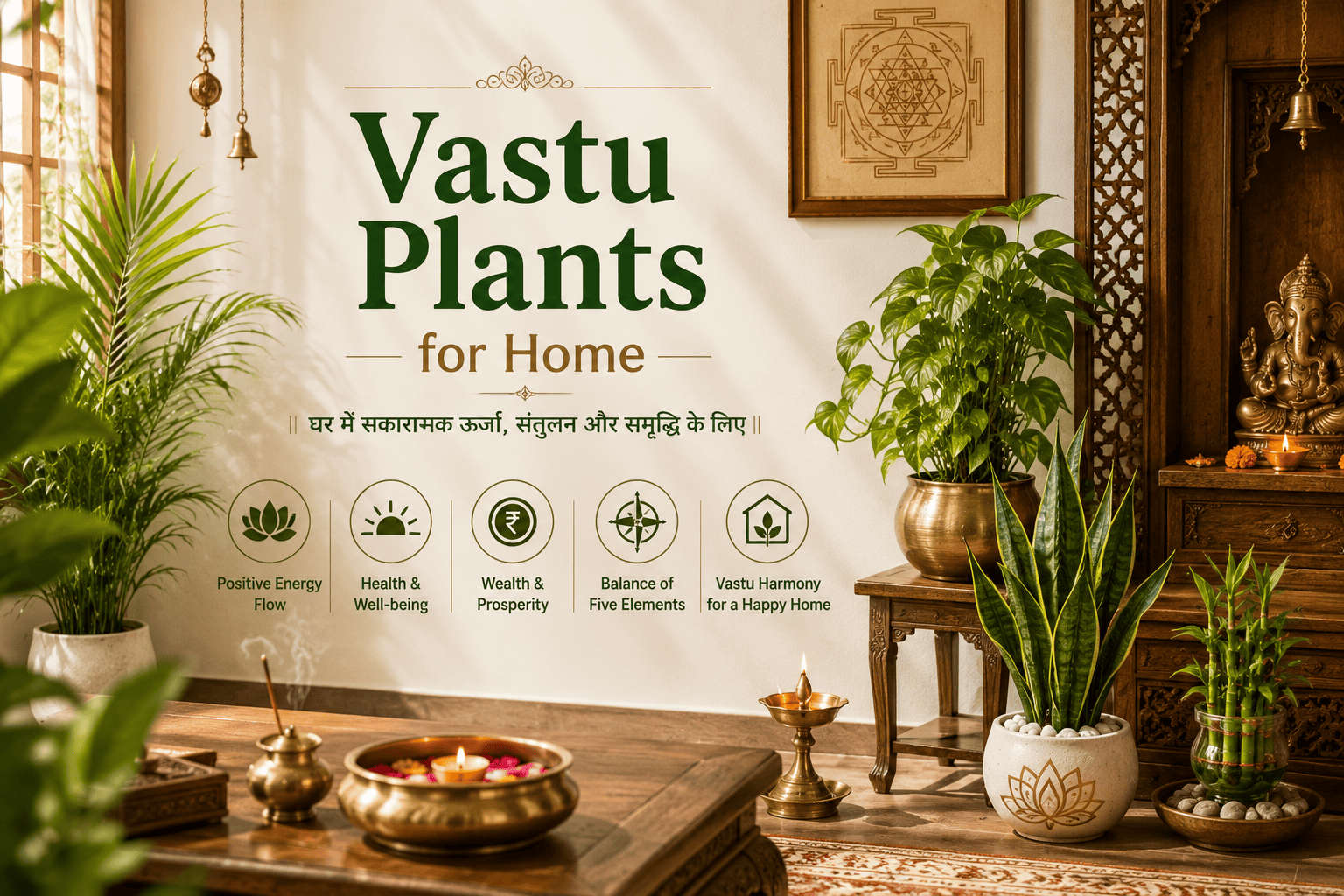
Vastu Plants for Home: The Complete Room-by-Room Guide to Positive Energy
By PlantDecoder | Last updated: 2026
My grandmother never called it Vastu Shastra. She just called it "the way things should be."
The tulsi plant was always at the front of the house, facing east, watered every morning before anything else happened. No cactus inside the home — never inside. The money plant she kept trailing along the north wall of her kitchen was, as far as she was concerned, simply the right place for it. She couldn't have told you the Sanskrit texts behind any of it, but she knew the principles the way she knew how to cook dal — from the inside out, passed down through generations of living in the same relationship with space, direction, and the natural world.
Vastu Shastra — the ancient Indian science of space, architecture, and energy — has guided how Indian homes are designed, arranged, and cultivated for thousands of years. And at the heart of this tradition, woven into almost every principle, is the role of plants.
This guide is for everyone who wants to understand that relationship properly: which plants to place where, which directions matter and why, and how to bring the energy of Vastu into a modern home without needing to rebuild your walls.
What Vastu Shastra Actually Says About Plants
Vastu Shastra — from the Sanskrit vastu (dwelling) and shastra (science or doctrine) — is one of the world's oldest systems of spatial arrangement. Its principles emerged from Vedic cosmology and draw deeply on the Panchabhutas: the five elements of earth (prithvi), water (jal), fire (agni), air (vayu), and space (akasha).
Plants, in this framework, are not decoration. They are living energy conduits.
Different plants are associated with different elements and different directional energies. The direction your home faces, the position of rooms, the flow of natural light — all of these interact with the placement of plants to either harmonise or disturb the flow of prana (life energy) through your home.
The 8 Directions & Their Energy Qualities
The eight cardinal and inter-cardinal directions in Vastu are each governed by a presiding deity and associated with specific qualities of energy:
North (Kubera)
Wealth and prosperity
Northeast (Ishanya)
Spirituality, wisdom, purity
East (Indra)
Health, new beginnings, solar energy
Southeast (Agni)
Fire element, transformation
South (Yama)
Stability, discipline
Southwest (Nirrti)
Earth element, grounding
West (Varuna)
Gains, rewards, creativity
Northwest (Vayu)
Air element, movement, relationships
The Main Entrance: Your Home's Energy Gateway
In Vastu, the main entrance (dwar) is the point through which energy — and fortune — enters the home. The plants you place here are not just about curb appeal. They are about what you're welcoming in.
The Tulsi Plant: Non-Negotiable
If there is one plant that Vastu Shastra and centuries of Indian tradition agree on without exception, it is Tulsi (Ocimum tenuiflorum), the holy basil.
Tulsi is traditionally placed at the entrance or in the northeast corner of the home, ideally in a tulsi vrindavan (a raised planter with spiritual significance). It should face east or north — directions that receive morning light and spiritual energy in Vastu cosmology.
What makes tulsi remarkable is that the spiritual and the scientific are entirely aligned here. Modern research has confirmed tulsi's antimicrobial properties, its capacity to purify air, and its role as an adaptogen. What Vastu knew intuitively, biochemistry has now confirmed.
Banana Plant (Kela)
The banana plant holds significant spiritual importance in Indian tradition — it is associated with Lord Vishnu and is auspicious at the entrance of a home, particularly before festivals and ceremonies.
In Vastu terms, it is best placed in the northeast or east corner of a garden or entrance courtyard. For apartment dwellers, dwarf banana varieties can work beautifully on a balcony facing north or northeast.
The banana plant's broad, generous leaves are said to welcome abundance. Given that banana plants grow rapidly and prolifically, it's not hard to understand why this symbolism took root.
What to Avoid at the Main Door
This is important, and it runs counter to some popular trends in home décor:
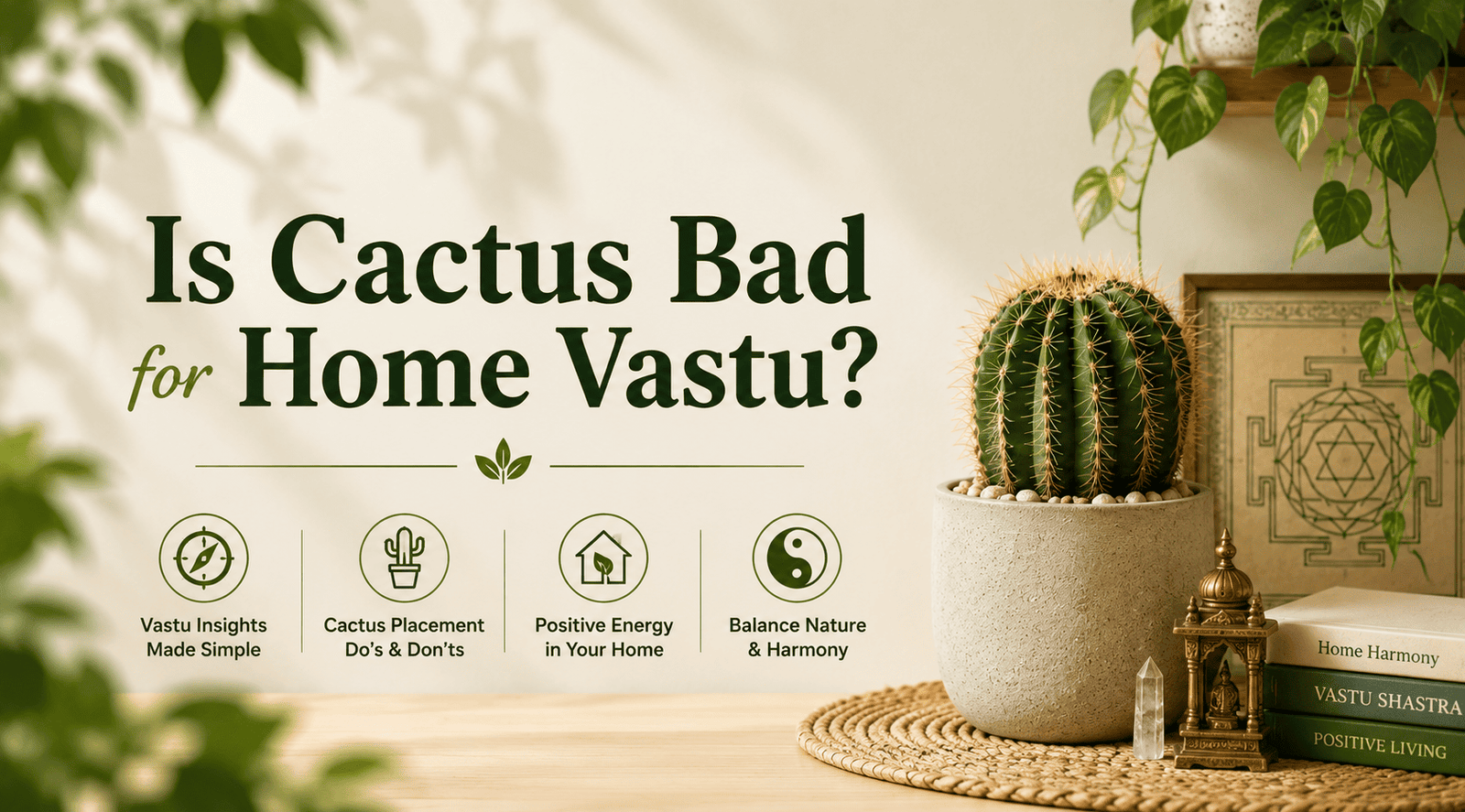
No cacti or thorny plants at or near the main entrance
In Vastu, thorns represent obstacles — literally and energetically. A beautiful cactus collection looks striking, but positioned at your entrance, Vastu considers it an invitation to hardship. Move them inside to a well-lit southeast corner if you love them; just don't let them greet your guests.
No dead or dying plants
A wilting, neglected plant at your entrance is considered one of the most inauspicious things you can have in Vastu. If a plant struggles at your entrance, either rehabilitate it urgently or replace it. A thriving plant represents thriving energy; a dying one does the opposite.
The Real Wealth: NASA's Clean Air Study
Eradicates Airborne Toxins
In 1989, NASA identified Epipremnum aureum as a powerhouse for filtering indoor air. It actively absorbs Volatile Organic Compounds (VOCs) like formaldehyde (found in carpets and furniture) and benzene (found in paints and cleaning supplies).
Psychological ROI
Studies consistently show that integrating trailing greenery into a workspace reduces cortisol (the stress hormone) and increases focus. You may not find coins in the soil, but the reduction in stress translates directly to better productivity.
Room by Room: Vastu Plants for Every Space
The Living Room
The living room is where family gathers, where guests are welcomed, where the social energy of the home is centred. In Vastu, this is typically associated with the north, northeast, or east zones of the home.
Money Plant (Epipremnum aureum / Pothos)
The money plant is perhaps the most iconic Vastu plant in Indian homes, and the placement rules around it are specific.
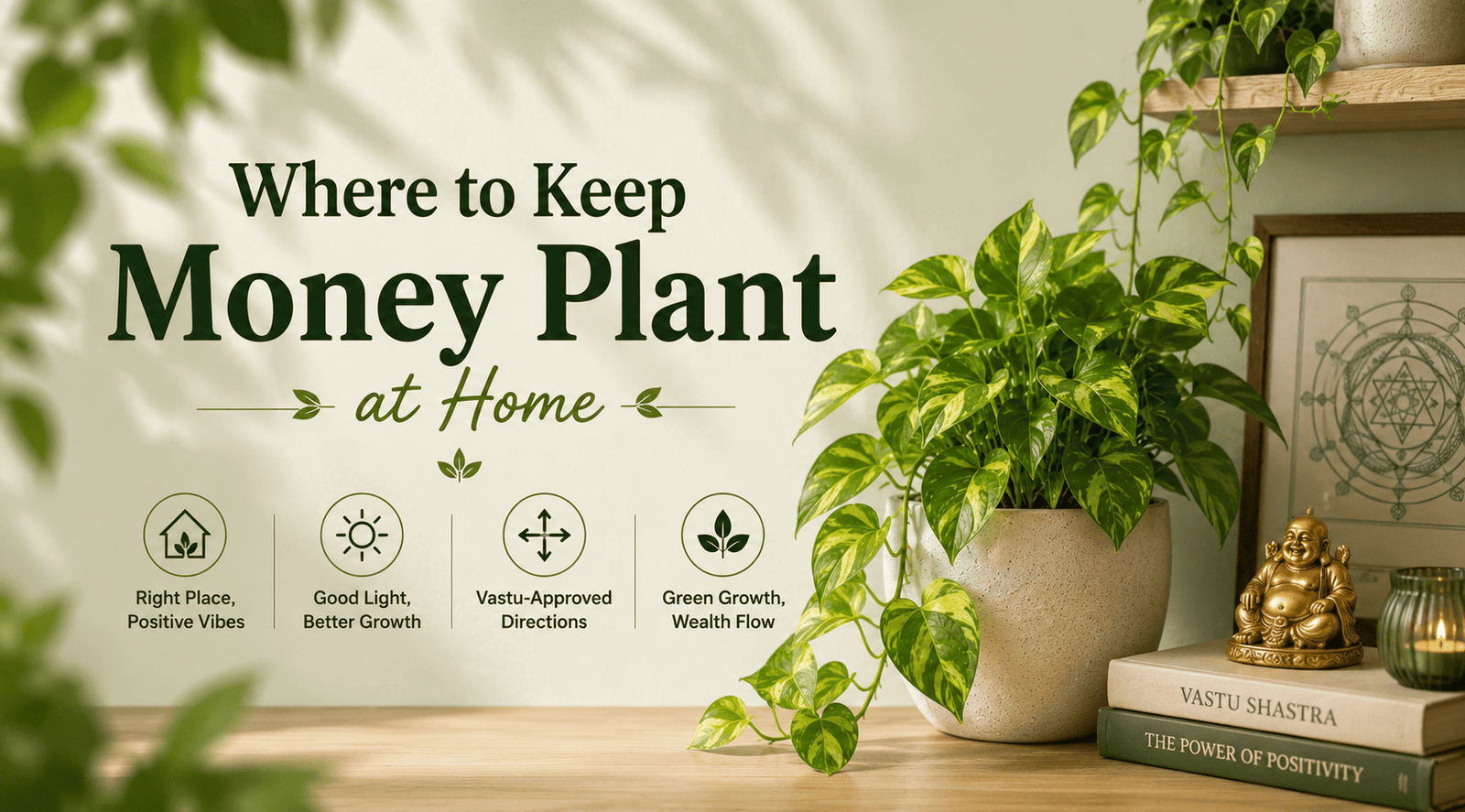
According to Vastu, money plant should be placed in the north or east direction of the living room. The north direction is governed by Kubera — the deity of wealth — making it the ideal zone for prosperity-associated plants. The east direction brings solar energy and new beginnings.
Here is the placement detail that most guides get wrong: the vine should be encouraged to grow upward, not allowed to trail downward toward the ground. Upward growth in Vastu symbolises rising fortune. A money plant that cascades down a shelf toward the floor is, in Vastu terms, directing energy downward. Train it up a moss pole or trellis.
Peace Lily (Spathiphyllum)
The peace lily — with its white, graceful flowers — is associated with tranquility and is well-suited to the living room's northeast or north zone. White flowers in Vastu carry the energy of purity and clarity.
One important note: peace lily is mildly toxic if ingested, so if you have young children, keep it on high shelves or replace with safer alternatives.
Bamboo Palm or Areca Palm
Palms in general are auspicious in Vastu and excellent for the north or east walls of the living room. They bring the energy of growth, freshness, and air — and scientifically, they are among the best air-purifying plants you can own.
The Southeast Corner: A Note
The southeast is the fire zone — the direction of Agni. Plants do not thrive energetically in the southeast corner of the living room in Vastu. If your room arrangement puts a plant in the southeast, choose something very small and low-energy. The southeast corner is better suited to your lighting or electrical setup.
The Kitchen
The kitchen in Vastu is ideally located in the southeast — the fire zone — because cooking literally involves fire. Plants in the kitchen should support health, nourishment, and purification.
Fresh herbs are ideal kitchen plants in Vastu — they connect to the earth element, they support health through cooking, and they're completely safe for children and pets. Place a small herb garden on an east or north-facing kitchen windowsill.
Tulsi can also be kept in the kitchen if space is limited and you don't have an entrance garden, though the entrance or northeast corner of the home is still preferred.
What to avoid in the kitchen
Large, dramatic leafy plants that "compete" with the fire energy of the kitchen. The kitchen is meant to be dynamic and transformative — large, still, expansive plants can feel energetically out of place. Keep plants here practical and small.
The Bedroom
This is where Vastu plant guidance gets most specific — and where it diverges most clearly from popular decor advice.
The bedroom, in Vastu, is a space for rest, intimate relationships, and the regeneration of energy. The Vastu rules for bedroom plants are:
Lavender
While not a traditional Vastu plant, lavender aligns beautifully with Vastu's emphasis on rest in the bedroom. It soothes the nervous system and supports sleep.
Snake Plant (Sansevieria) — with nuance
The snake plant is one of those Vastu plants that generates genuine debate. Traditional Vastu recommends against sharp, pointed leaves in the bedroom — they generate what Vastu practitioners call "sha chi" (cutting energy). However, a small snake plant placed in the corner — not directly beside the bed — is accepted by many Vastu practitioners, particularly given its remarkable air-purifying properties. It releases oxygen at night, which is genuinely beneficial.
What to avoid in the bedroom:
Large trees or plants with massive root energy are not recommended for bedrooms — the energy is too dominant for a space meant for rest. No banana plants, no large palms, no fig trees indoors in the bedroom.
Thorny plants — including roses, if you're keeping potted rose plants — are a Vastu no in the bedroom. The energy of thorns is incompatible with the softness needed in a rest and relationship space.
Cactus — beautiful elsewhere, but the Vastu position on cactus in the bedroom is consistent across traditions: it generates confrontational, spiky energy that disrupts rest and relationships. Move it to the living room's sunny window.
The Pooja Room / Prayer Space
If your home has a dedicated pooja room or prayer corner, the plant guidance here is clear:
Tulsi
Tulsi is the premier pooja plant — ideally kept near the space or just outside it.
Lotus
Lotus — if you have a water feature or can keep a small bowl with a lotus bulb, this is the most auspicious flower in Hindu tradition for a prayer space.
Jasmine and Marigold
Jasmine and marigold — not houseplants per se, but fresh jasmine and marigold flowers are considered highly purifying and auspicious in the prayer space. Keep a small vase of them fresh.
The northeast corner of any home is considered the most spiritually charged in Vastu — this is where the Ishanya energy flows, connected to wisdom, purity, and the divine. A prayer space in the northeast, with tulsi nearby, is the most classically aligned setup.
The Bathroom
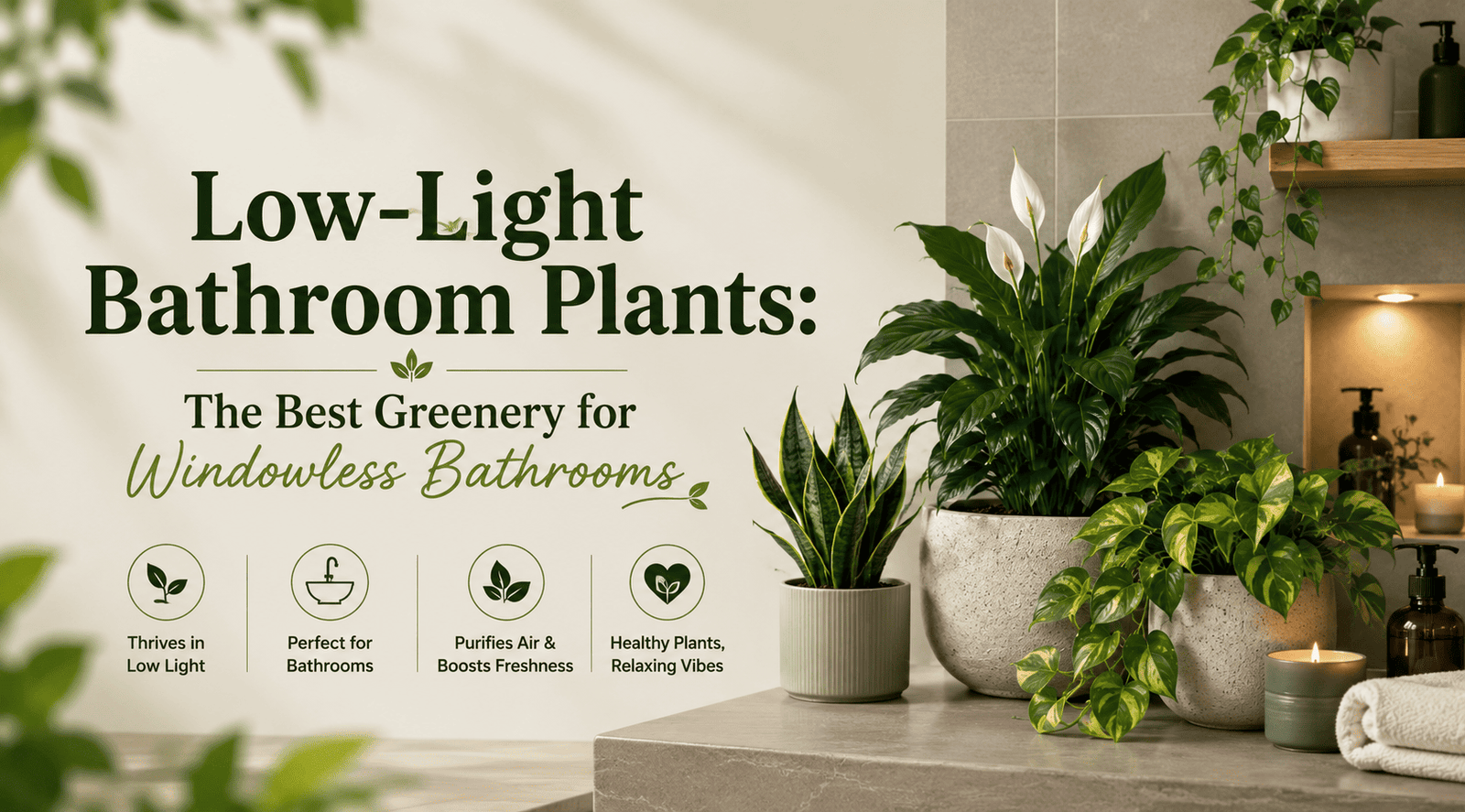
Traditional Vastu guidance is to minimise plants in the bathroom — water and drain energy is dominant here, and it's not considered an ideal space for plant energy. That said, modern apartments have bathrooms, and if you want a plant there, here's what works:
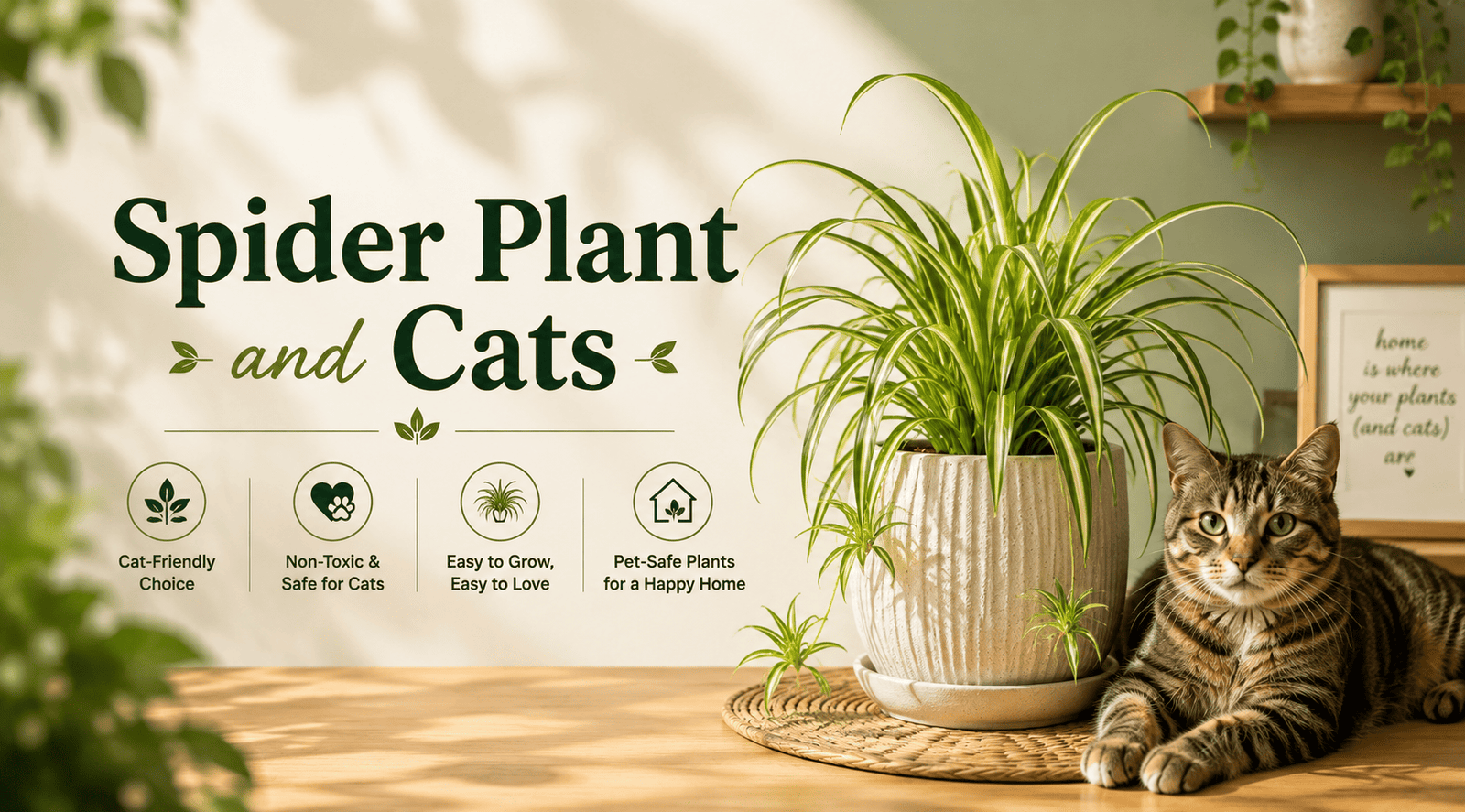
Boston Fern or Spider Plant
Both love humidity, both are completely non-toxic, and both are unobtrusive enough to not dominate the bathroom's energy.
What to avoid
Do not keep your tulsi in the bathroom. Ever. This is one of the clearest Vastu prohibitions — the sacred plant should never be near a space associated with waste and water drainage.
The Complete Directional Guide: Quick Reference
| Direction | Vastu Energy | Best Plants | Plants to Avoid |
|---|---|---|---|
| North | Wealth (Kubera) | Money plant, bamboo, areca palm | Heavy, dark plants |
| Northeast | Spirituality (Ishanya) | Tulsi, small flowering plants | Large trees, cactus |
| East | Health, solar energy | Banana plant, neem, herbs | Nothing blocking light |
| Southeast | Fire (Agni) | Keep plants minimal | Large leafy plants |
| South | Stability | Tall trees (outdoor), peepal | No plants indoors |
| Southwest | Earth, grounding | Neem tree (outdoor), earth plants | Climbing/trailing plants |
| West | Gains, creativity | Snake plant (small), jade | Thorny plants |
| Northwest | Air, relationships | Fragrant plants, jasmine | None specific |
Plants That Are Always Inauspicious in Vastu: The Definitive List
These plants, regardless of how beautiful they are, are considered Vastu-incompatible for indoor home placement:
Cactus and thorny plants indoors
The association is with obstacles, arguments, and stagnant energy. If you love cactus, keep them on an outdoor terrace or balcony, never inside the home.
Bonsai
This one surprises people. Bonsai trees are beautiful and require enormous skill to cultivate. But in Vastu, a stunted tree — one whose natural growth has been deliberately restricted — represents restricted growth and energy. Traditional Vastu recommends against bonsai inside the home.
Cotton plant
In Vastu, cotton is associated with funeral rites and is considered inauspicious indoors.
Dead or artificial plants
Vastu energy is prana — life force. Artificial plants have none. Dried plants have ceased to carry it. Both are considered energetically neutral at best and inauspicious at worst.
Tamarind and Mehendi (Henna) plants indoors
Both are considered incompatible with indoor home energy in Vastu, though they're fine in outdoor gardens.
What People Ask About Vastu Plants
Direct answers to common questions about plant placement in Vastu Shastra:
Which plant is best for home entrance according to Vastu?
Where should I keep a money plant as per Vastu?
Is cactus good or bad for home Vastu?
Which direction should the tulsi plant face?
Can I keep a snake plant in my bedroom as per Vastu?
Is lucky bamboo the same as Vastu bamboo?
Vastu Meets Modern Life: How to Apply This in an Apartment
Living in a 2BHK in Mumbai or a flat in Bangalore doesn't mean you can't apply Vastu plant principles. Here's how:
Use a compass
The directional rules in Vastu are literal — you need to know your home's actual cardinal directions. A compass app on your phone works perfectly.
Work with what you have
If your home's entrance faces south (traditionally considered more challenging in Vastu), compensate with plants in your northeast interior corner and be especially careful about what you place at the entrance.
Scale to your space
A tulsi in a pot on an east-facing windowsill is entirely valid. Vastu principles scale — a small, thriving tulsi carries the same energy as a large one.
Prioritise plant health
In Vastu, a neglected plant is worse than no plant. If you can only maintain two plants well, keep two plants. A thriving, well-watered, beautifully placed tulsi and money plant will do more for your home's energy than a dozen stressed, yellowing plants.
Align Your Home Energy with PlantDecoder
Identify any mystery plant and get instant Vastu placement and safety guidance tailored for your home space.
A Living Practice
My grandmother is in her eighties now. She still waters the tulsi first.
There's something that matters in that ritual — the daily acknowledgement of living things, the orientation toward nature and direction and light.
Whether you approach Vastu Shastra as a spiritual practice, an architectural philosophy, or simply as ancestral wisdom about how to live well with plants, the outcomes are the same: a home with thoughtfully placed, well-tended greenery that connects you to the natural world.
The plants know the rest.
Stop Guessing. and Start Rescuing.
Join over 1,000+ plant parents who have permanently eliminated watering anxiety. Access instant Gemini AI leaf diagnostics and custom environmental care systems completely free.