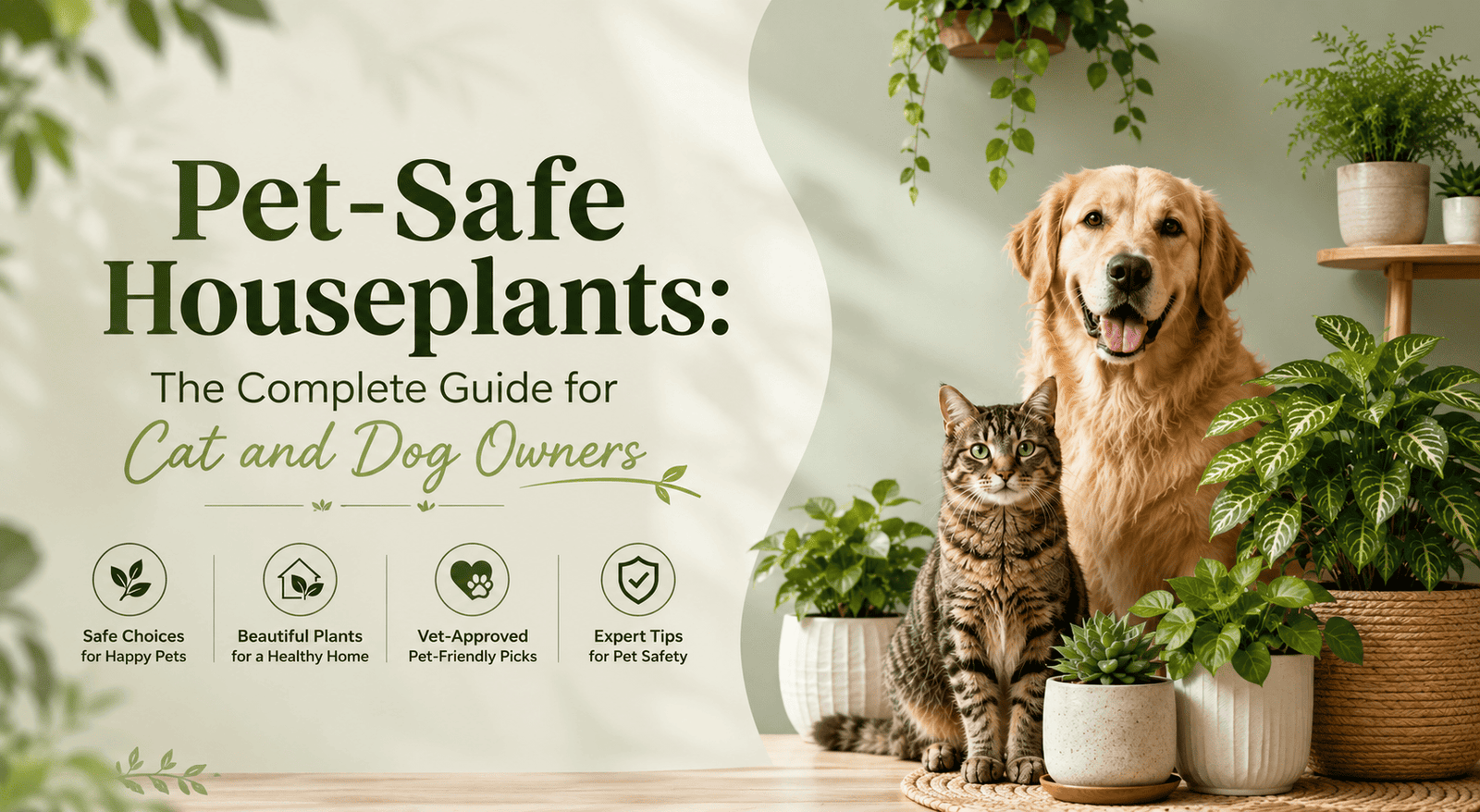
Pet-Safe Houseplants: The Complete Guide for Cat and Dog Owners
By PlantDecoder | Last updated: 2026
It starts innocently enough.
You spend a Sunday afternoon at the nursery, fall completely in love with a trailing marble queen pothos, bring it home, drape it over the bookshelf — and feel, briefly, like you've achieved the aesthetic life you've always wanted.
Then your cat jumps up, chews three leaves, and spends the next hour drooling on the rug.
If you've been through this, you're not alone. If you haven't — and you have pets — this guide is the thing that might save you from it.
The overlap between "beautiful houseplants" and "plants that are harmful to cats and dogs" is genuinely uncomfortable. Many of the most popular, most photographed, most widely recommended houseplants in the world are toxic to pets. Not dangerous in a catastrophic, hide-the-plant way for most exposures — but toxic enough to cause real discomfort for your animal, and in some cases, genuinely dangerous.
The good news is this: the list of non-toxic, gorgeous, pet-friendly plants is also long. You don't have to choose between a beautiful home and a safe one. You just need to know which plants go where.
Why Cats and Dogs React Differently to the Same Plant
Before we get into the plant lists, this is worth understanding — because it explains why the same pothos that barely affects your dog sends your cat into a drooling spiral.
Cats are obligate carnivores.
Their livers lack certain enzymes that omnivores use to metabolise plant compounds. This is why lily species — which cause zero serious harm to dogs and humans — can cause acute kidney failure in cats. The cat's system simply cannot process what the plant contains.
Dogs are omnivores with a tendency to eat things enthusiastically and in quantity.
A dog is more likely than a cat to eat a significant amount of a plant before stopping, which means dose matters more. A cat that nibbles and then stops (because it tastes horrible) has a very different outcome to a Labrador who eats half a peace lily.
Size matters enormously.
A 3 kg cat and an 8 kg cat have very different toxic thresholds. A teacup chihuahua and a Golden Retriever will respond differently to the same plant. Toxicity scales with body weight.
Individual sensitivity varies.
Just as some humans can eat a whole chilli and feel nothing while others are in agony — animals have individual variation in their sensitivity to plant compounds. Some cats are more reactive to pothos than others.
All of this means that "toxic to cats" covers an enormous range: from "causes some drooling and irritation" to "causes kidney failure with even small amounts." We'll be specific about severity throughout this guide.
The Safest Houseplants for Homes with Cats and Dogs
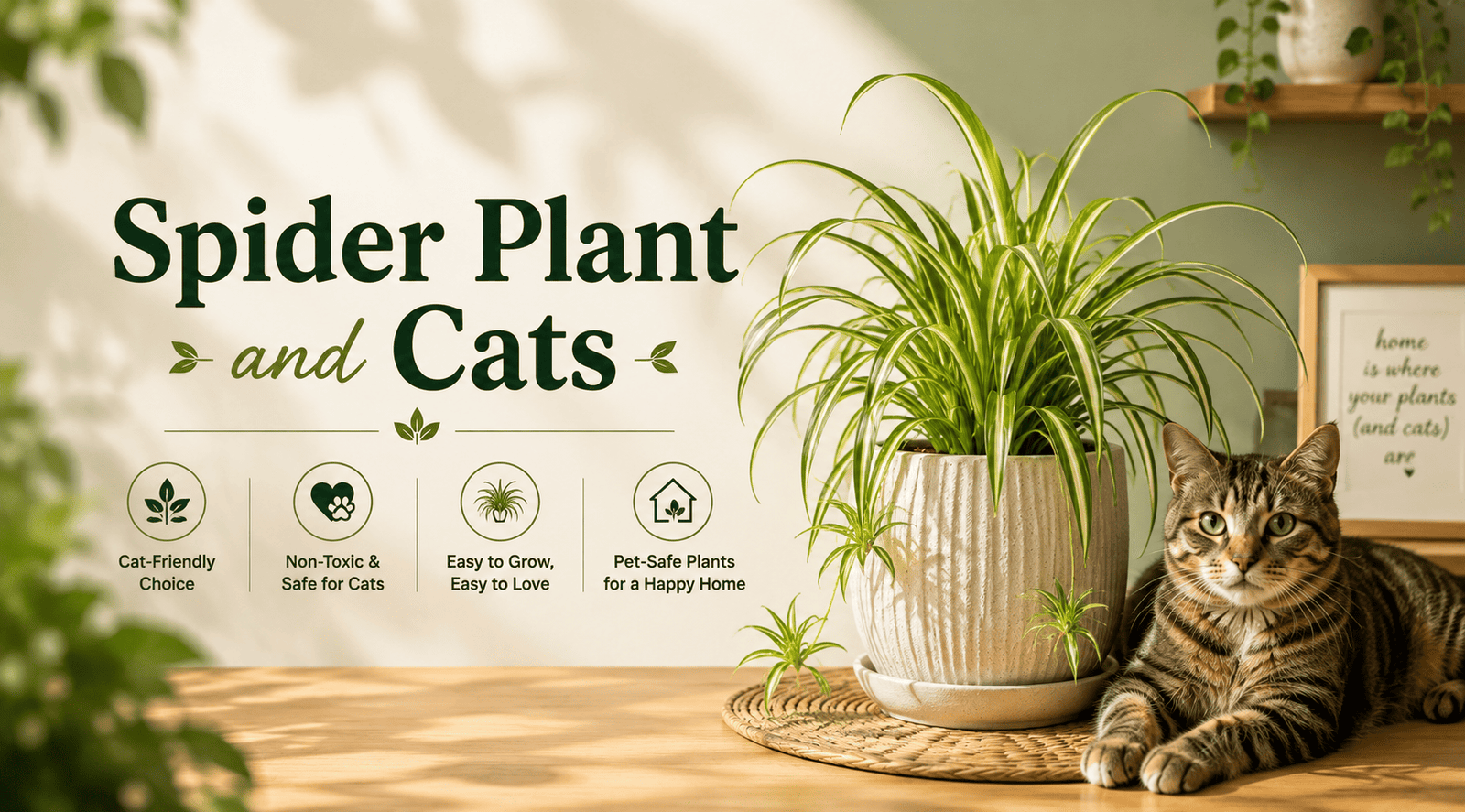
1. Spider Plant (Chlorophytum comosum)
The spider plant is the single most recommended pet-safe houseplant in the world, and it deserves that reputation.
It is completely non-toxic to both cats and dogs according to the ASPCA and major veterinary poison databases. Not "mildly irritating" or "low risk" — genuinely, fully non-toxic.
There's a small nuance worth knowing: cats seem mildly attracted to spider plants, possibly because the plant produces compounds that have a very mild hallucinogenic effect similar to catnip. This means your cat will try to eat it, and may seem a little spacey afterward — but it won't cause harm. The worst that happens is mild stomach upset from eating too much plant material.
The spider plant also produces cascading "babies" — little offshoots on long runners — that cats find irresistible. Put it in a hanging basket out of paw's reach if you want it to survive aesthetically. Safety-wise, it doesn't matter.
2. Boston Fern (Nephrolepis exaltata)
Lush, full, cascading greenery that transforms any corner into a tropical oasis — and completely safe for cats and dogs.
Boston Ferns are one of the few genuinely non-toxic plants that also happen to be large and dramatic enough to be statement plants in a room. They're the pet-owner's answer to the trailing pothos: all the visual drama, none of the toxicity anxiety.
They do have a reputation for being fussy — they like humidity, they sulk when dry, they drop fronds if the air is too dry. But in a bathroom or kitchen, or near a humidifier, they thrive. And the humidity-loving quality makes them ideal for the one room of the house that cats rarely enter for long: the bathroom.
3. Areca Palm (Dypsis lutescens)
If you want height, drama, and architectural presence — and you have pets — the Areca Palm is your answer.
Completely non-toxic to cats and dogs, graceful, and one of the best air-purifying plants you can own (NASA research placed it among the top performers for removing xylene and toluene from indoor air). It grows tall and stays lush with relatively little fuss, making it the ideal large statement plant for pet-friendly homes.
Dogs occasionally chew palm fronds out of boredom. Cats occasionally shred them. Neither is dangerous with Areca Palm — just aesthetically frustrating.
4. Calathea / Prayer Plant (Calathea, Maranta)
Calatheas have become one of the most popular interior plants of the last decade, and for good reason: their extraordinary patterned leaves — purples, silvers, greens, burgundies — make them feel like living art. They are also completely non-toxic to cats and dogs.
The prayer plant adds an extra delight: it moves. The leaves fold upward at night and unfurl in the morning in response to light. Cats, who notice everything that moves, will watch this with fascination. They may also bat at the leaves. Completely safe.
Calatheas are famously particular about water quality (they prefer filtered water or rainwater) and don't like drafts or dry air. But if you can meet their needs, they are spectacularly rewarding, totally pet-safe plants.
5. Bamboo Palm (Chamaedorea seifrizii)
A slender, elegant palm that works beautifully in lower-light spaces than the Areca Palm — and is equally safe for pets.
Bamboo Palms are outstanding air purifiers and have a graceful, tropical character that works in both modern and traditional interiors. They're also significantly more compact than Areca Palms, making them better suited to smaller apartments.
6. African Violet (Saintpaulia)
Small, colourful, cheerful, and completely harmless to cats and dogs. African Violets are the ideal windowsill plant for pet owners — bright enough to add colour, small enough to place on ledges cats can reach, and safe enough that it doesn't matter.
If a cat bats one off a windowsill (and they will), the only casualty is the pot.
7. Rubber Plant (Ficus elastica) — The Nuanced One
Here's where we need to be precise, because the rubber plant is extremely popular and the safety information online is inconsistent.
Species Sensitivity Breakdown
For dogs: Low risk. The white milky sap can cause mild skin and mucous membrane irritation, but ingestion of leaves typically causes only mild gastrointestinal upset. Dogs rarely eat enough to cause significant issues.
For cats: Moderate concern. The sap contains compounds that are more irritating to cats than dogs. Not in the "call the vet immediately" category, but if your cat is a determined chewer, the rubber plant isn't the ideal choice.
Our recommendation: if you have cats that chew plants, skip the rubber plant and choose from the fully non-toxic options above. If you have dogs only, or cats that ignore plants, it's manageable with sensible placement.
Plants to Remove or Relocate: The Honest Pet Safety List
These are not "place on a high shelf" plants. For cats especially, some of these need to leave the home entirely.
For Cat Owners: The Non-Negotiables
True Lilies (Lilium species) — CRITICAL
Easter lily, tiger lily, Asiatic lily, stargazer lily, and daylily (Hemerocallis) are the most dangerous plants you can have in a home with cats.
Every part of these plants — leaves, flowers, pollen, even the water in the vase — is severely nephrotoxic to cats. Acute kidney failure can develop within 24–72 hours of exposure. Even small amounts of pollen landing on a cat's fur and being groomed off have caused kidney failure.
This is not a "high shelf" situation. These plants should not exist in a home with cats. If you receive lilies as a gift — a common occurrence given how beautiful they are — remove them from the home immediately.
Oleander (Nerium oleander)
Extremely toxic to both cats and dogs. Cardiac glycosides affect heart rhythm. No place in a home with pets.
Sago Palm (Cycas revoluta)
All parts toxic, seeds especially. Causes severe liver failure even in tiny amounts. Fatal to both cats and dogs. Remove entirely.
For All Pet Owners: Manage Placement
Pothos / Money Plant (Epipremnum aureum)
Calcium oxalate crystals cause oral irritation, drooling, vomiting. Toxic to both cats and dogs but rarely fatal in small exposures. Keep high and away from determined chewers.
Peace Lily (Spathiphyllum)
Calcium oxalate plus other compounds. More significant for cats than dogs. If you have cats, rehome it. If you have dogs only, high placement is usually sufficient.
Dieffenbachia (Dumb Cane)
Significant oral irritation, can cause temporary inability to swallow. Painful experience for pets. Keep away from both cats and dogs.
Aloe Vera
The clear gel inside is harmless, but the yellow latex layer between skin and gel is toxic to cats and dogs. Causes vomiting and diarrhoea. If your pet chews aloe leaves whole, this is the concern.
ZZ Plant (Zamioculcas zamiifolia)
Mildly toxic, calcium oxalate. Low risk in small amounts but keep away from pets that chew everything.
Philodendron
Same family as pothos, same calcium oxalate mechanism. Toxic to both cats and dogs. High placement required.
The Complete Pet Safety Table
A comprehensive reference matrix comparing toxicity levels, physiological symptoms, and recommended placement actions for popular houseplants across cat and dog households:
| Plant | Safe for Cats? | Safe for Dogs? | Severity if Ingested | Action Required |
|---|---|---|---|---|
| Spider Plant | Yes | Yes | None (mild stomach upset possible) | Safe anywhere |
| Boston Fern | Yes | Yes | None | Safe anywhere |
| Areca Palm | Yes | Yes | None | Safe anywhere |
| Calathea / Prayer Plant | Yes | Yes | None | Safe anywhere |
| Bamboo Palm | Yes | Yes | None | Safe anywhere |
| African Violet | Yes | Yes | None | Safe anywhere |
| Rubber Plant | Caution | Low risk | Mild irritation | High placement |
| Pothos / Money Plant | Toxic | Toxic | Oral irritation, vomiting | High shelf or rehome |
| Peace Lily | Toxic | Toxic | Oral irritation, more severe in cats | Rehome if cats present |
| Dieffenbachia | Toxic | Toxic | Significant oral swelling | Remove |
| Aloe Vera | Toxic | Toxic | Vomiting, diarrhoea | High placement |
| ZZ Plant | Mildly toxic | Mildly toxic | Mild irritation | High placement |
| True Lilies | Critical | Toxic | Kidney failure in cats | Remove immediately |
| Sago Palm | Critical | Critical | Liver failure | Remove immediately |
| Oleander | Critical | Critical | Cardiac effects | Remove immediately |
Verify Houseplant Safety with PlantDecoder
Scan any plant before bringing it home to check real-time ASPCA toxicity databases, verify pet safety levels, and get custom placement recommendations.
Building a Pet-Safe Plant Strategy
The goal isn't a plant-free home. It's a thoughtfully designed one. Here's how to think about it:
Zone your plants.
Non-toxic plants anywhere — on the coffee table, on the floor, within reach. Mildly toxic plants on genuinely high shelves (not a shelf your cat can leap to — actually out of reach). Seriously toxic plants removed entirely.
Know your pet.
A plant-obsessed, chew-everything cat needs a more conservative approach than a dog who has never shown interest in a plant. Tailor your strategy to the animal you actually have.
The new plant rule.
Every new plant that enters your home — bought, gifted, propagated — gets identified before placement. It takes thirty seconds with PlantDecoder and means you never accidentally introduce a dangerous plant without realising it.
Cut flowers matter too.
Lilies frequently arrive in mixed bouquets. Train yourself to check before putting a bouquet in water. If you're not sure what's in it, photograph it and identify it before a cat investigates.
Quick Answers: What Pet Owners Actually Ask
Direct, expert answers to the most common safety and toxicity questions asked by cat and dog owners:
Is pothos safe for cats?
Are ferns safe for cats?
Is peace lily toxic to cats?
Which plants cause kidney failure in cats?
Is aloe vera safe for cats and dogs?
What should I do if my pet eats a houseplant?
Are succulents safe for pets?
A Note on Indoor Plants vs. Garden Plants
If your pets have outdoor access, the hazard extends to the garden.
Regional Hazard: Oleander (Nerium oleander)
In India specifically, oleander is commonly grown in gardens and on balconies for its beautiful flowers — and it is extremely toxic to both cats and dogs.
If your pet has garden access, walk it with the same critical eye you'd apply to your indoor plants.
The Bigger Picture: Plants and Pets Can Share a Home
We want to be clear about something: the goal of this guide is not fear. It's knowledge.
Cats and dogs can live happily in homes full of beautiful plants. The spider plants, Boston Ferns, Areca Palms, and Calatheas of the world are not consolation prizes — they are genuinely spectacular plants that make any home better.
And the process of identifying and making thoughtful decisions about what's in your home is, ultimately, the same process that makes you a better plant parent.
Know what you have. Make it safe. Then let the jungle grow.
Stop Guessing. and Start Rescuing.
Join over 1,000+ plant parents who have permanently eliminated watering anxiety. Access instant Gemini AI leaf diagnostics and custom environmental care systems completely free.